Spinal Cord Injury Expert Witness: Explaining Injury Levels, Functional Prognosis, and Long-Term Care Needs in Court Proceedings
By Dr. Ellia Ciammaichella, DO, JD, Triple Board-Certified Physiatrist
Quick Insights
Spinal cord injury expert witness is a specialized service providing objective, research-based analysis on SCI levels, prognosis, and functional impact—critical for accurate case outcomes and defensible legal strategies.
Key Takeaways
- Expert witnesses clarify how T6 injuries affect personal independence and work capacity in real-world terms.
- Prognosis explanations may reference current clinical guidelines, not just physician opinion.
- Multistate service includes Nevada, Texas, and California for flexible legal team support.
- Detailed, plain-language reports address attorneys’ pain points around proving long-term SCI damages.
Why It Matters
Selecting a spinal cord injury expert witness can make or break a case, especially when SCI prognosis is difficult to substantiate. For attorneys facing complex, high-value claims, accurate testimony empowers better settlements or defense, addressing the frustration of “hard to prove” damages with clarity and legal credibility.
Introduction
As both a Doctor of Osteopathic Medicine and Juris Doctor, I offer a distinctly dual-qualified lens to spinal cord injury expert witness work, integrating clinical mastery with legal acumen. Learn more about Dr. Ellia Ciammaichella’s DO/JD credentials and multidisciplinary expertise.
A spinal cord injury expert witness is a board-certified physician with specialized knowledge in both diagnosing the precise level of injury and translating functional limitations into clear, objective terms for the court.
When a T6 injury—defined as mid-thoracic spinal cord damage—disrupts trunk control and mobility, the consequences reach far beyond medical management; legal proceedings depend on rigorous, unbiased interpretation of clinical findings to substantiate damages and future needs.
My dual experience ensures that every opinion is rooted in contemporary clinical standards and fully contextualized within the legal framework. For example, current spinal cord injury guidelines state that precise injury characterization and detailed prognosis critically inform both care and legal decision-making.
Rigorous analysis and comprehensive documentation can change the trajectory of high-stakes litigation for attorneys in Reno and beyond.
Understanding Spinal Cord Injury Levels in Litigation
The level of spinal cord injury (SCI) is the single most determinative factor in both clinical prognosis and legal damages assessment. In litigation, precise identification of the neurological level—such as T6 (mid-thoracic)—directly informs the scope of functional loss, anticipated care needs, and future costs.
How the Level of Injury Impacts Prognosis
The neurological level of injury defines which motor and sensory functions are preserved. For example, a T6 injury (mid-back) typically results in paraplegia, with full arm and hand function but impaired trunk control and complete loss of leg movement.
This distinction is critical for attorneys, as it shapes both the plaintiff’s independence and the quantifiable damages. According to AO Spine/Praxis clinical guidelines, accurate classification is essential for both acute management and long-term planning.
Early surgical decompression—ideally within 24 hours—has been shown to improve outcomes, and is now strongly recommended in updated guidelines, reflecting a shift in both medical and legal standards of care. Recent evidence supports this approach.
In my 15+ years of practice evaluating individuals with spinal cord and brain injuries, I’ve found that detailed functional assessment, beyond basic diagnosis, is essential for accurately delineating damages in legal proceedings. Often, attorneys and even some medical experts may underestimate the importance of correlating the neurological findings with real-world impact.
My approach focuses on making this connection explicit, ensuring that my evaluation translates directly into actionable evidence for both sides.
What Legal Teams Must Understand About SCI Classifications
Legal teams must grasp that the American Spinal Injury Association (ASIA) Impairment Scale is the gold standard for classifying SCI. This scale objectively quantifies motor and sensory loss, which I translate into clear, jury-friendly language. In my experience, the ability to explain these classifications in plain English is often the difference between a persuasive expert report and one that fails under cross-examination.
What are the key factors in SCI prognosis for litigation?
The neurological level, completeness of injury, and early intervention are the primary determinants of prognosis and future care needs.
From my perspective as a triple board-certified physiatrist and JD, I view functional assessment as the foundational element in translating ASIA grades into meaningful legal narratives. For example, an ASIA Impairment Score of A versus C can radically alter the projected need for lifelong care and associated costs. I take care to document these distinctions unambiguously, as they can shape settlement outcomes.
When to Seek Medical Attention
Immediate evaluation by a physician is warranted for:
- Sudden loss of movement or sensation below the injury
- Difficulty breathing or chest pain
- Loss of bladder or bowel control
Why Medical-Legal Dual Expertise Matters
My dual training as a physician and attorney allows me to bridge the gap between complex medical facts and the evidentiary standards required in court. As outlined in recent translational research, this interdisciplinary approach is increasingly recognized as best practice in SCI litigation.
I have observed that many expert witnesses lack the legal literacy to anticipate cross-examination strategies or to document findings in a manner that withstands Daubert challenges. My reports are structured to meet both clinical and legal admissibility standards, ensuring that every opinion is defensible and clearly linked to the record.
From my unique perspective with both medical and legal training, I can translate complex medical findings into precise documentation that clearly establishes functional limitations for both plaintiff and defense teams. Attorneys benefit from my ability to:
- Translate medical jargon into actionable legal evidence
- Anticipate and address common defense or plaintiff arguments
- Provide an objective, balanced analysis for both sides
This dual perspective is particularly valuable in high-stakes cases where damages hinge on nuanced distinctions in functional capacity. In my experience consulting with both plaintiff and defense attorneys nationwide, this balanced approach is essential for producing analyses that are respected and relied upon by the court.
Spotlight: T6 Injuries and Functional Prognosis
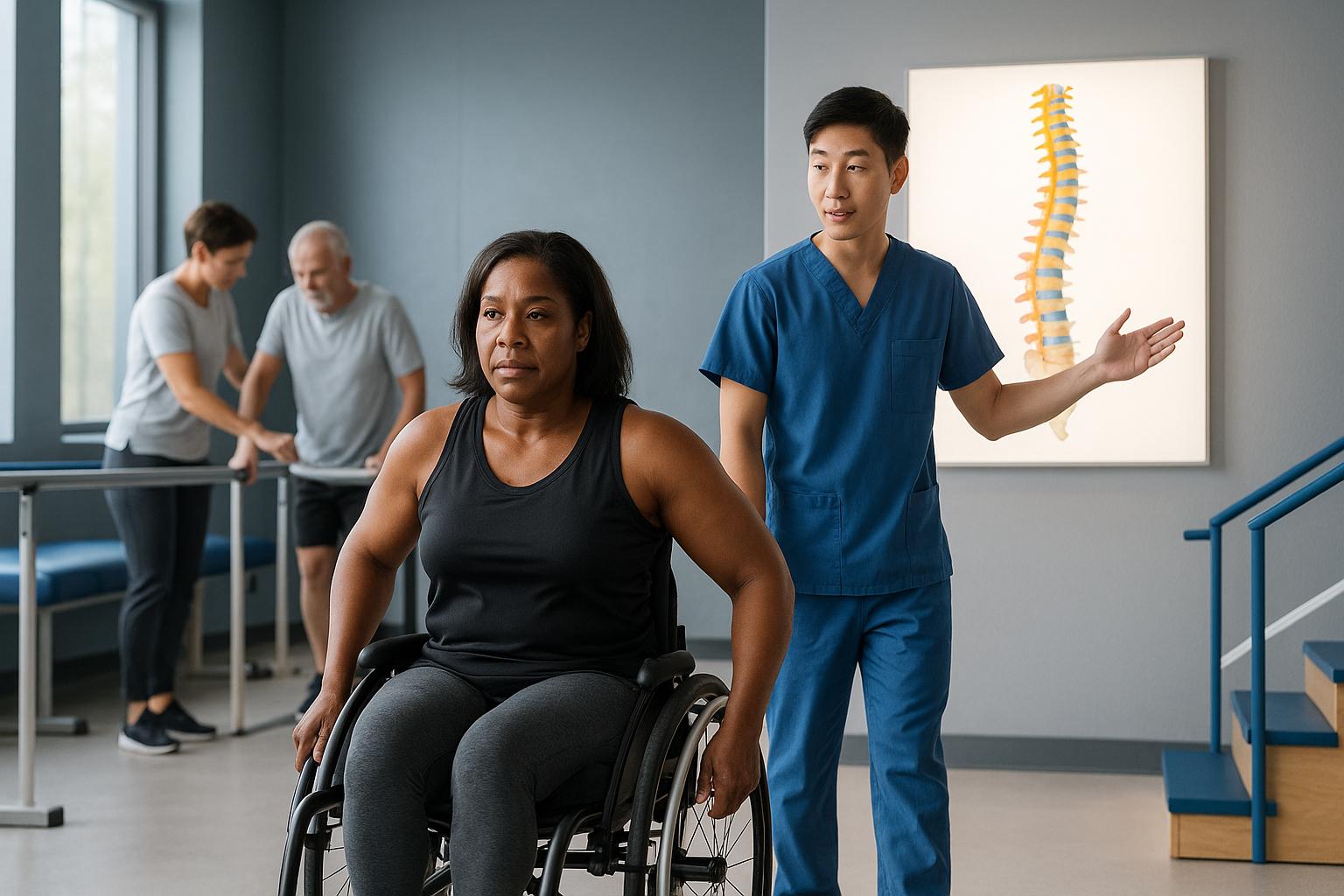
A T6 injury (mid-thoracic spinal cord injury affecting trunk function) is a pivotal level in SCI litigation. Individuals with T6 injuries typically retain full use of their arms and hands but lose voluntary control of the trunk and legs. This results in paraplegia, impaired balance, and increased risk of secondary complications.
Typical Outcomes After T6 Injury
- Loss of movement and sensation below the chest
- Impaired trunk stability, requiring specialized seating or bracing
- Independence in self-care with adaptive equipment, but wheelchair dependence for mobility
Recent advances, such as closed-loop vagus nerve stimulation, have shown promise in improving upper limb function in incomplete injuries, as demonstrated in a 2025 clinical trial. Additionally, protocol-driven respiratory management can reduce complications like atelectasis from 84% to 16% in two weeks, according to current guidelines.
Having worked with hundreds of spinal cord injury cases, I’ve found that accurate functional assessment and documentation are equally valuable for plaintiffs seeking fair compensation and defendants requiring objective analysis. I have seen cases where early and comprehensive rehabilitation planning is believed to support long-term independence, though direct evidence is limited.
ADLs and Vocational Capacity: Common Challenges
Activities of daily living (ADLs) such as dressing, bathing, and transferring are often achievable with adaptive strategies. However, vocational capacity is frequently limited by:
- Inability to perform physically demanding work
- Need for workplace accommodations
- Increased fatigue and risk of secondary health issues
In my practice, I have seen that early, aggressive rehabilitation and workplace planning can maximize independence, but permanent limitations must be clearly documented for legal proceedings. While some practitioners prefer to focus solely on the medical diagnosis, my experience has shown that integrating functional analysis—such as worksite simulations and ADL evaluations—provides more persuasive and actionable insight for litigants and legal professionals.
Translating Functional Limitations into Legal Evidence
The core value of a spinal cord injury expert witness lies in the ability to convert complex medical findings into clear, actionable legal evidence. I routinely translate ASIA scores, functional assessments, and therapy notes into language that juries and judges can understand.
From Medical Jargon to Jury-Friendly Language
I avoid technical jargon in reports and testimony, instead using analogies and plain English to explain, for example, how a T6 injury affects balance, bowel/bladder control, and the ability to live independently. This approach is supported by clinical guideline recommendations for effective communication in SCI cases.
Comparative expertise is particularly important in these situations. While some medical experts focus solely on diagnosis, my approach emphasizes comprehensive functional assessment that provides all parties—physicians, attorneys, and litigants—with clear, accessible documentation of impairments.
Vocational Assessments and Damages
Functional limitations must be linked to specific vocational restrictions. I provide detailed, evidence-based opinions on:
- Loss of earning capacity
- Need for retraining or job modification
- Projected future care costs
In my experience, the most persuasive expert opinions are those that connect medical facts directly to the legal standards for damages, using clear, defensible logic. These analyses are critical for helping the trier of fact understand the lived experience behind the injury, not simply its clinical definition.
Expert Witness Reports: Building Defensible SCI Claims
Expert witness reports are the linchpin of any SCI litigation. My reports are structured to withstand scrutiny, integrating the latest clinical guidelines and objective data.
Proving Prognosis and Life Care Needs
I substantiate prognosis using published research, such as the value of early decompression and advanced rehabilitation techniques. For example, I reference the recognized role of expert witness reports in substantiating damages and enhancing settlement value. I also incorporate evidence from recent clinical trials on functional recovery, ensuring that my recommendations are current.
Rehabilitation assessments frequently include recommendations for equipment and home modifications to enhance patient safety and independence.
- Projected medical and attendant care needs
- Equipment and home modification requirements
- Long-term risks and secondary complications
In my professional assessment, the ability to synthesize scientific evidence, detailed functional findings, and legal standards into a cohesive report is paramount. I routinely integrate new guideline recommendations and cite authoritative sources—such as the recent clinical SCI guidelines from IDHI Brain Injury Program—so every report presents the strongest possible foundation for legal argument.
Common Pitfalls in SCI Expert Testimony
Common errors include overreliance on outdated data, failure to link findings to legal standards, and lack of clarity in functional prognosis. I address these by:
- Citing up-to-date, high-authority sources
- Structuring opinions to answer specific legal questions
- Providing a clear, objective rationale for every conclusion
Having supported hundreds of legal teams nationwide, I have refined my process to deliver reports that are both clinically rigorous and legally robust. In my experience, balancing objectivity, technical detail, and plain language explanations sets my work apart and directly benefits litigants who need clear proof—not just complex medical theory.
Multi-State, Telemedicine & Local (Reno) Availability
I offer spinal cord injury expert witness and IME services across more than ten states, including Nevada, Texas, California, and others. My telemedicine model allows for rapid, secure evaluations and consultations, ensuring timely support for legal teams regardless of location.
States Covered and Licensure
I am licensed in Nevada, Texas, California, Colorado, Georgia, Idaho, Montana, North Dakota, Utah, Washington, Pennsylvania, and Kentucky (pending). This broad licensure enables me to provide expert analysis in both in-person and remote formats, tailored to the needs of each case.
Why Nationwide Reach Matters for Attorneys
Attorneys benefit from my ability to deliver consistent, research-based opinions across jurisdictions. My familiarity with state-specific standards and my experience testifying in multiple venues ensure that my reports are admissible and persuasive wherever your case is filed.
In my experience, the combination of multi-state licensure and telemedicine capacity is a decisive advantage for legal teams managing complex, multi-jurisdictional SCI claims.
My Approach to Patient Care and Expert Testimony
As a physician with dual degrees in medicine and law, I have developed a practice philosophy centered on precision, objectivity, and clarity—qualities that are indispensable in both clinical and legal settings. My triple board certification in Physical Medicine & Rehabilitation, Spinal Cord Injury Medicine, and Brain Injury Medicine ensures that my assessments are grounded in the most current standards of care and research.
In my experience, the most effective expert witness is one who can bridge the gap between complex medical realities and the evidentiary requirements of the courtroom. I have supported hundreds of legal teams nationwide, providing detailed, defensible reports that withstand rigorous cross-examination and Daubert challenges.
My training at leading institutions, including the University of Utah and Craig H. Neilsen Rehabilitation Hospital, has equipped me to deliver nuanced, research-based opinions that address both immediate and long-term functional limitations.
I am committed to ongoing professional development, regularly participating in national conferences and contributing to published research in the field of spinal cord injury. This dedication allows me to offer attorneys and litigants the highest level of expertise, whether the case involves a T6 injury or more complex, multi-level impairments.
Ultimately, my goal is to ensure that every evaluation and report I produce provides clear, actionable insights that support fair and accurate legal outcomes for all parties involved.
Spinal Cord Injury Expert Witness Services in Reno
Reno serves as the primary base for my spinal cord injury expert witness and independent medical evaluation (IME) services, offering a unique blend of local accessibility and national reach. As a physician based in Reno with licensure across multiple states—including Texas, California, and several others—I am able to provide both in-person and telemedicine consultations tailored to the needs of attorneys, physicians, and litigants throughout the region.
The Reno area presents distinct considerations for spinal cord injury cases, including access to specialized rehabilitation resources and the need for timely, objective expert analysis in high-stakes litigation. My practice is equipped to address these challenges by delivering comprehensive, guideline-driven assessments that reflect both the local healthcare landscape and the broader legal context.
Attorneys and medical professionals in Reno benefit from my ability to synthesize complex clinical data into clear, defensible legal evidence, while my telemedicine model ensures that even multi-jurisdictional cases receive prompt, consistent support. This approach is particularly valuable for legal teams managing cases that span state lines or require rapid turnaround for expert reports.
If your case requires an expert with both medical assessment and legal applications, learn more about Dr. Ellia’s medical-legal consulting and expert witness services for spinal cord injury, IMEs, and related litigation support.
If you are seeking a spinal cord injury expert witness in Reno or require a virtual second opinion, I invite you to connect with me to discuss how my dual medical-legal expertise can support your case.
Conclusion
A spinal cord injury expert witness provides the critical bridge between complex medical realities and the evidentiary standards required in court. In summary, my dual qualifications as a physician and attorney enable me to deliver objective, research-based analysis of spinal cord injury levels, such as T6 injuries, and their impact on functional limitations and prognosis.
This approach ensures that both medical management and legal documentation are addressed with precision, supporting fair and defensible outcomes for litigants and legal professionals alike.
Based in Reno, I provide specialized services across multiple states, including Texas, California, and Colorado, through both telemedicine and in-person consultations. I am willing to travel as an expert witness, offering flexibility that benefits those with complex, multi-jurisdictional cases.
I invite you to schedule a consultation TODAY to secure the most accurate medical assessment and ensure your legal documentation is comprehensive and defensible. Prompt action can significantly influence both recovery and case outcomes, providing peace of mind and confidence during challenging times.
This article is for educational purposes only and should not be used as a substitute for professional medical or legal advice, diagnosis, or treatment. Always seek the advice of your physician or qualified legal counsel with any questions you may have regarding a medical condition or legal matter. Never disregard professional advice or delay in seeking it because of something you have read in this article.
Frequently Asked Questions
What does a spinal cord injury expert witness do?
A spinal cord injury expert witness evaluates the level and completeness of injury, translates medical findings into clear legal evidence, and provides objective opinions on prognosis and functional limitations. This role is essential for substantiating damages, clarifying future care needs, and supporting both plaintiffs and defendants in litigation.
How can I access your spinal cord injury expertise regardless of my location?
I offer both telemedicine and in-person consultations across all states where I am licensed, including Texas, California, and Colorado. My multi-state licensure and willingness to travel ensure that individuals and legal teams can access specialized expertise and timely evaluations, no matter where they are located.
How does your combined medical and legal expertise benefit spinal cord injury cases?
My dual training as a physician and attorney allows me to produce reports that meet both clinical and legal standards. This ensures that medical documentation is thorough, objective, and directly addresses the legal questions at hand, which is crucial for defensible outcomes and effective case resolution.
About the Author
Dr. Ellia Ciammaichella, DO, JD, is a triple board-certified physician specializing in Physical Medicine & Rehabilitation, Spinal Cord Injury Medicine, and Brain Injury Medicine. With dual degrees in medicine and law, she offers a rare, multidisciplinary perspective that bridges clinical care and medico-legal expertise. Dr. Ciammaichella helps individuals recover from spinal cord injuries, traumatic brain injuries, and strokes—supporting not just physical rehabilitation but also the emotional and cognitive challenges of life after neurological trauma. As a respected independent medical examiner (IME) and expert witness, she is known for thorough, ethical evaluations and clear, courtroom-ready testimony. Through her writing, she advocates for patient-centered care, disability equity, and informed decision-making in both medical and legal settings.