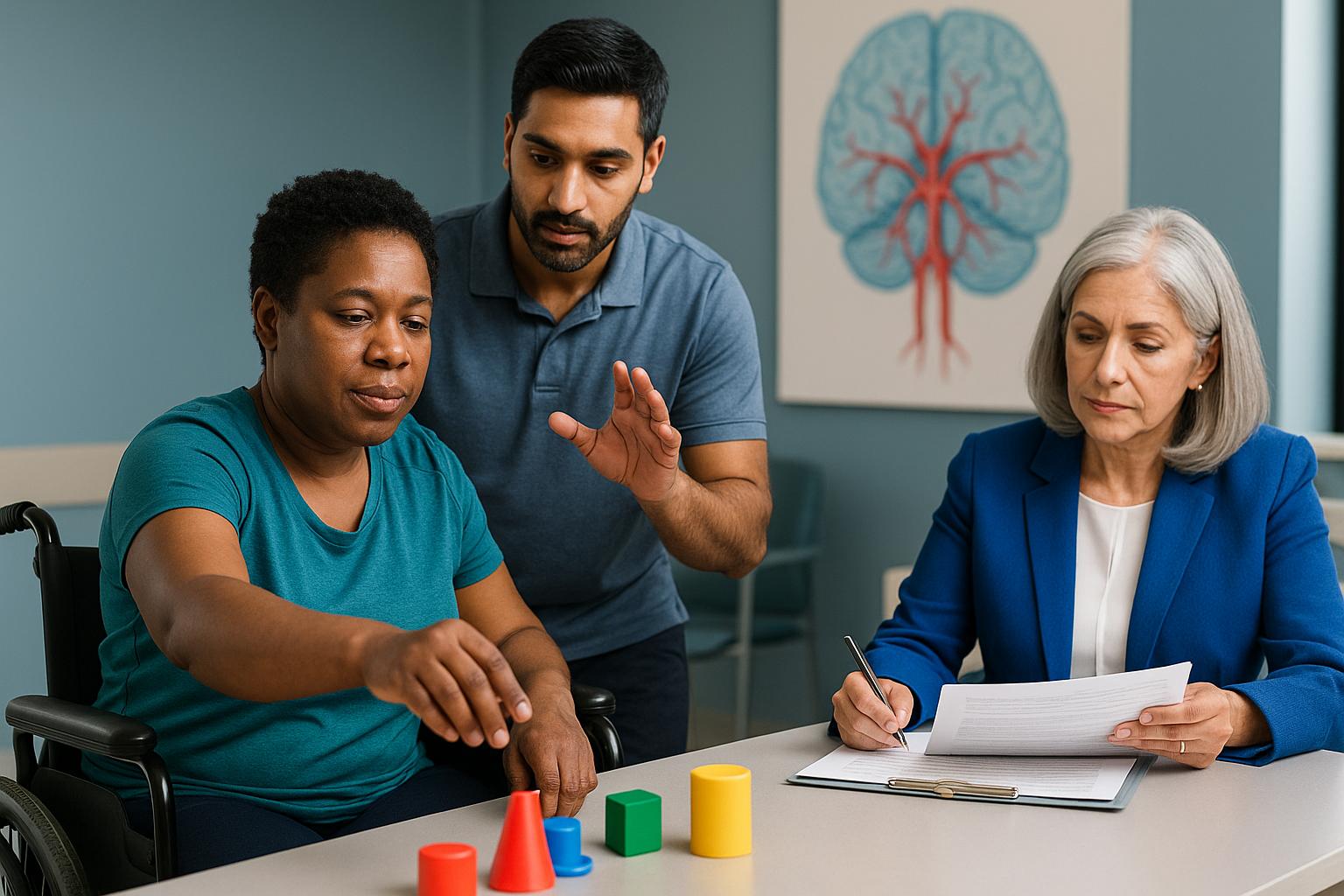
Stroke Imaging Basics for Attorneys: Understanding CT and MRI Evidence in Legal Cases
By Dr Ellia Ciammaichella, DO, JD, Triple Board-Certified in Physical Medicine & Rehabilitation, Spinal Cord Injury Medicine, and Brain Injury Medicine
Quick Insights
Stroke imaging Reno is the process of using CT or MRI scans to visualize brain injuries from stroke, clarify the timing and extent, and offer evidence for court cases. Research highlights both its strengths and limitations.
Key Takeaways
- CT is rapid and widely used for detecting acute bleeding or large strokes.
- MRI offers detailed views, aiding prognosis and legal arguments about timing or extent.
- Attorneys in Texas or California can access stroke imaging consultations via telemedicine.
- Imaging can clarify facts, but cannot always answer intent or standard-of-care questions—key for legal strategy.
Why It Matters
Stroke imaging is crucial for attorneys needing clear, unbiased answers about injury cause, timing, and prognosis. Current evidence suggests these scans help clarify complex cases, but understanding their limits ensures cases are built on solid, court-defensible facts, directly addressing the pain of unclear or unreliable expert reports.
Introduction
As a triple board-certified physician and attorney (DO/JD), I approach stroke imaging with a uniquely dual perspective, recognizing its pivotal role in both clinical medicine and legal proceedings.
Stroke imaging is the process of using advanced technologies—primarily CT scans (computed tomography) and MRI (magnetic resonance imaging)—to visualize, define, and document brain injuries caused by stroke.
In legal contexts, stroke imaging is foundational evidence, clarifying the timing, extent, and potential prognosis of neurological damage for courts and litigants. For attorneys in Reno or across my multi-state practice, understanding what stroke imaging can and cannot demonstrate is essential for building defensible, evidence-based arguments.
My experience in comprehensive case reviews has shown that imaging findings often guide both medical management and legal strategy; noninvasive imaging technologies can map brain adaptation and injury patterns, supporting objective expert opinions on causation, standard of care, and prognosis.
Accurate interpretation of stroke imaging analysis can make the difference between a clear, actionable report and an inconclusive expert opinion—precisely what your legal team needs.
Understanding Stroke Imaging: CT vs. MRI
Stroke imaging, as I apply it in both clinical and legal settings, fundamentally relies on two modalities: CT scans (computed tomography) and MRI (magnetic resonance imaging). Each offers distinct advantages and limitations, which are critical for attorneys to understand when evaluating evidence.
CT Scans: Overview and Legal Implications
CT scans are often the first imaging study performed in suspected stroke cases due to their speed and accessibility. They excel at detecting acute haemorrhage and large infarcts, which are essential for immediate management and for establishing the presence of significant brain injury in legal contexts.
In my experience, CT imaging is invaluable for rapid triage and for documenting the initial extent of injury, especially when time is of the essence in both medical and legal investigations.
From my perspective as a triple board-certified DO/JD, one key value of CT imaging is the ability to provide time-stamped evidence that can be independently verified by both medical and legal professionals. This supports objectivity in court, particularly in cases where rapid clinical intervention or causation is questioned.
Recent research demonstrates that cardiac CT is emerging as a tool for identifying cardioembolic sources of ischemic stroke, expanding its utility beyond traditional applications and providing attorneys with more comprehensive evidence for causation analysis.
Some studies suggest that imaging findings can inform rehabilitation strategies, potentially leading to modest improvements in outcomes; therefore, interpreting CT findings should be approached cautiously when considering long-term prognosis.
MRI: Advanced Insights and Limitations
MRI provides superior detail, particularly for small or early infarcts, and is highly sensitive to changes in brain tissue. This level of detail is crucial when the timing or subtlety of injury is in dispute.
I have found that advanced MRI techniques, such as diffusion-weighted imaging, can clarify the age of a lesion, which is often pivotal in cases where the timing of injury is contested.
In my 15+ years of practice evaluating individuals with spinal cord and brain injuries, I’ve found that detailed functional assessment, beyond basic diagnosis, is essential for accurately delineating damages in legal proceedings.
Advanced MRI methods, such as amide proton transfer imaging, now allow noninvasive detection of pH changes in post-stroke tissue, which may refine clinical protocols and provide nuanced evidence for prognosis.
Systematic review findings indicate that while MRI can enhance stroke recovery assessment, the improvement in outcomes is modest, underscoring the need for careful interpretation in court.
Comparison Table: CT vs. MRI at a Glance
- CT: Fast, widely available, excellent for acute bleeding, less sensitive for small/early strokes.
- MRI: Detailed, sensitive for early/small infarcts, better for timing, longer acquisition, less available in emergencies.
While some medical experts focus solely on diagnosis, my approach emphasizes comprehensive functional assessment that provides all parties—physicians, attorneys, and litigants—with clear, accessible documentation of impairments. In my dual role, I emphasize that the choice between CT and MRI should be guided by the specific legal question—whether it is the presence, timing, or extent of injury that is most relevant.
What Stroke Imaging Can—and Cannot—Show
Stroke imaging analysis is a powerful tool for visualizing brain injury, but it is not infallible. I routinely explain to attorneys that imaging can clarify certain facts while leaving others unresolved.
Detecting Acute Injury
Both CT and MRI can confirm the presence of acute brain injury, delineate the affected territory, and, in some cases, suggest the likely cause. For example, MRI can reveal small infarcts missed by CT, and advanced imaging can identify metabolic changes that inform prognosis.
In my comprehensive case reviews, I have seen imaging findings serve as objective anchors for expert opinions on causation and standard of care.
Recent studies highlight that advanced MRI techniques, such as amide proton transfer, enable noninvasive detection of pH changes in post-stroke tissue, which may be relevant for predicting tissue viability and long-term outcomes.
Limitations: Beyond the Images
However, imaging cannot always determine the precise timing of injury, the exact mechanism, or the intent behind clinical decisions. It is critical for legal teams to recognize that imaging findings must be interpreted within the broader clinical context. I have observed that overreliance on imaging alone can lead to misinterpretation of causation or prognosis.
In my dual medical-legal role, I frequently encounter cases where attorneys expect imaging to provide definitive answers, but these expectations must be tempered with an understanding of both the science and its limits.
Noninvasive imaging technologies can map brain adaptation after stroke, but they do not capture every aspect of functional recovery or the nuances of individual cases.
When to Seek Medical Attention
If a litigant exhibits sudden weakness, loss of speech, or severe headache, immediate evaluation by a physician is warranted to rule out an acute stroke.
The Role of Imaging in Prognosis and Legal Cases
Imaging plays a central role in forming expert opinions on prognosis, yet its predictive value has boundaries. In my practice, I integrate imaging findings with clinical data to provide attorneys with balanced, evidence-based assessments.
Prognostic Value: What Can Be Predicted?
Imaging features, such as the size and location of infarcts, can help stratify prognosis and guide therapy. For instance, research shows that imaging can assist in predicting outcomes for medium vessel occlusion strokes and inform decisions about reperfusion therapies. I have found that imaging is particularly useful for estimating the likelihood of functional recovery, which is often a key issue in damage assessment.
From my unique perspective with both medical and legal training, I can translate complex medical findings into precise documentation that clearly establishes functional limitations for both plaintiff and defense teams.
Randomized controlled trials further confirm that while imaging supports care pathways, the improvement in ultimate functional outcomes is incremental rather than absolute, which is a vital context for legal arguments.
Meta-analyses indicate that multidisciplinary stroke teams, supported by imaging, are associated with improved functional outcomes and reduced mortality, reinforcing the value of imaging in both clinical and legal settings.
Limits of Prognosis in the Legal Setting
Despite its strengths, imaging cannot guarantee specific outcomes. I caution attorneys that prognostic estimates based solely on imaging may not account for individual variability or rehabilitation potential. Imaging should be one component of a comprehensive case review, not the sole determinant of damages or future care needs.
Randomized controlled trials have shown that while imaging features can inform prognosis, the translation to long-term outcomes is complex and must be contextualized within the totality of medical evidence.
Expert Case Review: Practical Insights
My approach to stroke imaging analysis in legal cases is grounded in objectivity and thoroughness. I conduct comprehensive case reviews, integrating imaging findings with medical record reviews to provide expert opinions on causation, standard of care, and prognosis.
Having worked with hundreds of spinal cord injury and traumatic brain injury cases, I’ve found that accurate functional assessment and documentation are equally valuable for plaintiffs seeking fair compensation and defendants requiring objective analysis.
The dual credentialing as both a physician and attorney allows me to clarify the limits of imaging in a way that is both court-defensible and meaningful for all parties.
Multi-State Analysis in Practice
Given my licensure across multiple states, I am familiar with jurisdictional nuances that may affect the admissibility and interpretation of imaging evidence. I have worked with both defense and plaintiff teams, ensuring that my analysis is fair, balanced, and tailored to the specific legal context.
The evidence base in stroke rehabilitation is limited by methodological biases, which I address by transparently discussing the strengths and weaknesses of the imaging studies I review. This transparency is essential in states with differing legal standards or expectations regarding imaging admissibility.
Sample Approaches to Imaging Testimony
When providing expert witness testimony, I translate complex imaging findings into accessible language for courts and litigants. My dual qualification as a physician and attorney allows me to bridge the gap between medical detail and legal relevance, ensuring that my opinions are both scientifically rigorous and legally defensible.
From my perspective, effective case support means clearly outlining what imaging can and cannot demonstrate and delineating damages objectively for all parties involved. This approach promotes fair, unbiased outcomes and strengthens the evidentiary foundation for legal strategy.
If you’re interested in understanding how medical-legal assessment and expert witness services in stroke imaging can directly impact your case, I offer a unique perspective that integrates both rigorous clinical detail and legal clarity.
My Approach to Patient Care and Expert Analysis
As a physician with dual credentials in medicine and law, my approach to stroke imaging is grounded in objectivity, precision, and a commitment to clarity for both medical and legal audiences. I recognize that attorneys and litigants require more than just technical findings—they need actionable, court-defensible insights that withstand scrutiny.
My triple board-certification in Physical Medicine & Rehabilitation, Spinal Cord Injury Medicine, and Brain Injury Medicine enables me to provide comprehensive, nuanced evaluations that go beyond surface-level interpretations. I integrate advanced imaging findings with detailed functional assessments, ensuring that every report I generate is both scientifically rigorous and legally relevant.
In my practice, I emphasize transparent communication and evidence-based analysis. Whether supporting plaintiff or defense teams, I strive to clarify the strengths and limitations of stroke imaging, always contextualizing findings within the broader clinical and legal framework.
Ultimately, my goal is to empower legal professionals with the knowledge and confidence to navigate complex imaging evidence, supporting fair and accurate outcomes in every case.
Stroke Imaging Expertise in Reno
As a physician based in Reno, I am uniquely positioned to serve the local community with advanced stroke imaging analysis and expert witness services. Reno’s diverse population and regional healthcare infrastructure present distinct considerations for both medical assessment and legal casework.
Environmental factors such as climate and altitude may influence health; thus, it’s important to consider local patient demographics and regional care protocols when planning patient care.
My practice serves as a hub for both in-person evaluations and telemedicine consultations, supporting attorneys, physicians, and litigants throughout Reno and across my multi-state licensure footprint.
I offer specialized expertise in integrating imaging evidence with functional assessments, providing clear, actionable reports for local legal teams. My dual qualification as a physician and attorney ensures that every analysis is tailored to the specific needs of Reno’s legal and medical communities.
If you are an attorney, claims adjuster, or physician in Reno seeking authoritative stroke imaging consultation or expert witness support, I invite you to schedule a virtual second opinion or request an IME consultation. My practice is dedicated to delivering clarity and confidence for your most complex cases.
Conclusion
Stroke imaging is a cornerstone in both medical management and legal documentation of brain injuries, providing objective evidence for causation, timing, and prognosis. In summary, CT and MRI each offer distinct advantages—CT for rapid assessment and MRI for detailed analysis—yet both have limitations that require careful interpretation in court.
My dual qualifications as a triple board-certified physician and attorney enable me to deliver comprehensive case reviews, integrating stroke imaging analysis with expert opinions on causation, standard of care, and prognosis. Proper imaging and documentation not only guide clinical care but also strengthen legal arguments, ensuring clarity for all parties involved.
Based in Reno, I provide specialized services across multiple states, including Texas, California, and Colorado, as well as others, through both telemedicine and in-person consultations. I am willing to travel as an expert witness, offering flexibility that benefits clients with complex, multi-jurisdictional cases.
I invite you to schedule a consultation TODAY to optimize your medical recovery outcomes and secure robust legal documentation. Prompt action can make a critical difference in both health and legal results, offering you peace of mind and confidence during challenging times. For more on evidence standards in stroke imaging, see this overview of clinical study protocols.
This article is for educational purposes only and should not be used as a substitute for professional medical advice, diagnosis, or treatment. Always seek the advice of your physician or other qualified healthcare provider with any questions you may have regarding a medical condition or treatment options. Never disregard professional medical advice or delay in seeking it because of something you have read in this article.
Frequently Asked Questions
What can stroke imaging show in a legal case?
Stroke imaging can objectively demonstrate the presence, timing, and extent of brain injury, supporting expert opinions on causation and prognosis. However, it cannot always determine the exact mechanism or intent behind clinical decisions. Imaging findings must be interpreted within the broader clinical and legal context to ensure accurate, court-defensible conclusions.
How can I access your stroke imaging expertise regardless of my location?
I offer stroke imaging analysis and expert consultations via telemedicine across all states where I am licensed, including Texas, California, and Colorado. For complex cases, I am available for in-person evaluations and expert witness testimony nationwide. This multi-state practice model ensures that attorneys and litigants receive timely, specialized support wherever they are located.
How does your combined medical and legal expertise benefit attorneys handling stroke cases?
My dual training as a physician and attorney allows me to translate complex imaging findings into clear, actionable reports tailored for legal proceedings. I provide comprehensive case reviews, integrating medical record analysis with expert opinions on causation, standard of care, and prognosis. This approach ensures that attorneys receive objective, evidence-based insights critical for both plaintiff and defense strategies.
About the Author
Dr. Ellia Ciammaichella, DO, JD, is a triple board-certified physician specializing in Physical Medicine & Rehabilitation, Spinal Cord Injury Medicine, and Brain Injury Medicine. With dual degrees in medicine and law, she offers a rare, multidisciplinary perspective that bridges clinical care and medico-legal expertise. Dr. Ciammaichella helps individuals recover from spinal cord injuries, traumatic brain injuries, and strokes—supporting not just physical rehabilitation but also the emotional and cognitive challenges of life after neurological trauma. As a respected independent medical examiner (IME) and expert witness, she is known for thorough, ethical evaluations and clear, courtroom-ready testimony. Through her writing, she advocates for patient-centered care, disability equity, and informed decision-making in both medical and legal settings.
Medical Expert Services
Dr. Ciammaichella provides expert medical consulting for attorneys handling complex injury cases: