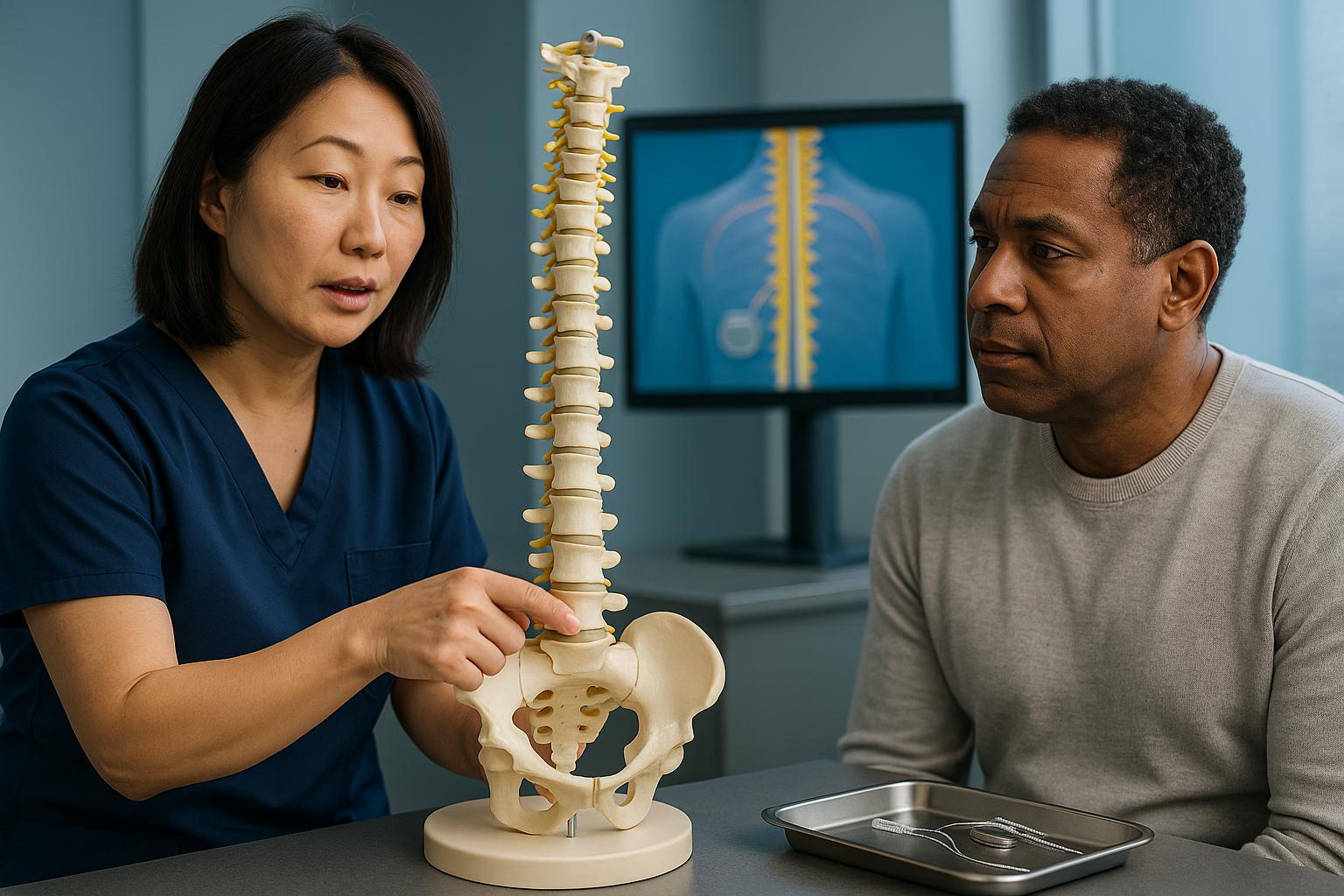
Recognizing T6 Spinal Cord Injury Symptoms: Mid-Chest Paralysis, Autonomic Dysfunction, and Expert Rehabilitation Strategies
By Dr. Ellia Ciammaichella, DO, JD, Triple Board-Certified in PM&R, Spinal Cord Injury Medicine, and Brain Injury Medicine
Quick Insights
T6 spinal cord symptoms often include paralysis and loss of sensation from the mid-chest downward, affecting mobility, organ control, and blood pressure regulation. Immediate care is essential; long-term needs include rehabilitation and legal documentation.
Key Takeaways
- Loss of movement and feeling below mid-chest is common after T6 injury.
- Muscle weakness and spasticity often lead to postural and trunk control challenges.
- Bowel, bladder, or blood pressure problems may develop after spinal cord trauma.
- Access to expert teleconsults for spinal cord injury symptoms varies by state, depending on local regulations and reimbursement policies.
Why It Matters
Understanding T6 spinal cord symptoms enables early intervention, protects client rights, and supports evidence-based legal decisions. For attorneys building defensible cases, clear symptom recognition resolves confusion and ensures accurate, research-backed reports for clients facing life-changing challenges.
Introduction
As a physician triple board-certified in physical medicine and rehabilitation, spinal cord injury medicine, and brain injury medicine—and as a Juris Doctor—I approach T6 spinal cord symptoms with a dual lens: clinical precision and legal clarity. This dual expertise is further detailed in my professional bio, highlighting my DO and JD qualifications.
T6 spinal cord symptoms are defined as the loss of movement and sensation from the mid-chest downward, typically resulting in paraplegia, impaired trunk control, and disruption of autonomic functions such as bladder, bowel, and blood pressure regulation. These symptoms not only dictate urgent medical intervention but also shape the trajectory of rehabilitation and the legal assessment of damages.
My background enables me to objectively analyze both the functional and legal ramifications of mid-thoracic injury patterns, ensuring that complex clinical findings are translated into defensible, evidence-based reports. Paralysis and loss of sensation below the mid-chest are hallmark features, underscoring the need for comprehensive documentation in both treatment and legal contexts.
Understanding these patterns is critical for litigants, clinicians, and insurers seeking clarity in cases where precise symptom delineation determines outcomes.
What Is a T6 Spinal Cord Injury?
A T6 spinal cord injury refers to damage at the sixth thoracic vertebral level, which is situated approximately at the mid-chest. This anatomical region is critical because it marks the transition between upper and lower trunk innervation. The spinal cord at T6 transmits motor and sensory signals to and from the brain for the trunk, abdomen, and lower extremities.
The Anatomy of the T6 Level
The T6 vertebra is part of the thoracic spine, which consists of twelve segments. At this level, the spinal cord controls the muscles of the trunk and abdominal wall, as well as the lower limbs. Injury here disrupts both voluntary movement and sensation below the mid-chest. In my experience, understanding the precise anatomical boundaries of T6 is essential for accurate diagnosis and prognosis.
How Injuries Occur
T6 injuries most commonly result from high-energy trauma, such as motor vehicle collisions or falls. Less frequently, tumors, infections, or degenerative diseases may compromise the spinal cord at this level. The mechanism of injury determines the extent of neurological impairment and guides both acute management and long-term rehabilitation.
Having established the anatomical and etiological context, I will now delineate the specific symptom patterns that define T6 spinal cord injuries.
Recognizing T6 Spinal Cord Symptoms
T6 spinal cord symptoms are characterized by a distinct constellation of motor, sensory, and autonomic deficits. The hallmark is paraplegia—paralysis and loss of sensation below the mid-chest. Spinal cord injury symptoms are clinically significant and can have medico-legal implications, depending on individual case details.
- Loss of voluntary movement below the mid-chest
- Loss or alteration of sensation (touch, pain, temperature) below T6
- Trunk and abdominal muscle weakness
- Bowel and bladder dysfunction
- Blood pressure instability
In my dual role as a physician and legal consultant, I have found that early recognition and precise documentation of these symptoms are critical for both optimal patient outcomes and defensible legal reports.
Motor Symptoms
Motor deficits after T6 injury include complete or partial paralysis of the lower trunk and legs. Muscle weakness, spasticity (involuntary muscle stiffness), and abnormal reflexes are common. These impairments compromise balance, posture, and mobility, often necessitating wheelchair use.
Clinical experience indicates that detailed functional assessments, beyond basic diagnosis, can aid in accurately delineating damages in legal proceedings. I have observed that spasticity can be particularly disabling, requiring targeted interventions for management of the thoracic.
Sensory Symptoms
Sensory loss typically extends from the mid-chest downward, affecting the ability to perceive touch, pain, and temperature. This loss increases the risk of pressure injuries and complicates daily activities. Regular skin checks and adaptive strategies are recommended to mitigate risks associated with spinal cord injuries.
When to Seek Medical Attention
Seek immediate evaluation by a physician if you experience:
- Sudden paralysis or loss of sensation below the chest
- Loss of bladder or bowel control
- Severe, unexplained headache with high blood pressure
Having outlined the primary symptoms, I will next address the specific motor and sensory deficit patterns unique to mid-thoracic injuries.
Key Motor and Sensory Deficits in Mid-Thoracic Injury Patterns
T6 injuries produce a predictable pattern of neurologic deficits. The loss of both motor and sensory function below the injury is standard, but the precise distribution and severity can vary.
Typical Patterns in T6 SCI
A complete T6 injury results in:
- Total loss of voluntary movement and sensation below the mid-chest
- Trunk muscle weakness, leading to postural instability
- Preservation of arm and hand function
In my experience, trunk control deficits are often underestimated but have profound effects on independence and safety. These patterns are well-documented in clinical literature, with thoracic SCI symptom patterns consistently including paraplegia and trunk weakness.
Comparatively, during expert evaluations, I focus not only on what functions are lost but also on what is preserved, as this nuance critically affects both daily life and quantifying damages for legal purposes. From my perspective as a triple board-certified spinal cord injury specialist, the ability to differentiate between complete and incomplete injuries at this level shapes both rehabilitation strategies and the documentation required for claims or defenses.
Comparing T6 to Other Levels
Unlike cervical injuries, T6 injuries spare arm and hand function. Compared to lower thoracic or lumbar injuries, T6 lesions more significantly affect trunk stability and autonomic regulation. This distinction is crucial for both rehabilitation planning and legal causation analysis.
For example, SCI symptom overview and incidence data confirm that mid-thoracic injuries uniquely disrupt trunk and abdominal muscle control.
With these patterns established, I will now discuss the autonomic and secondary complications that frequently arise after T6 SCI.
Autonomic and Secondary Complications After T6 SCI
Autonomic dysfunction is a defining feature of T6 spinal cord injuries. Disruption of the sympathetic nervous system at this level leads to a range of potentially life-threatening complications.
Autonomic Dysreflexia
Autonomic dysreflexia is a medical emergency characterized by sudden, severe hypertension and headache. It occurs in individuals with injuries at or above T6. Prompt recognition and intervention are essential, as untreated episodes can result in stroke or death.
I educate all clients and their caregivers about this risk, emphasizing the need for immediate blood pressure monitoring during acute episodes. Autonomic dysreflexia in T6 SCI is well-documented and requires ongoing vigilance.
Certain complications of spinal cord injuries can lead to increased care needs and risk of hospitalization, factors that may be considered in legal contexts.
Accurate functional assessment and documentation are important for both plaintiffs seeking fair compensation and defendants requiring objective analysis in spinal cord injury cases, as indicated by expert opinions.
Bowel, Bladder, and Vascular Issues
T6 injuries disrupt normal bowel and bladder control, leading to incontinence or retention. Vascular complications, such as orthostatic hypotension (dangerous drops in blood pressure upon standing), are also common.
Early intervention and patient education are recommended to prevent secondary complications of spinal cord injury. Bowel/bladder/vascular complications are among the most significant contributors to morbidity in this population.
Understanding these complications is essential for both clinical management and legal documentation, as they directly impact quality of life and long-term care needs.
Diagnosis, Evaluation, and Rehabilitation Strategies
Accurate diagnosis and comprehensive evaluation are foundational to effective management of T6 spinal cord injuries. I employ a combination of neurological examination, imaging, and functional assessments to delineate the extent of injury.
Clinical Assessment
A thorough neurological exam assesses motor strength, sensory levels, and reflexes. Imaging studies, such as MRI and CT, confirm the location and severity of the lesion. In my experience, early and precise assessment enables timely intervention and optimizes outcomes. Rehabilitation and outcome optimization research supports the value of multidisciplinary evaluation.
From my unique perspective with both medical and legal training, I can translate complex medical findings into precise documentation that clearly establishes functional limitations for both plaintiff and defense teams.
While some medical experts focus solely on diagnosis, my approach emphasizes comprehensive functional assessment that provides all parties—physicians, attorneys, and litigants—with clear, accessible documentation of impairments.
Rehabilitation and Prognosis
Rehabilitation focuses on maximizing independence, preventing complications, and improving quality of life. Interventions include physical therapy, occupational therapy, and adaptive equipment. I have found that early, comprehensive rehabilitation is associated with better functional outcomes and reduced long-term disability.
Early intervention and documentation for legal/clinical outcomes are critical for both clinical and legal success. With diagnosis and rehabilitation addressed, I will now explore why symptom patterns are so significant in both clinical and legal contexts.
Why Symptom Patterns Matter: Clinical & Legal Insights
The symptom patterns of T6 spinal cord injuries have significant implications for medical management and can impact legal proceedings, depending on individual case details.
Medical Implications
Accurate symptom identification guides treatment, rehabilitation, and prognosis. It also informs risk assessment for complications such as autonomic dysreflexia and pressure injuries. In my practice, I ensure that all findings are meticulously documented to support both clinical care and future legal needs.
Legal Case Scenarios
Precise symptom delineation can be important for damage assessment, causation analysis, and compensation claims in legal contexts, as indicated by expert opinions. Expert analysis can translate complex medical findings into accessible, defensible reports for both plaintiffs and defendants, as indicated by expert opinions.
For those seeking both reliable medical assessment and expertise in legal applications, I offer a full range of medical-legal evaluation and expert witness services, combining advanced clinical knowledge with legal insight.
Clarity and accuracy in symptom documentation can influence case resolution, as indicated by expert opinions. Holding both DO and JD degrees can provide a unique perspective in bridging medical and legal domains, as indicated by expert opinions.
Having established the clinical and legal significance of symptom patterns, I will next outline the scope of expert services available nationwide.
My Approach to Patient Care
Delivering care for individuals with T6 spinal cord symptoms requires a meticulous, evidence-based approach that integrates both clinical and legal perspectives. As a triple board-certified physician in physical medicine and rehabilitation, spinal cord injury medicine, and brain injury medicine, I am committed to ensuring that every assessment is comprehensive and defensible.
My dual training as a Doctor of Osteopathic Medicine and Juris Doctor allows me to bridge the gap between complex medical findings and the legal standards required for accurate damage assessment. I prioritize clear, objective documentation, which is essential for both optimal patient outcomes and robust legal analysis.
In my practice, I emphasize early recognition of symptom patterns, thorough functional evaluations, and the use of peer-reviewed research to support every clinical and medico-legal conclusion.
I have consulted on hundreds of spinal cord injury cases across multiple states, providing both rehabilitation guidance and expert witness services. My goal is to empower clients, attorneys, and fellow physicians with the clarity and precision needed to navigate the signifigant challenges posed by mid-thoracic injury patterns.
If you are seeking a physician who combines clinical expertise with legal acumen, I invite you to connect for a virtual second opinion or request an independent medical evaluation tailored to your needs.
T6 Spinal Cord Symptoms and Expert Services in Reno
As a physician based in Reno, I recognize the unique needs of individuals and legal professionals navigating T6 spinal cord symptoms in this region. Reno’s diverse population and active lifestyle can present distinct challenges for those affected by mid-thoracic injury patterns, particularly when it comes to mobility, accessibility, and long-term rehabilitation planning.
My Reno-based practice serves as a hub for both advanced medical assessment and legal consulting, offering in-person evaluations and telemedicine services to clients throughout Nevada and across my multi-state licensure footprint. I routinely collaborate with local physicians, attorneys, and claims adjusters to provide objective, research-backed documentation that supports both clinical care and legal proceedings.
Given Reno’s proximity to major trauma centers and its growing legal community, timely access to a dual-degreed, triple board-certified spinal cord injury specialist is invaluable. Whether you are a patient, litigant, or attorney seeking expert analysis, my practice delivers the clarity and precision required for both medical management and legal casework.
To schedule a consultation or discuss your case in Reno or via telemedicine, please reach out—my expertise is accessible locally and throughout all licensed states.
Conclusion
T6 spinal cord symptoms involve paralysis and loss of sensation from the mid-chest downward, profoundly affecting mobility, organ control, and blood pressure regulation. In summary, timely recognition and intervention are essential for optimal medical recovery, while precise documentation is critical for legal clarity and defensible casework.
My dual qualifications as a triple board-certified physician and Juris Doctor uniquely position me to address both the clinical and legal complexities of these injuries, ensuring that every assessment is both medically sound and legally robust.
Based in Reno, I provide specialized services across multiple states, including Texas, California, and Colorado, as well as others, through both telemedicine and in-person consultations. I am willing to travel as an expert witness, offering flexibility that benefits clients with complex, multi-jurisdictional cases.
I invite you to schedule a consultation today to secure the best possible medical recovery and ensure comprehensive legal documentation. Prompt action not only improves health outcomes but also strengthens your legal position, providing peace of mind and confidence during challenging times.
This article is for educational purposes only and should not be used as a substitute for professional medical advice, diagnosis, or treatment. Always seek the advice of your physician or other qualified healthcare provider with any questions you may have regarding a medical condition or treatment options. Never disregard professional medical advice or delay in seeking it because of something you have read in this article.
Frequently Asked Questions
What are the most common T6 spinal cord symptoms?
The most common T6 spinal cord symptoms include paralysis and loss of sensation below the mid-chest, muscle weakness, spasticity, and difficulties with bowel, bladder, and blood pressure regulation. These symptoms often require immediate medical attention and long-term rehabilitation. Early intervention and comprehensive care are crucial for maximizing function and quality of life.
How can I access your spinal cord injury expertise regardless of my location?
You can access my spinal cord injury expertise through telemedicine consultations and in-person evaluations across all states where I am licensed, including Texas, California, and Colorado. I am also available to travel for expert witness services or complex assessments, ensuring that clients nationwide receive specialized, research-driven care and documentation.
How does your combined medical and legal expertise benefit spinal cord injury cases?
My dual training as a physician and attorney allows me to provide objective, defensible assessments that clarify both medical and legal aspects of spinal cord injuries. This approach ensures that all findings are thoroughly documented, supporting fair damage assessment and clear communication for both plaintiffs and defendants in legal proceedings.
About the Author
Dr. Ellia Ciammaichella, DO, JD, is a triple board-certified physician specializing in Physical Medicine & Rehabilitation, Spinal Cord Injury Medicine, and Brain Injury Medicine. With dual degrees in medicine and law, she offers a rare, multidisciplinary perspective that bridges clinical care and medico-legal expertise. Dr. Ciammaichella helps individuals recover from spinal cord injuries, traumatic brain injuries, and strokes—supporting not just physical rehabilitation but also the emotional and cognitive challenges of life after neurological trauma. As a respected independent medical examiner (IME) and expert witness, she is known for thorough, ethical evaluations and clear, courtroom-ready testimony. Through her writing, she advocates for patient-centered care, disability equity, and informed decision-making in both medical and legal settings.