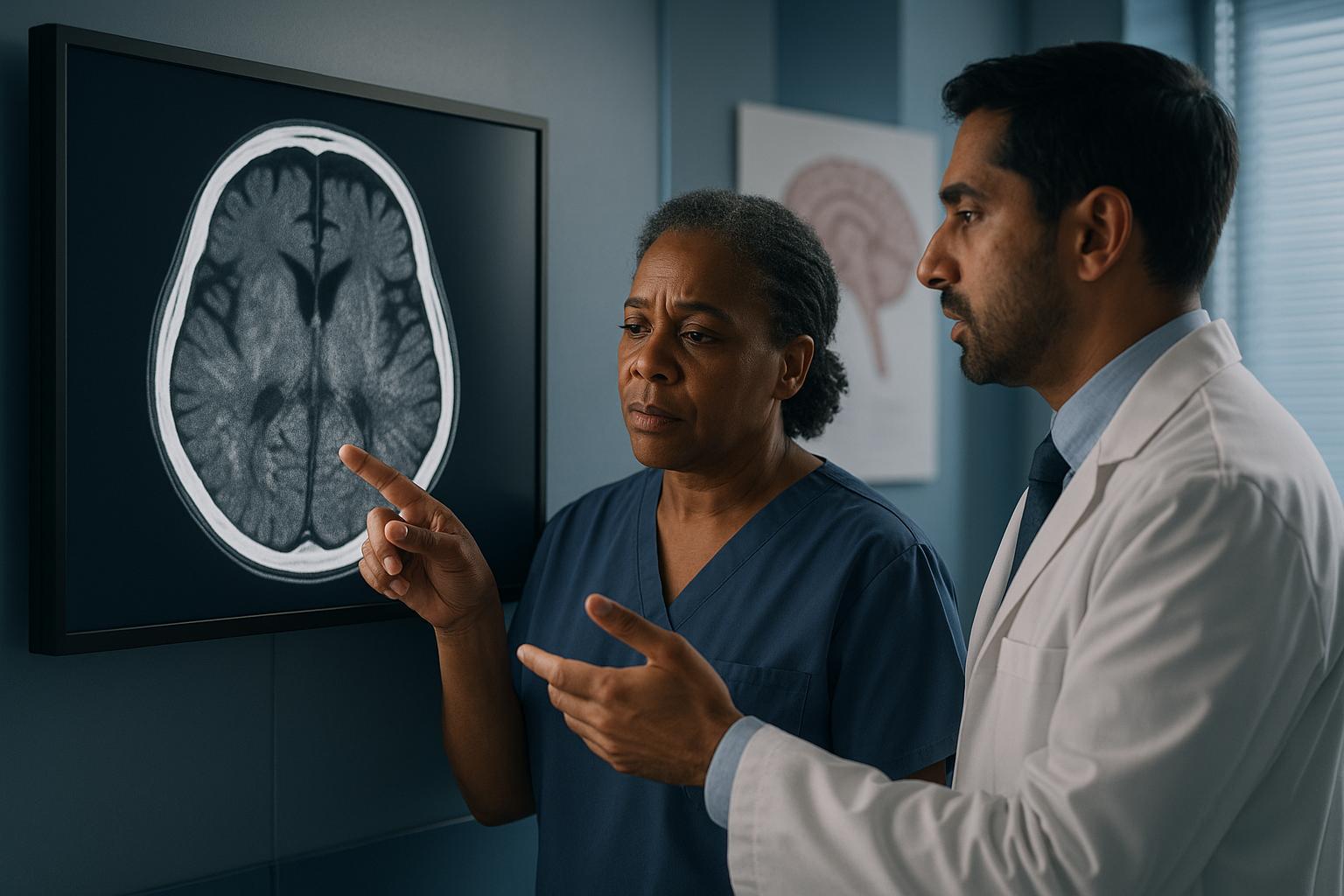
Emotional and Behavioral Changes After Traumatic Brain Injury
By Ellia Ciammaichella, DO, JD
Triple Board-Certified in Physical Medicine & Rehabilitation, Spinal Cord Injury Medicine, and Brain Injury Medicine
Quick Insights
TBI emotional changes involve shifts in mood, behavior, and stress responses caused by brain network disruption. Depression affects roughly 13% of people after traumatic brain injury, with twice the risk compared to those without head trauma. Post-traumatic stress disorder emerges in about 16% of civilian cases. These changes stem from altered brain connectivity, not personal weakness. Persistent mood shifts warrant medical evaluation to distinguish injury effects from other causes.
Key Takeaways
- Depression risk doubles after brain injury, yet mood disorders remain frequently underdiagnosed in rehabilitation settings.
- PTSD prevalence after brain injury varies widely, with studies reporting rates between 5.6% and 29.4% at different recovery intervals.
- Emotional maladjustment can persist up to 12 months post-injury; however, such difficulties may not be directly mediated by the brain injury itself.
- Neuroimaging studies have identified abnormal pre-frontal cortex function associated with depressive symptoms after head trauma.
Why It Matters
Emotional and behavioral shifts profoundly affect daily functioning, relationships, and return to work. Understanding these changes helps families recognize symptoms early and seek appropriate intervention. Documented mood disorders and PTSD can indicate functional impairments beyond physical disability, potentially supporting comprehensive damage assessments that reflect true quality-of-life impact.
Introduction
As a board-certified physician and attorney practicing medical-legal consulting, I evaluate how brain injuries alter emotional regulation and behavior in ways that profoundly affect daily life. For more on my qualifications, see the background of Ellia Ciammaichella, DO, JD.
TBI emotional changes involve shifts in mood, behavior, and stress responses caused by disrupted brain networks. These changes stem from altered neural connectivity, not personal weakness or character flaws. Depression affects roughly 13% of people after traumatic brain injury, with twice the risk compared to those without head trauma.
Research demonstrates that emotional and behavioral difficulties persist at 12 months post-injury, regardless of initial severity. Post-traumatic stress disorder emerges in about 16% of civilian cases. My dual training allows me to evaluate how these neuropsychiatric changes translate into functional impairment with both medical and legal significance.
Understanding these patterns helps families recognize symptoms early and supports comprehensive documentation of injury impact beyond physical disability. For those interested in detailed coding and classifications for traumatic brain injury diagnosis, see recent updates in the ICD-10 classification for traumatic brain injury.
Understanding Emotional Dysregulation After Brain Injury
Emotional dysregulation after brain injury involves disrupted control over mood responses, stress reactions, and behavioral impulses. These changes stem from damaged neural pathways that normally regulate emotional processing. Families may experience significant challenges understanding these symptoms, which can affect family dynamics and the overall care environment.
The brain’s frontal networks, which manage emotional control and social behavior, are particularly vulnerable to traumatic forces. When these circuits sustain damage, patients may experience sudden mood swings, irritability, or difficulty managing frustration in situations they previously handled easily. These shifts occur independently of conscious effort or willpower.
Research demonstrates that mood disorders remain frequently underdiagnosed in rehabilitation settings despite their prevalence. Many patients never receive a formal psychiatric evaluation during acute recovery. This gap in screening means emotional symptoms often go unrecognized until they significantly impair daily functioning or relationships.
Recognition matters because early intervention improves long-term adjustment. Families who understand these changes as medical symptoms rather than character defects can seek appropriate support and modify expectations during recovery.
Depression and Mood Disorders Following TBI
Depression represents one of the most common neuropsychiatric consequences of traumatic brain injury. Studies show a 13% incidence rate among more than 700,000 TBI participants, with affected individuals facing twice the risk compared to those without head trauma. These figures likely underestimate true prevalence given diagnostic challenges in this population.
Post-injury depression differs from typical major depressive disorder in several ways. Symptoms may include profound fatigue, cognitive slowing, and emotional blunting that overlap with direct brain injury effects. This overlap complicates diagnosis because standard depression screening tools may not distinguish injury-related symptoms from mood disorder symptoms.
Timing varies considerably across individuals. Some patients develop depressive symptoms within weeks of injury, while others experience a delayed onset months later as they confront persistent functional limitations. In medical-legal evaluations, I examine whether mood changes correlate temporally with the injury event and whether they persist despite physical recovery.
The functional impact extends beyond subjective distress. Depression after brain injury impairs rehabilitation participation, delays return to work, and strains family relationships. These secondary effects compound the primary injury’s impact on quality of life and independence.
Post-Traumatic Stress Disorder and Brain Injury
Post-traumatic stress disorder emerges as a distinct complication in many brain injury cases. Civilian populations show a pooled PTSD prevalence of approximately 16% following traumatic brain injury, though rates vary widely depending on injury circumstances and measurement timing.
The relationship between brain injury and PTSD presents unique diagnostic challenges. Traditional understanding suggested that loss of consciousness or amnesia for the traumatic event would prevent PTSD development.
Current evidence contradicts this assumption. Patients may develop PTSD symptoms even without explicit memory of the injury event, possibly through emotional memory pathways that remain intact despite cognitive impairment.
Research indicates that 12.2% of civilian TBI patients meet PTSD criteria at three months post-injury, with military populations showing substantially higher rates. This difference likely reflects both injury context and pre-existing risk factors rather than injury severity alone.
Literature examining PTSD after severe TBI remains limited, highlighting the need for diagnostic vigilance across all injury severities. In my evaluations, I assess whether intrusive symptoms, avoidance behaviors, and hyperarousal patterns align temporally with the injury and whether they persist beyond typical recovery timelines.
Behavioral Changes and Long-Term Adjustment
Behavioral changes after brain injury often prove more disabling than physical impairments. Patients may exhibit impulsivity, poor judgment, social inappropriateness, or reduced insight into their own limitations. These changes reflect damage to frontal lobe systems that govern executive function and behavioral control.
Family members frequently report that the injured person “isn’t the same” despite apparent physical recovery. This observation carries significant weight in functional assessments. Subtle personality shifts may not appear on standard neuropsychological testing yet profoundly affect employment capacity, relationship stability, and independent living skills.
Longitudinal data reveal that emotional and behavioral difficulties persist at 12 months post-injury regardless of initial severity classification. This persistence challenges the assumption that mild injuries produce only temporary symptoms. In medical-legal contexts, I evaluate whether documented behavioral changes align with known injury patterns and whether they limit specific functional domains.
The trajectory of behavioral recovery varies considerably. Some patients show gradual improvement with structured rehabilitation and environmental modifications. Others plateau with persistent deficits that require long-term support and accommodation. Predicting individual outcomes remains imprecise, making ongoing monitoring essential.
For attorneys and organizations seeking assistance with these complex evaluations, detailed information on medical-legal consulting services is available.
The Neuroscience Behind Emotional Changes
Modern neuroimaging reveals specific brain network disruptions underlying emotional symptoms after traumatic brain injury. Neuroimaging studies have identified abnormal prefrontal cortex function associated with depressive symptoms after head trauma.
The default mode network, which regulates self-referential thinking and emotional processing, shows consistent abnormalities in patients with post-injury depression. Disrupted connectivity in this network may explain why patients struggle with emotional regulation, motivation, and future planning even after physical symptoms resolve.
Diffuse axonal injury, caused by rotational forces during trauma, damages white matter tracts throughout the brain. These microscopic injuries may not appear on standard CT scans, yet disrupt communication between brain regions essential for emotional control. The distributed nature of this damage explains why emotional symptoms often seem disproportionate to visible structural injury.
Understanding these mechanisms helps explain symptom persistence and guides realistic expectations. When families recognize that emotional changes reflect measurable brain network disruption rather than personal weakness, they can approach recovery with appropriate support strategies and patience for gradual improvement.
How I Approach Emotional and Behavioral Assessment
Extensive experience in evaluating individuals with brain injuries has shown that emotional and behavioral changes often prove more disabling than physical impairments, yet they frequently go undocumented in standard medical records.
From my unique perspective with both medical and legal training, I assess whether mood disorders, PTSD symptoms, and behavioral shifts align temporally with the injury event and persist beyond typical recovery timelines. This analysis requires examining resting-state brain connectivity patterns, longitudinal symptom trajectories, and functional limitations across multiple life domains—not just subjective complaints.
While some medical experts focus solely on visible structural damage, my approach emphasizes a comprehensive neuropsychiatric assessment that provides attorneys, physicians, and litigants with clear documentation of how TBI’s emotional changes translate into measurable functional impairment.
I work equally with plaintiff and defense teams to establish whether documented behavioral shifts reflect true injury sequelae or alternative explanations. Individual outcomes vary considerably, making objective analysis essential for fair damage assessment in legal proceedings.
Conclusion
In summary, TBI emotional changes reflect measurable disruptions in brain networks that regulate mood, behavior, and stress responses. Research demonstrates that emotional and behavioral difficulties persist at 12 months post-injury, regardless of initial severity. Depression affects roughly 13% of individuals after traumatic brain injury, while PTSD emerges in approximately 16% of civilian cases, with timing varying widely across recovery trajectories.
As a physician and attorney, I evaluate how these neuropsychiatric changes translate into functional impairment with both medical and legal significance. Timely medical evaluation and accurate documentation affect both recovery understanding and legal case analysis.
I work objectively with both plaintiffs and defendants to establish whether documented behavioral shifts reflect true injury sequelae through a comprehensive assessment of symptom trajectories, brain connectivity patterns, and functional limitations across multiple life domains.
Through Ciammaichella Consulting Services, PLLC, I provide specialized medical-legal evaluations that bridge clinical understanding with legal documentation needs. Based in Reno, Nevada, Dr. Ellia Ciammaichella provides medical-legal services across licensed states such as Texas, California, and Colorado.
I am available to travel for expert testimony and in-person evaluations when appropriate. This flexibility allows individuals and legal teams with complex cases to access consistent, expert analysis regardless of location.
If you are navigating a case involving TBI emotional changes and need informed, evidence-based support, please request a consultation to discuss your situation.
This article is for educational purposes only and should not be used as a substitute for professional medical advice, diagnosis, or treatment. Always seek the advice of your physician or other qualified healthcare provider with any questions you may have regarding a medical condition or treatment options. Never disregard professional medical advice or delay in seeking it because of something you have read in this article.
Frequently Asked Questions
How long do emotional changes last after traumatic brain injury?
Emotional and behavioral difficulties often persist at 12 months post-injury regardless of initial severity classification. Some patients show gradual improvement with structured rehabilitation and environmental modifications, while others plateau with persistent deficits requiring long-term support.
Depression may develop within weeks or emerge months later as patients confront functional limitations. PTSD symptoms typically appear within three months but can manifest later. Individual recovery trajectories vary considerably, making ongoing monitoring essential for appropriate intervention timing.
Can someone develop PTSD after a brain injury even without remembering the event?
Yes, patients may develop PTSD symptoms even without explicit memory of the injury event. Traditional understanding suggested that loss of consciousness or amnesia would prevent PTSD development, but current evidence contradicts this assumption. Emotional memory pathways may remain intact despite cognitive impairment, allowing PTSD to emerge through mechanisms independent of conscious recall.
Approximately 16% of civilian TBI patients develop PTSD, with symptoms including intrusive thoughts, avoidance behaviors, and hyperarousal that align temporally with the injury and persist beyond typical recovery timelines.
How do physicians distinguish depression from normal brain injury symptoms?
Post-injury depression differs from typical major depressive disorder because symptoms overlap with direct brain injury effects. Profound fatigue, cognitive slowing, and emotional blunting may reflect either mood disorder or neurological damage. I examine whether mood changes correlate temporally with the injury event, persist despite physical recovery, and respond to standard depression treatments.
Neuroimaging reveals specific resting-state brain connectivity patterns linked to depressive symptoms, providing biological validation. Comprehensive assessment considers symptom trajectory, functional impact on rehabilitation participation and relationships, and response to intervention.
About the Author
Dr. Ellia Ciammaichella, DO, JD, is a triple board-certified physician specializing in Physical Medicine & Rehabilitation, Spinal Cord Injury Medicine, and Brain Injury Medicine. With dual degrees in medicine and law, she offers a rare, multidisciplinary perspective that bridges clinical care and medico-legal expertise. Dr. Ciammaichella helps individuals recover from spinal cord injuries, traumatic brain injuries, and strokes—supporting not just physical rehabilitation but also the emotional and cognitive challenges of life after neurological trauma. As a respected independent medical examiner (IME) and expert witness, she is known for thorough, ethical evaluations and clear, courtroom-ready testimony. Through her writing, she advocates for patient-centered care, disability equity, and informed decision-making in both medical and legal settings.

Medical Expert Services
Dr. Ciammaichella provides expert medical consulting for attorneys handling complex injury cases: