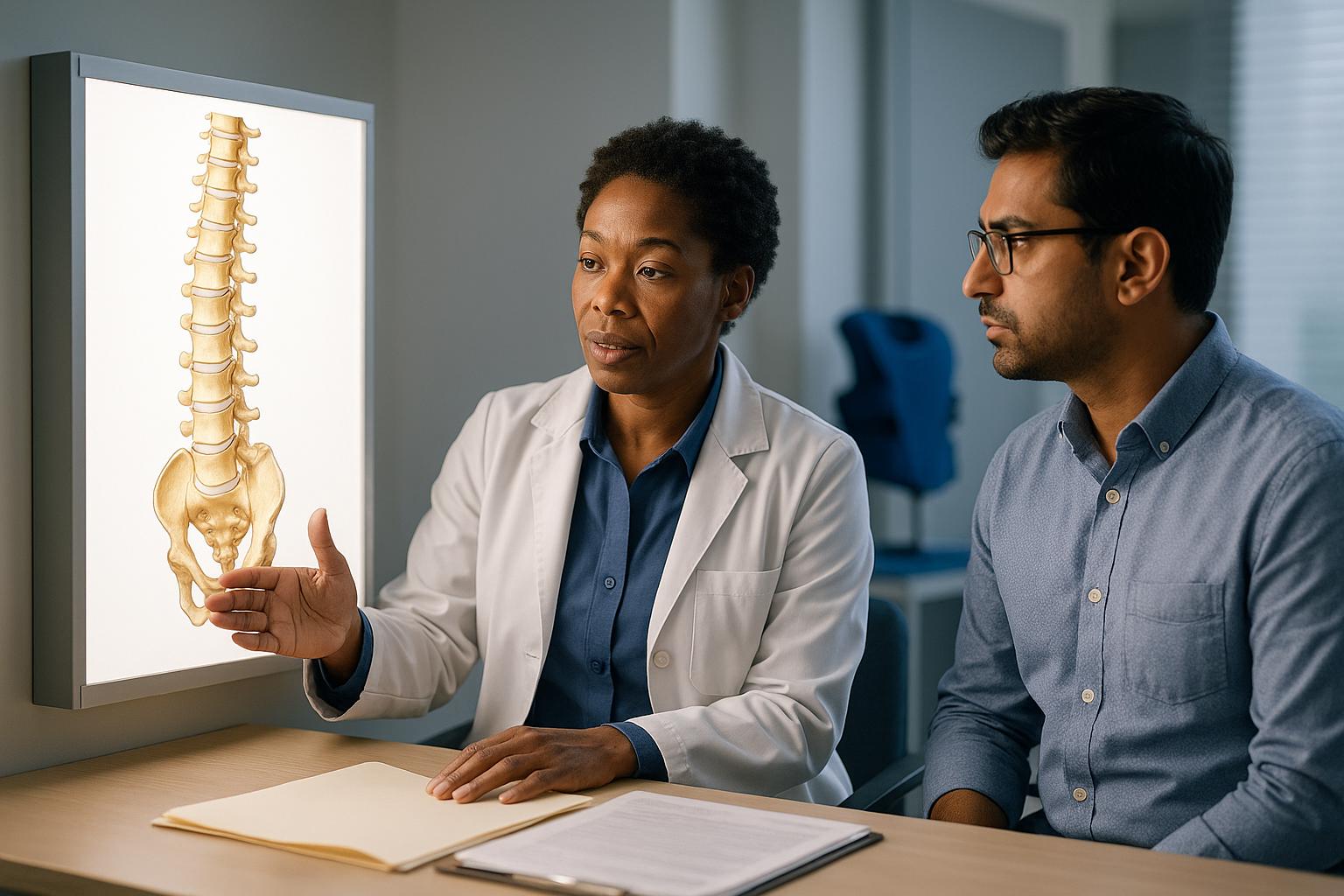
Medical Legal Consultation: The Essential Bridge Between Complex Injuries and Fair Justice
By Ellia Ciammaichella, DO, JD
Triple Board-Certified in Physical Medicine & Rehabilitation, Spinal Cord Injury Medicine, and Brain Injury Medicine
Quick Insights
Medical legal consultation involves a physician reviewing case records to clarify complex medical issues for legal proceedings. This process helps attorneys understand causation, prognosis, and treatment appropriateness when standard documentation leaves questions unanswered. Expert input becomes essential in complex cases involving multiple medical issues, advanced treatments, or disputed medical relationships. Timely consultation can reveal critical details that may influence case strategy and settlement considerations.
Key Takeaways
- Spinal cord stimulation shows Level 1 evidence for failed back surgery syndrome, outperforming reoperation.
- Complex regional pain syndrome cases require specialist interpretation of diagnostic criteria and treatment pathways.
- FDA device approvals define legally defensible indications for implantable pain management technologies.
- Post-market surveillance data monitors device safety and performance after market release.
Why It Matters
Recognizing when medical complexity exceeds routine care can assist attorneys in building stronger cases and potentially avoiding costly errors. Expert consultation can help clarify complex medical records, providing insights into injury impact, future needs, and reasonable treatment expectations. This clarity can influence settlement negotiations, jury understanding, and the pursuit of appropriate compensation for clients with permanent functional limitations.
Introduction
As a board-certified physician and attorney practicing in Reno, I regularly review cases where medical complexity creates legal uncertainty. My background as Ellia Ciammaichella, DO, JD, with extensive clinical and legal experience, enables me to provide nuanced insights in challenging circumstances.
Medical legal consultation involves a physician analyzing case records to clarify disputed medical issues for attorneys and courts. This process becomes essential when injuries involve multiple body systems, advanced interventions like spinal cord stimulation, or questions about causation that standard documentation cannot resolve. Expert input transforms confusing records into clear narratives about injury impact and future needs.
Through Ciammaichella Consulting Services PLLC, my medical-legal consulting practice, I provide expert medical consultation and case review services to attorneys handling complex injury cases across multiple jurisdictions.
Complex regional pain syndrome, failed back surgery syndrome, and traumatic brain injury cases often require specialist interpretation of diagnostic criteria, treatment pathways, and long-term prognosis. My dual training allows me to evaluate how medical findings translate into functional limitations and legal significance.
Understanding when medical complexity exceeds routine care helps attorneys build stronger cases and avoid costly missteps during settlement negotiations. For further insight into the evaluation of mid-thoracic injuries and the recovery process, see this discussion of mid-thoracic spinal cord injuries like T6.
What Makes a Case Medically Complex
Medical complexity arises when injuries involve multiple body systems, require advanced interventions, or create diagnostic uncertainty that standard documentation cannot resolve. In my practice evaluating spinal cord injury and traumatic brain injury cases, I often see complexity emerge when functional limitations don’t match the imaging findings or when treatment responses vary significantly from expected patterns.
Clinical guidelines for spine pain interventions highlight scenarios where standard care pathways become insufficient. Cases involving failed back surgery syndrome, complex regional pain syndrome, or traumatic brain injury with subtle cognitive deficits require specialist interpretation of diagnostic criteria and treatment appropriateness. These conditions often present with overlapping symptoms that make causation analysis challenging without expert medical input.
Complexity also increases when cases involve device-based interventions like spinal cord stimulation or intrathecal drug delivery systems. These technologies require an understanding of FDA-approved indications, patient selection criteria, and long-term safety considerations that general medical records may not adequately address.
Attorneys need expert consultation to determine whether proposed treatments align with evidence-based standards and how they impact life care planning projections. When such specialized expertise is necessary, objective medical-legal consulting can clarify the critical factors that influence legal and medical outcomes.
When Standard Medical Records Aren’t Enough
Medical records document what happened during clinical encounters, but they rarely explain why certain decisions were made or what alternative approaches might have been appropriate. When reviewing records in medico-legal evaluations, I focus on gaps between documented findings and functional outcomes, particularly when treatment progression suggests diagnostic uncertainty or evolving clinical understanding.
Records become insufficient when they lack detailed functional assessments, fail to document decision-making rationale for advanced interventions, or contain conflicting information across multiple providers. Intrathecal therapy indications and contraindications require specialist review because standard documentation may not capture the nuanced patient selection process or explain why certain candidates were deemed appropriate for implantable drug delivery systems.
Expert consultation becomes essential when records show treatment escalation without clear justification, when multiple specialists disagree about diagnosis or prognosis, or when functional limitations exceed what imaging or diagnostic testing would predict. These scenarios require someone who can synthesize complex medical information and explain how it relates to causation, treatment appropriateness, and future medical needs in legally meaningful terms.
How Expert Consultation Clarifies Causation and Prognosis
Causation analysis requires connecting specific injuries to documented functional limitations while accounting for pre-existing conditions, natural disease progression, and alternative explanations. In my evaluations, I examine temporal relationships between incidents and symptom onset, review diagnostic testing to confirm injury mechanisms, and assess whether treatment responses support or contradict claimed causation.
Level 1 evidence for failed back surgery syndrome demonstrates how expert consultation can clarify when specific interventions become medically necessary versus elective. This evidence helps establish whether proposed treatments represent reasonable medical care or experimental approaches that may not meet legal standards for compensable future medical expenses.
Prognosis determination becomes particularly complex when injuries involve permanent functional limitations that may improve, stabilize, or worsen over time. Expert consultation helps attorneys understand the range of possible outcomes, identify factors that influence long-term prognosis, and determine when maximum medical improvement has been reached.
This analysis directly affects settlement negotiations and life care planning projections by establishing realistic expectations for future medical needs and functional capacity. See also how recovery milestones are evaluated after spinal cord injury for examples of evidence-based approaches to prognosis.
The Role of Device and Intervention Evidence in Legal Cases
Device-based interventions require an understanding of regulatory approvals, clinical evidence supporting their use, and real-world safety data that may not appear in standard medical records. FDA device indications for spinal cord stimulation systems define legally defensible uses and help determine whether proposed interventions meet evidence-based standards for specific conditions.
Current generation SCS device capabilities demonstrate how technology evolution affects treatment options and life care planning projections. Expert consultation helps attorneys understand whether proposed devices represent standard care, emerging technology with limited long-term data, or experimental approaches that may not be compensable under typical settlement frameworks.
Device evidence becomes particularly important when cases involve permanent implants that require ongoing maintenance, programming adjustments, and eventual replacement. Understanding device longevity, complication rates, and revision surgery requirements helps establish accurate future medical cost projections and supports realistic settlement negotiations based on actual long-term care needs rather than theoretical estimates.
Choosing the Right Medical Expert for Your Case
Selecting an appropriate medical expert requires matching the case’s clinical complexity with the expert’s board certifications, clinical experience, and familiarity with relevant medical literature. Cases involving spinal cord injury, traumatic brain injury, or complex pain syndromes benefit from experts who maintain active clinical practices and understand current treatment standards rather than those who primarily perform medico-legal work.
Expert qualifications should include relevant board certifications, experience evaluating similar injuries, and familiarity with the specific interventions or diagnostic challenges present in the case. Real-world safety surveillance data for implant devices demonstrates why experts need ongoing clinical engagement to understand evolving safety considerations and post-market performance data that affects long-term risk assessment.
The right expert can translate complex medical information into clear explanations that support case development, identify weaknesses in opposing expert opinions, and provide objective analysis that strengthens settlement negotiations or trial preparation. Medical legal consultation works best when experts collaborate with attorneys early in case development, helping identify critical medical issues before they become obstacles to successful resolution.
My Approach to Medical Legal Consultation
Through extensive training and clinical experience evaluating individuals with spinal cord and brain injuries, I’ve found that effective medical legal consultation requires translating complex clinical findings into clear, actionable insights for legal professionals.
My dual training as both a physician and an attorney allows me to bridge the gap between medical complexity and legal requirements. When reviewing cases involving spinal cord stimulation, failed back surgery syndrome, or traumatic brain injury, I focus on connecting documented medical findings to functional limitations in ways that support both case development and settlement negotiations.
From my perspective with both medical and legal credentials, the most valuable consultation addresses not just what happened medically, but why certain treatment decisions were made and how they relate to causation and prognosis. This approach helps attorneys understand whether proposed interventions meet evidence-based standards and how medical complexity affects life care planning projections.
I work equally with plaintiff and defense teams, providing objective analysis that clarifies medical issues rather than advocating for predetermined outcomes.
Individual case circumstances vary; consultation outcomes depend on specific medical and legal factors.
Conclusion
In summary, medical legal consultation becomes essential when case complexity exceeds what standard documentation can clarify. As a physician and attorney, I’ve seen how expert analysis transforms confusing records into clear narratives about causation, treatment appropriateness, and future needs.
Evolving device approvals for high-frequency spinal cord stimulation demonstrate why cases involving advanced interventions require specialist interpretation of regulatory standards and clinical evidence. Systematic evidence synthesis supports expert testimony by connecting treatment decisions to established medical literature rather than subjective opinion.
Based in Reno, Nevada, Dr. Ellia Ciammaichella provides medical-legal services through Ciammaichella Consulting Services PLLC across multiple licensed states. I am available to travel for expert testimony and in-person evaluations when appropriate. This flexibility allows individuals and legal teams with complex cases to access consistent, expert analysis regardless of location.
If you would like to discuss your case or learn how medical legal consultation could improve your legal strategy, please contact Dr. Ciammaichella.
I invite you to schedule a consultation today to discuss how my dual medical and legal training can clarify the medical complexities in your case. Whether you need help understanding causation in a failed back surgery syndrome claim or evaluating proposed device interventions, expert consultation provides the clarity that strengthens settlement negotiations and supports fair case resolution.
This article is for educational purposes only and should not be used as a substitute for professional medical advice, diagnosis, or treatment. Always seek the advice of your physician or other qualified healthcare provider with any questions you may have regarding a medical condition or treatment options. Never disregard professional medical advice or delay in seeking it because of something you have read in this article.
Frequently Asked Questions
What types of cases benefit most from medical-legal consultation?
Cases involving spinal cord injury, traumatic brain injury, complex regional pain syndrome, or failed back surgery syndrome typically require expert consultation. These conditions present diagnostic challenges, disputed causation, and treatment complexity that standard medical records cannot adequately address.
Expert analysis becomes particularly valuable when cases involve device-based interventions like spinal cord stimulation or intrathecal drug delivery systems, where understanding FDA-approved indications and long-term safety data affects both case strategy and life care planning projections.
How does expert consultation affect settlement negotiations?
Expert consultation clarifies medical complexity in ways that directly impact settlement value and negotiation strategy. When I review cases, I identify gaps between documented findings and functional limitations, explain whether proposed treatments meet evidence-based standards, and establish realistic prognosis expectations.
This analysis helps attorneys understand the strength of causation arguments, justify future medical cost projections, and identify weaknesses in opposing expert opinions. Clear medical narratives supported by regulatory data and clinical evidence create stronger negotiating positions than relying solely on treatment records.
Can you provide consultation services across multiple states?
Yes, I am licensed in multiple states, including Texas, California, Georgia, Idaho, Nevada, Utah, Washington, Colorado, Pennsylvania, and Montana. I provide record review and consultation services across all licensed jurisdictions and am available to travel for in-person evaluations and expert testimony when cases require it.
This multi-state capability ensures consistent expert analysis regardless of where litigation occurs, while my dual medical and legal training allows me to address both clinical complexity and legal requirements in a single consultation.
About the Author
Dr. Ellia Ciammaichella, DO, JD, is a triple board-certified physician specializing in Physical Medicine & Rehabilitation, Spinal Cord Injury Medicine, and Brain Injury Medicine. With dual degrees in medicine and law, she offers a rare, multidisciplinary perspective that bridges clinical care and medico-legal expertise. Dr. Ciammaichella helps individuals recover from spinal cord injuries, traumatic brain injuries, and strokes—supporting not just physical rehabilitation but also the emotional and cognitive challenges of life after neurological trauma. As a respected independent medical examiner (IME) and expert witness, she is known for thorough, ethical evaluations and clear, courtroom-ready testimony. Through her writing, she advocates for patient-centered care, disability equity, and informed decision-making in both medical and legal settings.

Medical Expert Services
Dr. Ciammaichella provides expert medical consulting for attorneys handling complex injury cases: