By Ellia Ciammaichella, DO, JD
Triple Board-Certified in Physical Medicine & Rehabilitation, Spinal Cord Injury Medicine, and Brain Injury Medicine
Quick Insights:
A life care plan personal injury assessment is one of the most consequential documents in catastrophic injury litigation, providing an evidence-based, individualized projection of future medical needs and costs that translates complex clinical realities into defensible economic damages. These plans are developed through systematic assessment of long-term rehabilitation requirements, equipment needs, secondary complication management, and ongoing medical care across the injured individual’s lifetime. Research suggests that catastrophic injuries involving spinal cord injury, traumatic brain injury, and stroke generate ongoing and evolving medical needs that no short-term treatment plan adequately captures. When prepared by a physiatrist with both clinical subspecialty expertise and legal training, life care plans meet rigorous evidentiary standards while accurately reflecting the full scope of what injured individuals will genuinely require.
Key Takeaways
- Life care plans are standards-based medical documents that project future care needs and costs for individuals with catastrophic injuries, grounded in peer-reviewed evidence and specialty-specific clinical expertise
- Physiatrist-developed life care plans carry unique weight in litigation because they integrate rehabilitation medicine expertise with direct clinical understanding of long-term functional trajectories across spinal cord injury, traumatic brain injury, and stroke populations
- Admissibility under Daubert and Federal Rules of Evidence 702 depends on the expert’s qualifications, methodology, and use of evidence-based cost projections rather than certification alone
- Comprehensive life care planning accounts for evolving needs over decades, including secondary complications, assistive technology updates, and changing levels of care as patients age with their injuries
Why It Matters
Catastrophic personal injury cases involving spinal cord injury, traumatic brain injury, and stroke require accurate projection of lifetime medical costs that can reach into the millions of dollars. Attorneys handling these cases face the challenge of translating complex, evolving medical needs into defensible damages claims that withstand expert scrutiny and cross-examination. Life care plans bridge this gap, providing the evidentiary foundation for future medical damages while ensuring injured individuals receive resources for the comprehensive, long-term rehabilitation care their conditions genuinely demand. The difference between a superficial cost projection and a rigorous, physiatry-based life care plan can determine whether a settlement or verdict truly addresses a plaintiff’s lifetime needs.

Understanding Life Care Plans in Personal Injury Cases
A life care plan personal injury assessment is, in my view, one of the most important documents that can be submitted in a catastrophic injury case. At its core, a life care plan is a comprehensive, evidence-based projection of the medical services, rehabilitation support, assistive equipment, and ongoing care that an injured individual will require over their lifetime. The American Academy of Physical Medicine and Rehabilitation recognizes life care planning as a standards-based discipline requiring methodological rigor, defined processes, and geographically adjusted cost analysis PM&R KnowledgeNOW AAPM&R 2024. In my practice, I have seen how a well-constructed life care plan can transform an attorney’s ability to advocate for their client’s true lifetime needs, and I have equally seen how an inadequately constructed plan can collapse under cross-examination.
As someone who Dr. Ellia Ciammaichella, DO, JD, brings dual medical-legal training to life care planning, I am triple board-certified in Physical Medicine and Rehabilitation, Spinal Cord Injury Medicine, and Brain Injury Medicine. Based in Reno, Nevada, I provide life care planning consultation, case review, and expert testimony to attorneys across the country who are handling spinal cord injury, traumatic brain injury, stroke, and other catastrophic injury cases. My background as both a physician and a Juris Doctor gives me a perspective that is rarely available from a single expert: I understand not only what the evidence says about long-term care needs, but what the law requires for those projections to withstand Daubert challenge and cross-examination.
Important Clinical Context
Not every personal injury case requires a life care plan. These documents are most critical when an injury creates permanent or long-lasting functional impairment requiring ongoing medical management over years or decades. Spinal cord injury at any level, moderate-to-severe traumatic brain injury, stroke resulting in significant disability, and other conditions causing lasting neurological compromise are the clearest candidates for comprehensive life care planning. What distinguishes these cases is not just the severity of the initial injury, but the complexity of the long-term care picture: the secondary medical complications that emerge months or years post-injury, the evolving equipment dependencies, and the changing levels of care support required as patients age with their conditions. Life care plans are forward-looking medical assessments, distinct from treatment records or acute care documentation, and they require expertise in the long-term trajectory of catastrophic injury rather than its acute management alone.
What a Life Care Plan Includes: Core Components and Medical Foundation
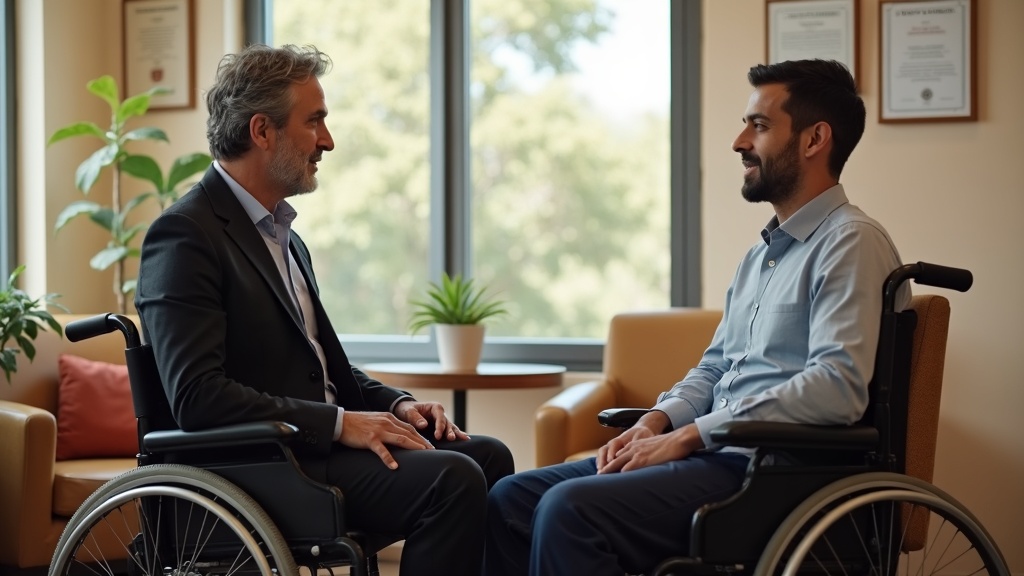
A comprehensive life care plan addresses every category of care an injured individual is reasonably projected to need over their lifetime. Based on my clinical experience and the peer-reviewed literature on catastrophic injury outcomes, I organize these projections into several core domains: physician and specialist visits, rehabilitation therapies (physical, occupational, speech, and cognitive rehabilitation), durable medical equipment and assistive technology, medications, attendant care and personal assistance services, home and vehicle modifications, and management of secondary medical complications.
The medical foundation for these projections is injury-specific, and this is where subspecialty clinical expertise becomes essential. Spinal cord injury, traumatic brain injury, and stroke each carry distinct long-term care trajectories that cannot be addressed through generic formulas or template-based approaches. For individuals with SCI, research indicates that more than one in five people will develop a pressure injury over the course of their condition, with a global incidence rate of 0.23 across rehabilitation and community settings combined Journal of Wound Ostomy Continence Nursing 2020. This finding establishes that wound prevention protocols, specialized pressure-relief seating, regular dermatologic surveillance, and wound care resources are not optional projections: they are clinically indicated standards of practice that belong in any SCI life care plan. Failing to account for these predictable secondary complications produces a plan that materially understates lifetime care costs.
For individuals with traumatic brain injury, the care picture is more individualized and trajectory-dependent. A prospective cohort study published in JAMA Network Open 2023, following 1,196 trauma patients from 18 U.S. level I trauma centers for up to five years post-injury, found that functional recovery trajectories after moderate-to-severe TBI varied substantially across the study population: while a majority achieved functional independence by year five, a meaningful proportion continued to experience persistent impairment and significant symptom burden, and mortality between years one and five was considerably higher than in mild TBI or orthopedic trauma comparison groups. This variability is precisely why life care plans for TBI populations cannot rely on assumptions drawn from aggregate statistics. Each plan must reflect the specific individual’s severity, current functional status, rehabilitation trajectory, and realistic range of future needs, incorporating both the possibility of continued recovery and the ongoing risks that persist regardless of functional gains.
While research identifies common patterns across injury populations, individual variation in recovery and complication risk is real and meaningful. Every life care plan I prepare reflects the specific person and their specific circumstances, not a statistical average.
The Life Care Planning Process: Assessment, Evidence, and Cost Projection

The development of a rigorous life care plan follows a structured process that integrates clinical assessment, peer-reviewed evidence, and careful cost analysis. Each stage builds on the last, and shortcuts in any phase compromise the evidentiary integrity of the final product.
Records Review
Comprehensive review of all medical, imaging, rehabilitation, and functional assessment documentation
Clinical Assessment
In-person or records-based evaluation of mobility, ADLs, cognition, equipment use, and home environment
Needs Projection
Evidence-based projection of future care across all categories, applying peer-reviewed literature to individual circumstances
Cost Analysis
Itemized cost documentation using current market data, Medicare fee schedules, and geographic adjustments with transparent sourcing
Medical Records Review and Functional Assessment
The first phase involves comprehensive review of the injured individual’s complete medical history: emergency department records, imaging, operative reports, inpatient rehabilitation documentation, outpatient therapy notes, neuropsychological evaluations, and current functional assessments. I review these materials to understand injury severity, the trajectory of recovery to date, the current functional baseline, and the clinical picture from which future projections will be made.
Where feasible, I conduct an in-person examination to assess mobility, activities of daily living, cognitive and communicative function, current assistive technology use, and home environment. In my assessments, I look beyond the diagnosis to understand how the individual actually functions in their daily environment; that real-world clinical context is essential for accurate projections. Published research on structured multidisciplinary approaches to traumatic SCI demonstrates that coordinated, specialty-led assessment frameworks, when implemented systematically, are associated with measurable improvements in patient outcomes including reduced mortality, shorter hospital stays, and lower rates of nosocomial complications European Journal of Trauma and Emergency Surgery 2018, reinforcing the value of organized, subspecialty-centered evaluation in complex injury cases.
Evidence-Based Needs Projection
Once I have a clear clinical picture, I use peer-reviewed literature, clinical practice guidelines, and my own subspecialty expertise to project future needs across each category of care. The goal is not to speculate, but to translate what is known about catastrophic injury trajectories into specific, documentable projections for this individual.
For stroke populations in particular, research on long-term rehabilitation utilization patterns suggests that therapy needs extend significantly beyond the acute phase. A retrospective cohort study of stroke patients found that ongoing rehabilitation service utilization was influenced by stroke severity, comorbid conditions, age, and geographic access to care, with factors such as copayment structures and therapist availability materially affecting what care patients actually received over time American Journal of Physical Medicine & Rehabilitation 2022. These findings inform how I project ongoing therapy needs in life care plans for stroke survivors, taking into account not just what care is medically indicated but what the realistic access and utilization trajectory suggests about long-term resource requirements.
Research provides the framework; each plan requires expert clinical reasoning to apply that evidence to the individual’s circumstances. A 25-year-old with cervical SCI and a 60-year-old with the same diagnosis will have fundamentally different long-term needs profiles, and no algorithm or certification substitutes for subspecialty clinical judgment.
Cost Analysis and Geographic Adjustment
Projecting care needs is only half of the life care planning process. Each projected service or item must be assigned a cost that is geographically relevant, supported by current market data, and documented with transparent methodology. I use Medicare fee schedules, regional market surveys, vendor catalogs, and published pricing sources to develop cost projections, adjusting for the geographic area where the injured individual resides and will be receiving care.
The International Academy of Life Care Planners’ Standards of Practice establish a formal framework for cost documentation, requiring that projections reflect geographically relevant, usual and customary rates supported by medical records and clinical literature IALCP Standards of Practice 2022. Life care plans that rely on outdated pricing, fail to document cost sources, or apply national averages without geographic adjustment are among the most vulnerable to challenge on cross-examination. I document my cost sources for every projected item in the plan, and I update pricing at the time each plan is prepared rather than relying on prior-year data.
Long-Term Implications: Secondary Complications and Evolving Care Needs

One of the most consequential failures in non-specialist life care plans is the systematic underestimation of secondary medical complications. In my experience, the most accurate life care plans anticipate not just the primary medical needs but the full context of living with a catastrophic injury: the predictable medical complications that emerge years after the initial event, the equipment cycles that recur over decades, the attendant care demands that grow as patients age, and the psychological and social support needs that are rarely captured in medical records alone.
A systematic review and meta-analysis published in the Journal of Wound Ostomy Continence Nursing (Chen et al., 2020; n=82,722 patients across 29 studies) found a global incidence rate of 0.23 for pressure injuries in SCI populations, with community-acquired cases (0.26) exceeding hospital-acquired cases (0.22). More than one in five individuals with SCI will develop a pressure injury over the course of their condition. This finding establishes pressure injury prevention, specialized seating systems, skin surveillance, and wound care as clinically necessary projections in any SCI life care plan.
For spinal cord injury populations, the secondary complications requiring ongoing management include pressure injuries, spasticity, neurogenic bladder and bowel dysfunction, chronic pain syndromes, and autonomic dysreflexia. Each of these conditions generates its own trajectory of projected care: medications, specialist follow-up visits, specialized equipment, and in some cases, recurrent hospitalization costs that represent a meaningful portion of lifetime care expenses. I have reviewed life care plans prepared by non-physician planners that entirely omitted neurogenic bladder management as a projected need, despite the near-universal presence of this complication in SCI populations. That omission was not a minor oversight; it represented years of urologic follow-up, catheter supplies, and attendant care costs that were simply not included in the damages calculation.
Traumatic brain injury populations present a different but equally complex long-term picture. Studies indicate that functional outcomes after moderate-to-severe TBI are not determined at the point of discharge: trajectories vary substantially by severity and time since injury, with a meaningful proportion of patients experiencing persistent cognitive and functional impairment, significant symptom burden, and reduced community participation that extends well beyond the acute recovery period JAMA Network Open 2023. The existence of recovery pathways does not reduce the scope of planning required; rather, it means that a well-constructed life care plan must account for plausible future scenarios and reflect the realistic range of care this individual may require given their current trajectory.
Equipment and technology needs evolve over time in ways that are clinically predictable but frequently underestimated. Wheelchair replacements, home modification updates to accommodate changing mobility, communication device upgrades for TBI patients, and transitions in attendant care levels are all predictable cost drivers that belong in a comprehensive plan. As patients age with their injuries, many require increasing rather than decreasing levels of support; this trajectory is well-recognized in clinical practice and must be projected with specificity, not assumed to be static over a 20- or 30-year plan period.
Life Care Plans as Evidence: Admissibility, Daubert Standards, and Expert Qualifications

Life care plans function in litigation as evidence of future medical damages. They serve as tools for settlement negotiation, as the basis for damages calculations presented to juries, and as testimony subject to Daubert or Frye admissibility standards in federal and state courts. Understanding what makes a life care plan admissible and persuasive under Federal Rule of Evidence 702 is essential for any attorney relying on these documents.
Recent legal scholarship in the Journal of Life Care Planning 2025 clarifies that admissibility under FRE 702, as updated in December 2023, depends on the “totality of education, experience, training, knowledge and skills” that qualifies the expert, with certifications serving as useful verification tools rather than sole determinants of admissibility. A court’s gatekeeping function under Daubert requires scrutiny of the expert’s methodology, the reliability of their cost projections, and whether the expert has the specific medical knowledge to assess this type of injury and project needs accurately. A certification from a non-physician planner does not confer the clinical expertise to independently assess the long-term prognosis of a cervical SCI or the functional trajectory of a severe TBI without physician input on each specific case.
My triple board certification in Physical Medicine & Rehabilitation, Spinal Cord Injury Medicine, and Brain Injury Medicine reflects genuine subspecialty clinical expertise in the populations most commonly involved in catastrophic injury litigation, and the AAPM&R recognizes that physiatrist-developed life care plans carry particular evidentiary weight because they rest on direct medical expertise, transparent cost documentation, and peer-reviewed evidence rather than reliance on third-party physician opinion PM&R KnowledgeNOW AAPM&R 2024.
My legal training as a JD helps me understand what will withstand cross-examination: not just what is medically accurate, but what is defensibly documented and methodologically sound. Opposing experts will challenge the assumptions underlying projected needs, the necessity of recommended care items, and the reliability of cost projections. Rigorous methodology at each stage of the planning process is the foundation of a plan that holds up under that scrutiny. Template-based plans, plans that fail to individualize projections, and plans prepared without the clinical capacity to independently assess the injury population are among the most vulnerable to exclusion or successful challenge.
When Should You Seek a Physiatrist’s Expertise for Life Care Planning?
In my experience, the earlier a physiatrist is involved in life care planning, the more comprehensive and litigation-ready the final plan. I have reviewed cases where critical needs, including management of neurogenic bladder, long-term spasticity treatment protocols, and equipment replacement cycles, were entirely omitted from the plan because the planner lacked direct clinical experience with the specific injury population. These omissions do not simply undervalue damages; they leave injured individuals without the resources their condition genuinely requires.
When Does a Case Warrant Physiatrist-Led Life Care Planning?
Spinal cord injury at any level, including incomplete injuries with significant functional limitations and secondary complication risk
Moderate-to-severe traumatic brain injury with persistent functional impairment, cognitive deficits, or lasting symptom burden
Stroke resulting in disability requiring ongoing rehabilitation, attendant care, or long-term adaptive technology support
Any catastrophic injury case where opposing counsel has retained a medical expert and future damages are contested
Cases where a non-physician planner has prepared an initial life care plan but independent physician-level assessment is needed for trial
For attorneys, the key clinical signal is permanence of impairment combined with complexity of long-term care needs. When the injured individual faces decades of medical management, equipment dependencies, attendant care requirements, or secondary complication risks, a physiatrist-developed life care plan provides both the medical substance and the evidentiary credibility to withstand defense scrutiny. For individuals and families navigating catastrophic injury, a life care plan prepared by a clinician with subspecialty knowledge of your specific condition is the most accurate way to understand what care you will genuinely need over your lifetime.
The Life Care Planning Consultation Process: What Attorneys Can Expect
When an attorney engages me for life care planning in a personal injury matter, the process is structured to produce a document that serves both immediate litigation needs and the long-term interests of the injured individual. My approach to expert witness testimony and comprehensive case review services reflects the same methodological rigor at every phase of the engagement.
Records & Assessment
Comprehensive medical record review followed by in-person or records-based clinical and functional evaluation to establish the individual’s baseline and trajectory
Projection & Costing
Evidence-based future needs projection across all care categories, with itemized cost documentation using current market data and geographically adjusted pricing
Trial-Ready Report
Detailed written life care plan formatted for settlement negotiation or trial, with full source documentation and deposition or trial testimony as needed
Following the initial records review and assessment, I synthesize the medical evidence, peer-reviewed literature, and my clinical expertise to project future needs across all care categories: physician visits, rehabilitation therapies, durable medical equipment, medications, attendant care, home modifications, and secondary complication management. Each item in the plan is supported by clinical rationale and documented cost sources.
The final written report is formatted for use in settlement negotiations or trial, with itemized projections, cost documentation, evidence citations, and explanation of methodology adequate to meet Daubert scrutiny. If the case proceeds to litigation, I provide deposition testimony explaining the plan and defending its methodology, and trial testimony presenting the plan to the jury in clear, accessible terms. My role throughout this process is to provide an honest, evidence-based assessment of what the injured individual will need: not to advocate for inflated damages, but to ensure that nothing essential is overlooked and that every projection is defensibly grounded.
Physiatrist-Developed vs. Non-Physician Life Care Plans: Key Distinctions
| Feature | Physiatrist-Developed Life Care Plan | Non-Physician Life Care Planner Assessment |
|---|---|---|
| Clinical Foundation | Direct medical training in rehabilitation medicine, spinal cord injury, and brain injury medicine with firsthand experience managing catastrophic injuries across their full course | Certification-based training in life care planning methodology; relies on treating physician input for medical projections and prognosis determination |
| Secondary Complication Assessment | Anticipates medical complications based on injury pathophysiology and clinical experience, including autonomic dysreflexia, neurogenic bladder dysfunction, and pressure injury risk | Identifies complications documented in existing medical records or reported by treating providers; may not independently recognize emerging risks not yet manifest in documentation |
| Functional Prognosis | Conducts independent medical assessment of long-term functional trajectory based on injury characteristics, rehabilitation progress, and outcome literature | Typically relies on treating therapists’ and physicians’ prognoses; more limited independent capacity to assess functional potential or project trajectory changes |
| Evidentiary Weight | Qualifies as medical expert under FRE 702; testimony on medical necessity and prognosis is generally admissible under Daubert standards without requiring physician co-signature | May qualify as vocational or economic expert; medical opinions may require physician co-expert support to withstand Daubert scrutiny, depending on the jurisdiction |
| Rehabilitation Expertise | Subspecialty-level knowledge of assistive technology options, adaptive equipment, evidence-based therapy modalities, and community reintegration strategies for SCI, TBI, and stroke populations | General working knowledge of equipment categories and therapy types; recommendations may rely on vendor catalogs and therapist consultations rather than direct clinical expertise |
| Litigation Resilience | Methodology and clinical reasoning designed to withstand cross-examination; dual DO/JD training informs understanding of evidentiary standards at each step of the planning process | May face challenges on medical qualifications and independent clinical judgment; may require physician co-expert for contested damages at trial in certain jurisdictions |
Conclusion
Life care plans in personal injury cases are consequential documents, and the quality of a plan is directly proportional to the depth of clinical expertise brought to its development. For spinal cord injury, traumatic brain injury, and stroke cases in particular, the complex, decades-long trajectory of care needs requires subspecialty knowledge that extends well beyond general rehabilitation familiarity. Secondary complications, evolving equipment needs, aging with disability, and the evidentiary demands of Daubert scrutiny all require a level of clinical and legal sophistication that is not interchangeable.
As a physiatrist with triple board certification in the subspecialties most directly relevant to catastrophic injury litigation, combined with a Juris Doctor degree and years of direct clinical experience managing these populations, I prepare life care plans that accurately reflect what injured individuals will genuinely need and that withstand the scrutiny of opposing experts and cross-examination alike. My commitment in every engagement is to provide an honest, evidence-based assessment: not to inflate damages, but to ensure that nothing essential is overlooked.
If you are handling a catastrophic injury case involving spinal cord injury, traumatic brain injury, or stroke, I invite you to contact Ciammaichella Consulting Services for case review and expert consultation. Licensed in nine states including Nevada, California, and Texas, I serve attorneys nationwide, providing life care planning expertise, independent medical examinations, and expert testimony in catastrophic injury cases wherever the matter is pending.
Need a Defensible Life Care Plan for Your Catastrophic Injury Case?
I provide physiatrist-developed life care plans, independent medical examinations, and expert witness testimony for attorneys handling spinal cord injury, traumatic brain injury, and stroke cases nationwide. Contact me at (775) 902-6917 or ellia@ciammaichella.com
⚕ Medical Disclaimer
This article is for educational purposes only and does not replace professional medical advice, diagnosis, or treatment. The information presented reflects general medical knowledge and Dr. Ciammaichella’s clinical experience; it is not intended as legal advice or a substitute for case-specific medical-legal consultation. Always consult with a qualified physician regarding individual medical conditions and with an attorney regarding legal matters. Results and outcomes discussed in this article reflect specific study populations and clinical scenarios; individual circumstances vary.
⚖ Legal Disclaimer
Nothing in this article constitutes legal advice, creates an attorney-client relationship, or establishes a physician-patient relationship. The content is provided solely for informational and educational purposes. Case outcomes, medical-legal standards, and applicable law vary by jurisdiction. Attorneys and other professionals seeking case-specific guidance should consult directly with a qualified medical-legal expert. Ciammaichella Consulting Services PLLC expressly disclaims liability for any action taken or not taken in reliance on the information contained herein.
Triple Board-Certified in Physical Medicine & Rehabilitation, Spinal Cord Injury Medicine, and Brain Injury Medicine · Ciammaichella Consulting Services PLLC, Reno
Frequently Asked Questions