By Ellia Ciammaichella, DO, JD
Triple Board-Certified in Physical Medicine & Rehabilitation, Spinal Cord Injury Medicine, and Brain Injury Medicine
Quick Insights:
A defensible medical expert witness report demands more than clinical opinion. It requires structured analysis, transparent methodology, and reasoning that can withstand judicial gatekeeping. The quality of an expert witness report can shape Daubert rulings, anchor settlement valuations, and define the credibility of testimony at trial. Research suggests that federal judges scrutinize expert opinions more closely than ever, and attorneys handling catastrophic injury cases benefit from physiatric expertise that addresses long-term functional outcomes and complications.
Key Takeaways
- Studies indicate that strong expert witness reports follow a consistent structure: qualifications, materials reviewed, methodology, clinical findings, causation analysis, and opinions to a reasonable degree of medical certainty.
- Admissibility under Daubert and Federal Rule of Evidence 702 requires reliable methodology, relevant qualifications, and opinions grounded in accepted medical practice.
- Physiatrists bring distinctive value to catastrophic injury cases through longitudinal outcome assessment, functional prognosis, and life care needs identification.
- Attorneys should request reports that include complete record citations, differential reasoning, validated assessment tools, and explicit causation statements.
Why It Matters
In catastrophic injury litigation involving spinal cord injury, traumatic brain injury, and stroke, the expert witness report often anchors damages, standard-of-care evaluation, and life care planning. Attorneys handling these cases rely on reports that survive cross-examination and meet evolving gatekeeping standards. For families navigating catastrophic neurological injury, the strength of expert medical testimony directly affects access to long-term care, rehabilitation, and financial security. A defensible report translates complex medical evidence into legally actionable opinions.

What Makes a Medical Expert Witness Report Defensible?
In my experience preparing reports for complex catastrophic injury litigation, the difference between a report that holds up and one that collapses under cross-examination almost always comes down to structure, methodology, and discipline. An expert witness report has two readers. It educates the legal team handling the case, and it persuades a judge applying admissibility standards. A Federal Judicial Center analysis of post-Daubert federal civil trials documented heightened judicial scrutiny of expert opinions, frequent use of motions in limine, and growing concern about objectivity and methodology. That gatekeeping pressure has not eased.
I am a triple board-certified physiatrist (Physical Medicine & Rehabilitation, Spinal Cord Injury Medicine, and Brain Injury Medicine) and a Juris Doctor. Based in Reno, Nevada, I work with attorneys nationwide on case reviews, independent medical examinations, and expert testimony. My training in both medicine and law gives me a specific analytical lens for this work: I separate what is medically possible from what is legally probable.
Important Clinical Context
Medical expert reports in catastrophic injury cases are not extended consultation notes. They are evidentiary documents. They require explicit methodology disclosure, comprehensive record-review documentation, and opinions that connect medical findings to legal questions on causation, standard of care, and future needs. Physiatrists are particularly suited to these cases because rehabilitation medicine focuses on long-term function, prognosis, and life care needs rather than acute intervention alone. A defensible report meets both the clinical and the evidentiary bar.
The Essential Components of an Expert Witness Report

A defensible expert witness report follows a recognizable structure. The American Board of Independent Medical Examiners guidance for Certified Independent Medical Examiners outlines clear expectations for IME documentation, evidence-based conclusions, and conduct standards, and these expectations apply with equal force to expert witness reports in litigation. Across my practice, every report I produce includes nine elements:
- Expert qualifications and scope of engagement. A complete statement of credentials, subspecialty training, and the specific questions I was asked to address.
- Materials reviewed. A full inventory of records, imaging, depositions, prior expert reports, and other documents, with dates and sources.
- Case summary and relevant medical history. Patient-specific clinical context drawn from the record.
- Methodology and clinical reasoning. How I analyzed the records, what diagnostic criteria I applied, and how I weighed alternative explanations.
- Findings and clinical assessment. Objective summary of what the record shows.
- Causation analysis with differential diagnosis. Explicit reasoning that connects clinical evidence to the legal question, ruling out alternative causes where warranted.
- Opinions to a reasonable degree of medical certainty. Conclusions stated in the precise legal-medical language admissibility requires.
- Supporting literature and standards of care. Peer-reviewed citations and clinical guidelines that anchor the opinion in the broader medical community.
- Signature and attestation. Formal certification of the report.
Incomplete record citations and missing methodology are the two most common weaknesses I see in opposing reports, and they are the two weaknesses that most reliably invite a successful Daubert challenge. The American Academy of Physical Medicine and Rehabilitation emphasizes that physiatric expert testimony must be impartial, thorough, and grounded in accepted medical practice, principles that shape both credentialing expectations and admissibility considerations.
What Distinguishes a Strong Report from a Weak One

Methodology and Clinical Reasoning
Strong reports show the work. They describe the reasoning process: how the records were analyzed, what diagnostic criteria were applied, what alternative diagnoses were considered, and how each conclusion was reached. Weak reports present conclusions without the analytical chain that produced them. Validated assessment tools and standardized outcome measures help close that gap. Johns Hopkins Medicine describes the Functional Capacity Evaluation as a comprehensive, objective assessment that produces a formal report detailing test data, interpretation, and return-to-work recommendations, an example of the structured documentation that strengthens expert opinions. In spinal cord injury cases, the Spinal Cord Independence Measure (SCIM III) has been validated across 13 spinal cord units in six countries, with inter-rater intraclass correlation coefficients at or above 0.95 in traumatic SCI populations. Physiatrists use measures like SCIM and FIM in routine clinical practice, which is one reason physiatric reports tend to read as transparent rather than conclusory.
A multi-center validation of the SCIM III across 13 spinal cord units in six countries (Bluvshtein et al., Spinal Cord 2010) reported intraclass correlation coefficients at or above 0.95 between paired raters in traumatic SCI populations, with SCIM III demonstrating greater responsiveness to functional change than the Functional Independence Measure.
Evidence-Based Opinions and Literature Support
Defensible reports cite peer-reviewed literature, clinical practice guidelines, and accepted standards of care. They show that the expert’s reasoning aligns with the medical community’s broader understanding. Weak reports rely on the expert’s eminence alone. In catastrophic injury cases, prognostic opinions must be grounded in validated models and outcome data, not speculation. A systematic review in the Journal of Neurotrauma identified 67 prognostic models for moderate-to-severe traumatic brain injury, with the IMPACT and CRASH models (developed on cohorts of 8,509 and 10,008 patients, respectively) receiving the most extensive external validation. That kind of evidentiary anchor is what an admissibility hearing rewards.
Objectivity and Impartiality
Expert witnesses are educators, not advocates. Strong reports acknowledge limitations in the medical evidence, present reasonable alternative interpretations, and avoid overreaching conclusions. An AMA Journal of Ethics analysis of expert medical testimony frames the Daubert and Federal Rule of Evidence 702 inquiry as a test of reliability and relevance, with judges acting as gatekeepers on both the qualifications of the witness and the methodology of the opinion. Attorneys benefit from objective reports because objectivity strengthens both cross-examination posture and settlement leverage. Testimony prepared to meet Daubert and Frye reliability standards starts with a report that has already done the analytical work in writing.
The Physiatrist’s Advantage in Catastrophic Injury Cases
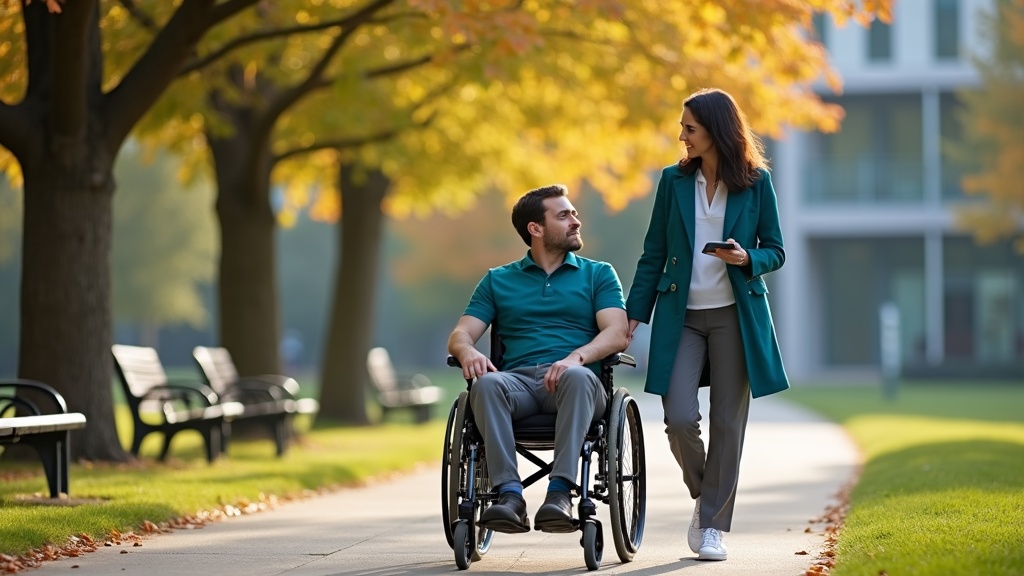
Physiatrists bring a specific set of skills to expert witness work in spinal cord injury, traumatic brain injury, and stroke cases. Rehabilitation medicine is the specialty of long-term function. Physiatrists are trained in longitudinal outcome assessment rather than acute intervention alone, in validated outcome measures and prognostic models, in life care planning scoped to medical needs identification, and in standards of care across the rehabilitation continuum from acute inpatient rehab through community reintegration. Many catastrophic injury cases turn on future care needs and functional prognosis. Those are the questions physiatrists answer in routine clinical practice.
A reliability study in the Australian Journal of Physiotherapy demonstrated very high inter-tester (ICC > 0.97) and intra-tester (ICC > 0.97) reliability for the Clinical Outcomes Variable Scale in traumatic brain injury populations, supporting the broader point that physiatric assessments rely on validated, reproducible instruments. In my practice, I frequently review cases where the initial expert opinion failed to account for secondary complications, the realistic trajectory of functional recovery, or evolving long-term care needs. Those gaps are exactly what physiatry training addresses, and the SCIM-validation work in spinal cord rehabilitation discussed earlier reflects the same evidentiary tradition: outcome measures with documented reliability and validity, used consistently across centers.
How Expert Reports Shape Catastrophic Injury Litigation

Expert reports do four things in catastrophic injury litigation. They form the documentary basis for Daubert motions and admissibility hearings. They anchor damages calculations and life care plans. They educate opposing experts and shape settlement posture. And they function as the roadmap for deposition and trial testimony. Physiatrists evaluate standard of care in ways acute care specialists often cannot, focusing on whether appropriate rehabilitation referrals were made on time, whether therapy intensity matched the patient’s potential, whether secondary complications were anticipated and managed, and whether long-term care planning was adequate.
My triple board certification in Physical Medicine & Rehabilitation, Spinal Cord Injury Medicine, and Brain Injury Medicine, combined with my JD training, lets me anticipate evidentiary challenges as the report is being written, not after it is served. The Federal Judicial Center’s post-Daubert research confirms that judicial gatekeeping rewards methodology and objectivity. In catastrophic injury cases, the report’s projection of future medical needs, stated to a reasonable degree of medical certainty, often determines case value. That projection has to be defensible on its own terms, before any witness ever takes the stand.
When Should You Seek a Physiatrist’s Expert Opinion?
Several case patterns reliably benefit from physiatric expertise. Cases involving permanent neurological impairment from SCI, TBI, or stroke, where long-term functional prognosis is disputed. Life care planning disputes where future medical needs, equipment, or attendant care assumptions are contested. Cases where the opposing expert has offered opinions on functional outcomes or return-to-work capacity without rehabilitation medicine training. Medical malpractice cases involving alleged failures in rehabilitation referral or post-acute care planning. And cases where standardized outcome measures or functional capacity evaluations are needed to quantify impairment.
In my experience reviewing catastrophic injury cases, initial expert opinions often overlook the nuances of neuroplasticity, secondary complications such as spasticity and autonomic dysreflexia, and the realistic trajectory of functional recovery. Engaging a physiatrist early can identify case strengths and weaknesses before significant litigation costs accumulate. That early read is one of the highest-value parts of medical-legal consulting.
The Expert Consultation Process: What Attorneys Can Expect
The engagement process is structured and transparent. It begins with an initial case inquiry where the attorney provides a case summary and the key legal questions. We complete a conflict check and engagement agreement. I then perform a comprehensive medical record review, including all relevant records, imaging, prior expert reports, and depositions. If an independent medical examination is indicated, I conduct a structured clinical assessment using validated tools. Opinion formation follows: clinical reasoning, literature review, and evidence-based analysis. The report is prepared using the nine-component structure described above. Deposition and trial testimony follow if needed, with consistent, objective presentation of the opinions already documented in the report.
Every report I produce includes complete record citations, explicit methodology, and literature support as standard practice. My medical-legal consulting services cover expert witness preparation, case reviews, independent medical examinations, medical record review, and trial and deposition testimony. The goal is to provide objective medical education to the court, not to advocate for a predetermined outcome.
Physiatrist-Led vs. Non-Rehabilitation Specialist Expert Reports
| Focus Area | Physiatrist-Led Expert Report | Non-Rehabilitation Specialist Report |
|---|---|---|
| Primary focus | Long-term functional outcomes, prognosis, and life care needs | Acute diagnosis, treatment, and immediate medical management |
| Assessment tools | Validated functional measures (SCIM, FIM, COVS) and functional capacity evaluations | Diagnostic imaging, laboratory values, acute clinical findings |
| Prognostic framework | Evidence-based models for neurological recovery and secondary-complication trajectories | Acute survival and medical-stability outcomes |
| Life care planning | Detailed projections for durable medical equipment, attendant care, therapy needs, and complication management | May defer to a separate life care planner or offer limited future-care opinions |
| Standard-of-care evaluation | Rehabilitation referral timing, therapy intensity, post-acute care coordination | Acute medical or surgical intervention appropriateness |
| Testimony scope | Functional capacity, return-to-work potential, quality of life, long-term care needs | Diagnosis, causation, acute treatment decisions |
Conclusion
A defensible expert witness report requires structured analysis, transparent methodology, evidence-based reasoning, and discipline aligned with admissibility standards. In catastrophic injury cases, the strength of that report often determines the value of the case. Physiatrists offer distinct expertise in functional prognosis, life care needs identification, and long-term outcome assessment, the areas that most often drive damages in spinal cord injury, traumatic brain injury, and stroke litigation.
Attorneys handling these cases should request expert reports that include complete record citations, explicit clinical reasoning, validated assessment tools, and peer-reviewed literature support. If you are evaluating a case that may benefit from physiatric medical-legal analysis, you can contact Ciammaichella Consulting Services for case review consultation. I am licensed across multiple states, including Nevada, California, and Texas, and I travel for cases nationwide. My background in both medicine and law lets me bridge the gap between medicine and law in a way that strengthens, rather than complicates, your case strategy.
Need Expert Medical-Legal Consultation?
Dr. Ciammaichella provides expert witness services, independent medical examinations, and case reviews for attorneys handling spinal cord injury, traumatic brain injury, and stroke cases nationwide.
⚕ Medical Disclaimer
This article is for educational purposes only and does not replace professional medical advice, diagnosis, or treatment. The information presented reflects general medical knowledge and Dr. Ciammaichella’s clinical experience; it is not intended as legal advice or a substitute for case-specific medical-legal consultation. Always consult with a qualified physician regarding individual medical conditions and with an attorney regarding legal matters. Results and outcomes discussed in this article reflect specific study populations and clinical scenarios; individual circumstances vary.
⚖ Legal Disclaimer
Nothing in this article constitutes legal advice, creates an attorney-client relationship, or establishes a physician-patient relationship. The content is provided solely for informational and educational purposes. Case outcomes, medical-legal standards, and applicable law vary by jurisdiction. Attorneys and other professionals seeking case-specific guidance should consult directly with a qualified medical-legal expert. Ciammaichella Consulting Services PLLC expressly disclaims liability for any action taken or not taken in reliance on the information contained herein.
Triple Board-Certified in Physical Medicine & Rehabilitation, Spinal Cord Injury Medicine, and Brain Injury Medicine · Ciammaichella Consulting Services PLLC, Reno
Frequently Asked Questions
Medical Expert Services
Dr. Ciammaichella provides expert medical consulting for attorneys handling complex injury cases: