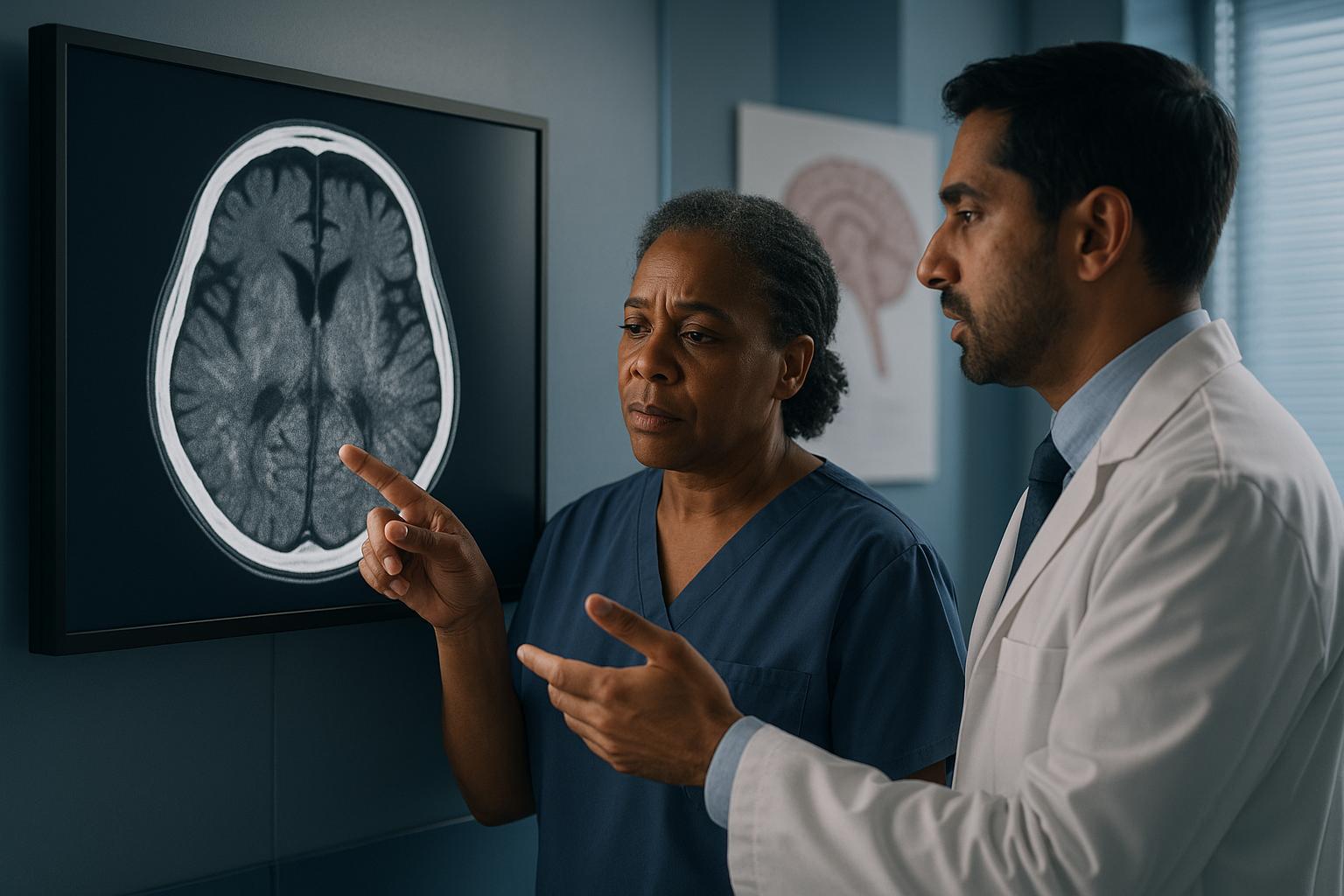
TBI Emotional Changes: What Legal Teams and Attorneys Need to Know About Mood Swings, Irritability, and Depression After Brain Injury
By Dr. Ellia Ciammaichella, DO, JD, Triple Board-Certified in PM&R, SCI Medicine, and Brain Injury Medicine
Quick Insights
TBI emotional changes often involve mood swings, irritability, or impulsivity due to injury in brain regions controlling feelings. Studies suggest these shifts can impact both recovery outcomes and legal case documentation.
Key Takeaways
- Depression affects 20–50% of TBI survivors, complicating rehabilitation and return to work.
- Clear documentation of emotional and behavioral changes is crucial for defensible case reports.
- Attorneys in Texas, California, and other states may access medical-legal expertise via telemedicine, provided the consulting physician complies with the licensing requirements of the state where the patient is located.
- Anxiety risk after TBI is 1.5–2.6 times higher with loss of consciousness, affecting case complexity.
Why It Matters
Understanding tbi emotional changes is crucial for attorneys because undiagnosed mood and behavioral symptoms can affect case outcomes and damages assessment. Current research indicates that reliable documentation supports stronger legal defenses and helps address confusion about post-TBI behaviors for all parties involved.
Introduction
As a dual-degree physician–attorney, triple board-certified in Physical Medicine & Rehabilitation, Spinal Cord Injury Medicine, and Brain Injury Medicine, I approach tbi emotional changes with both clinical precision and legal clarity from my Reno-based practice. You can read more about my unique combined medical and legal qualifications as a DO/JD here.
TBI emotional changes are alterations in mood, behavior, or affect—such as irritability, impulsivity, or depression—that arise following traumatic brain injury. These symptoms can complicate medical rehabilitation and, critically, influence legal proceedings where accurate documentation of emotional and behavioral regulation is essential for defensible case analysis.
My work at Ciammaichella Consulting Services, PLLC, centers on providing objective, research-backed assessments for legal teams and medical professionals navigating the intersection of injury, functional impact, and damages. According to recent clinical research, depression affects between 20% and 50% of TBI survivors, underscoring the importance of reliable documentation in both treatment and litigation contexts.
In Reno and across licensed states, a nuanced understanding of emotional changes post-TBI is vital for building robust, legally sound cases.
Understanding Emotional and Behavioral Changes After TBI
Emotional and behavioral changes after traumatic brain injury (TBI) encompass a spectrum of symptoms, including mood swings, irritability, impulsivity, and emotional lability. These changes often result from injury to brain regions such as the frontal lobes and limbic system, which are responsible for emotional regulation and impulse control.
In my dual role as a physician and attorney, I have seen how these symptoms can complicate both clinical recovery and legal case analysis.
Defining TBI and Affected Brain Regions
TBI is defined as an alteration in brain function caused by external force, often resulting in damage to areas like the frontal lobes, which govern executive function and behavioral regulation. The limbic system, integral to emotional processing, is also frequently affected.
Disruption in these regions can manifest as difficulty managing emotions, increased impulsivity, and unpredictable mood changes. In my 15+ years of practice evaluating individuals with spinal cord and brain injuries, I’ve found that detailed functional assessment, beyond basic diagnosis, is essential for accurately delineating damages in legal proceedings.
Prevalence of Emotional Changes
Research demonstrates that depression affects 20–50% of TBI survivors, with anxiety and irritability also highly prevalent. Notably, approximately 15% of individuals with mild TBI experience persistent emotional symptoms beyond three months post-injury.
In clinical practice, these challenges can persist for years and significantly impact both daily functioning and legal proceedings.
What emotional changes are common after TBI?
- Mood swings (rapid changes in emotional state)
- Irritable (easily frustrated or angered)
- Impulsivity (acting without forethought)
- Depression (persistent sadness or loss of interest)
- Anxiety (excessive worry or nervousness)
Causes and Risk Factors of Post-TBI Emotional Changes
The etiology of emotional changes post-TBI is multifactorial. Direct injury to neural circuits responsible for emotion regulation is a primary cause. Damage to the frontal lobes and limbic system disrupts neurotransmitter balance, leading to mood disorders and behavioral dysregulation.
Brain Injury Mechanisms
Mechanisms such as loss of consciousness (LOC), diffuse axonal injury, and focal contusions increase the risk of emotional sequelae. Studies indicate that individuals with LOC are 1.5–2.6 times more likely to develop anxiety disorders compared to those without LOC. In my experience, the severity and location of injury often predict the complexity of emotional symptoms.
While some clinicians focus solely on diagnostic labels, my approach accounts for how brain injury mechanisms specifically affect emotion-regulating pathways, allowing for a more defensible correlation between clinical findings and reported behavioral changes.
Medical and Social Contributors
Factors such as medical comorbidities, inadequate social support, and financial stressors may contribute to emotional changes. Understanding these risk factors may aid in accurate damage assessment and causation analysis in litigation.
Key Symptoms: Mood Changes, Irritability, and Impulsivity
Mood changes after TBI are characterized by rapid shifts between emotional states, often without clear external triggers. Irritability and impulsivity—defined as acting without forethought or self-control—are particularly disruptive, affecting interpersonal relationships and occupational functioning.
Recognizing Mood Swings
Mood swings may present as sudden episodes of sadness, anger, or euphoria. Depression is common, with symptoms such as persistent low mood, loss of interest, and changes in sleep or appetite. Approximately 75% of moderate-to-severe TBI survivors report at least one sensory symptom, which is closely linked to increased emotional distress.
From my perspective as a triple board-certified PM&R and legal expert, these sensory and mood symptoms are often under-recognized in litigation. Careful, narrative documentation of these changes can mitigate misunderstandings by legal teams, especially when behavior is misconstrued as intentional rather than injury-driven.
Identifying Impulsivity and Behavioral Dysregulation
Impulsivity manifests as difficulty delaying gratification, poor judgment, and risk-taking behaviors. Behavioral dysregulation can include verbal outbursts or aggression. In clinical practice, these symptoms may complicate rehabilitation and can be misinterpreted in legal contexts if not properly documented.
When to Seek Medical Attention
Attorneys and case managers should advise immediate physician evaluation if a TBI survivor exhibits:
- Suicidal ideation
- Severe aggression or violence
- Sudden, unexplained changes in consciousness
Behavioral Regulation Strategies for TBI
Effective behavioral regulation strategies are essential for managing emotional changes post-TBI. Interventions include cognitive-behavioral therapy, pharmacologic management, and structured environmental modifications. These approaches are supported by recent psychosocial adjustment research.
Interventions and Therapeutic Approaches
Cognitive-behavioral interventions target maladaptive thought patterns and promote adaptive coping. Pharmacologic agents may be indicated for mood stabilization or impulse control.
I often recommend a multidisciplinary approach, integrating therapy, medication, and family education to optimize outcomes. Based on treating hundreds of patients with TBI-associated behavioral dysregulation, I have found that family involvement and environmental structure are just as important as medication for sustainable improvement.
Attorneys should consider that treatment adherence and response may vary, and that rehabilitation records can provide useful context for damage assessment.
Role of Multi-State Telemedicine
Telemedicine expands access to specialized care, particularly for clients in Reno and other licensed states. This model facilitates ongoing behavioral monitoring and timely intervention, which may be important for both clinical recovery and legal documentation.
Best Practices in Documenting Emotional Changes for Legal Teams
Accurate documentation of emotional changes post-TBI is vital for legal defensibility. Objective, standardized assessment tools should be employed to quantify symptoms and track progression over time.
Assessment Tools and Scales
Recommended instruments include the Patient Health Questionnaire (PHQ-9) for depression, the Hospital Anxiety and Depression Scale (HADS), and structured behavioral checklists. These tools provide quantifiable data that can be referenced in legal reports.
From my unique perspective with both medical and legal training, I can translate complex medical findings into precise documentation that clearly establishes functional limitations for both plaintiff and defense teams.
Legal-Grade Documentation Process
A legally sound documentation process involves:
- Detailed baseline and follow-up assessments
- Correlation of symptoms with injury mechanism
- Clear differentiation between pre-existing and post-injury changes
At Ciammaichella Consulting Services, PLLC, we strive to ensure that documentation methods meet both clinical and legal standards, supporting robust damage analysis for both defense and plaintiff teams.
While some medical experts focus solely on diagnosis, my approach emphasizes comprehensive functional assessment that provides all parties—physicians, attorneys, and litigants—with clear, accessible documentation of impairments.
For legal teams who require detailed, defensible medical assessment and reporting, my medical-legal services, designed for both clinical assessment and legal application, can provide critical support for your cases.
Rehabilitation and Prognosis: Multi-State Telemedicine Options
Rehabilitation for TBI-related emotional changes is a dynamic, long-term process. Evidence supports the integration of physical, occupational, and psychological therapies to facilitate recovery and community reintegration.
Advanced rehabilitation modalities, including technology-driven interventions, are increasingly available via telemedicine. In clinical practice, early, coordinated rehabilitation may improve functional outcomes and support more accurate legal damage assessments.
Having worked with hundreds of spinal cord injury and brain injury cases nationally, I have seen that telemedicine allows for continuity and comprehensive review of rehabilitation progress, which is invaluable when legal teams require up-to-date, objective prognosis data.
Local Experience: Multi-State Patient and Legal Support
For legal teams in Reno, access to a dual-qualified physician–attorney with multi-state licensure ensures that both clinical and legal standards are met. My experience spans diverse jurisdictions, allowing me to provide objective, research-backed analysis for litigants across Nevada, Texas, California, and beyond.
This breadth of practice ensures that local and national cases benefit from consistent, high-quality evaluation and documentation.
My Approach to Patient Care and Legal Consultation
Patient experiences and outcomes are at the core of my practice philosophy, especially when addressing TBI emotional changes in the Reno region. As a dual-degree, triple board-certified physician–attorney, I have dedicated my career to bridging the gap between complex medical realities and the legal standards required for defensible case analysis.
My approach is grounded in objective, research-backed assessment and clear, accessible documentation. I prioritize thorough functional evaluations that go beyond diagnosis, ensuring that both emotional and behavioral changes are accurately captured for legal teams and medical colleagues alike.
I maintain active involvement in ongoing professional development, including participation in national conferences and collaboration with interdisciplinary teams. This commitment allows me to remain current with evolving clinical guidelines and legal requirements, which is essential for providing reliable, up-to-date expertise.
Ultimately, my goal is to deliver clarity and confidence to attorneys, physicians, and litigants navigating the challenges of post-TBI emotional and behavioral changes. This commitment to excellence in both patient care and legal consultation is what distinguishes my Reno-based practice.
TBI Emotional Changes: Medical-Legal Expertise in Reno
Navigating TBI emotional changes requires a nuanced understanding of both clinical and legal complexities, particularly in a city like Reno, where access to specialized expertise can directly impact case outcomes.
The unique demographic and occupational landscape of Reno, including a high prevalence of physically demanding professions and recreational activities, often correlates with increased risk for traumatic brain injuries and subsequent emotional sequelae.
As a physician based in Reno with licensure across multiple states, I am able to offer both in-person and telemedicine consultations tailored to the needs of local attorneys, physicians, and litigants. This flexibility ensures that individuals and legal teams in Reno have timely access to comprehensive assessments, objective documentation, and expert witness services that meet the highest standards of both medical and legal practice.
My practice serves as a regional hub for advanced evaluation and damage analysis, supporting local professionals in building robust, evidence-based cases. By integrating the latest research and standardized assessment tools, I help ensure that emotional and behavioral changes after TBI are thoroughly documented and clearly communicated in both clinical and legal contexts.
If you are an attorney, physician, or case manager in Reno seeking specialized support for TBI-related emotional changes, I invite you to schedule a consultation or request an IME. This approach ensures that your cases benefit from the most current, defensible, and objective expertise available.
Conclusion
TBI emotional changes—such as mood swings, irritability, and impulsivity—are among the most consequential sequelae of traumatic brain injury, affecting both clinical recovery and legal case analysis. In summary, effective management of these symptoms requires not only evidence-based medical interventions but also meticulous, objective documentation to support defensible legal outcomes.
My dual qualifications as a triple board-certified physician and attorney uniquely position me to bridge the gap between medical complexity and legal clarity, ensuring that both litigants and legal teams receive comprehensive, research-backed assessments.
Based in Reno, I provide specialized services across multiple states, including Texas, California, and Colorado, through both telemedicine and in-person consultations. I am willing to travel as an expert witness, which allows me to support complex cases wherever they arise, offering clients the advantage of consistent, high-level expertise.
I invite you to schedule a consultation TODAY to optimize medical recovery and secure robust legal documentation. Prompt action not only improves clinical outcomes but also strengthens your legal position, providing peace of mind and confidence during challenging times.
This article is for educational purposes only and should not be used as a substitute for professional medical advice, diagnosis, or treatment. Always seek the advice of your physician or other qualified healthcare provider with any questions you may have regarding a medical condition or treatment options. Never disregard professional medical advice or delay in seeking it because of something you have read in this article.
Frequently Asked Questions
What are the most common tbi emotional changes after a brain injury?
The most common tbi emotional changes include mood swings, irritability, impulsivity, depression, and anxiety. These symptoms often result from injury to brain regions responsible for emotional regulation. Many individuals experience persistent emotional symptoms that can impact daily functioning and legal case complexity.
How does your multi-state practice benefit clients needing medical-legal expertise?
My multi-state licensure allows me to provide telemedicine and in-person consultations in states such as Texas, California, and Colorado. This flexibility ensures that clients, attorneys, and litigants have access to specialized assessments and expert witness services regardless of location, streamlining both medical care and legal documentation.
Why is objective documentation of emotional changes important in legal cases?
Objective documentation is essential for establishing the extent and impact of emotional changes after TBI. Using standardized assessment tools and detailed reports, I help legal teams clearly delineate damages and causation. This approach supports fair, defensible outcomes for both plaintiffs and defendants, and is validated by current clinical guidelines.
About the Author
Dr. Ellia Ciammaichella, DO, JD, is a triple board-certified physician specializing in Physical Medicine & Rehabilitation, Spinal Cord Injury Medicine, and Brain Injury Medicine. With dual degrees in medicine and law, she offers a rare, multidisciplinary perspective that bridges clinical care and medico-legal expertise. Dr. Ciammaichella helps individuals recover from spinal cord injuries, traumatic brain injuries, and strokes—supporting not just physical rehabilitation but also the emotional and cognitive challenges of life after neurological trauma. As a respected independent medical examiner (IME) and expert witness, she is known for thorough, ethical evaluations and clear, courtroom-ready testimony. Through her writing, she advocates for patient-centered care, disability equity, and informed decision-making in both medical and legal settings.