By Ellia Ciammaichella, DO, JD
Triple Board-Certified in Physical Medicine & Rehabilitation, Spinal Cord Injury Medicine, and Brain Injury Medicine
Quick Insights
An Independent Medical Examination (IME) is a structured evaluation requested by insurers, employers, or attorneys to obtain an objective medical opinion about injury causation, treatment necessity, or disability status. The IME process includes comprehensive document review, physical examination, and generation of a detailed medical-legal report. The examiner does not establish a treating relationship with the patient. Research indicates that compensation status and examiner selection can influence report conclusions, making examiner credentials and objectivity critical considerations.
Key Takeaways
- IMEs typically last 45–90 minutes and include history-taking, physical assessment, and functional testing.
- Document review precedes the exam and may involve hundreds of pages of medical records.
- The final report addresses specific legal questions about causation, impairment, and maximum medical improvement.
- Studies show that workers’ compensation status can affect outcome measurement methods and reported disability levels.
Why It Matters
Understanding the IME process helps attorneys evaluate examiner qualifications and anticipate report content. A well-conducted IME provides legally defensible opinions that withstand cross-examination and clarify complex medical issues. Selecting an examiner with dual medical-legal training ensures reports address both clinical findings and legal standards of proof.
Introduction
As a board-certified physician and attorney, I frequently evaluate cases where understanding the IME process is essential to building a strong legal strategy. My background as Ellia Ciammaichella, DO, JD, provides a unique blend of clinical and legal expertise for the most complex cases.
An Independent Medical Examination is a structured evaluation requested by insurers, employers, or attorneys to obtain an objective medical opinion about injury causation, treatment necessity, or disability status. The examiner does not establish a treating relationship with the patient.
Instead, the physician conducts a comprehensive document review, performs a focused physical examination, and generates a detailed medical-legal report addressing specific questions posed by the requesting party.
Through Ciammaichella Consulting Services PLLC, my medical-legal consulting practice, I provide Independent Medical Examinations and expert witness services to attorneys handling catastrophic injury cases.
My dual training allows me to approach the IME process with both clinical rigor and legal awareness. I understand how medical findings translate into functional limitations and how documentation standards affect report defensibility.
This article walks you through each phase of the IME process, so you know exactly what to expect and how to evaluate examiner qualifications.
Understanding the Purpose of an Independent Medical Examination
An IME serves a fundamentally different role than a typical medical appointment. When I conduct an IME, I am not establishing a treatment relationship with the patient. Instead, I am providing an objective medical opinion to answer specific legal questions posed by the requesting party—typically an insurer, employer, or attorney.
Research shows that compensation status can influence outcome measurement, which is precisely why IMEs exist. The requesting party needs an independent assessment of injury causation, treatment necessity, disability status, or maximum medical improvement. These evaluations help resolve disputes about medical facts that affect claim outcomes.
In my practice, I most commonly address questions about functional impairment following spinal cord injury or traumatic brain injury. The IME allows me to evaluate whether documented injuries are consistent with the claimed mechanism of injury and whether current treatment recommendations align with evidence-based standards. For more information on how recovery milestones are evaluated after spinal cord injury, see our detailed guide.
The exam is structured to answer legal questions, not to provide ongoing care. This distinction matters because it shapes every aspect of how I approach the evaluation.
Pre-Examination Document Review and Case Analysis
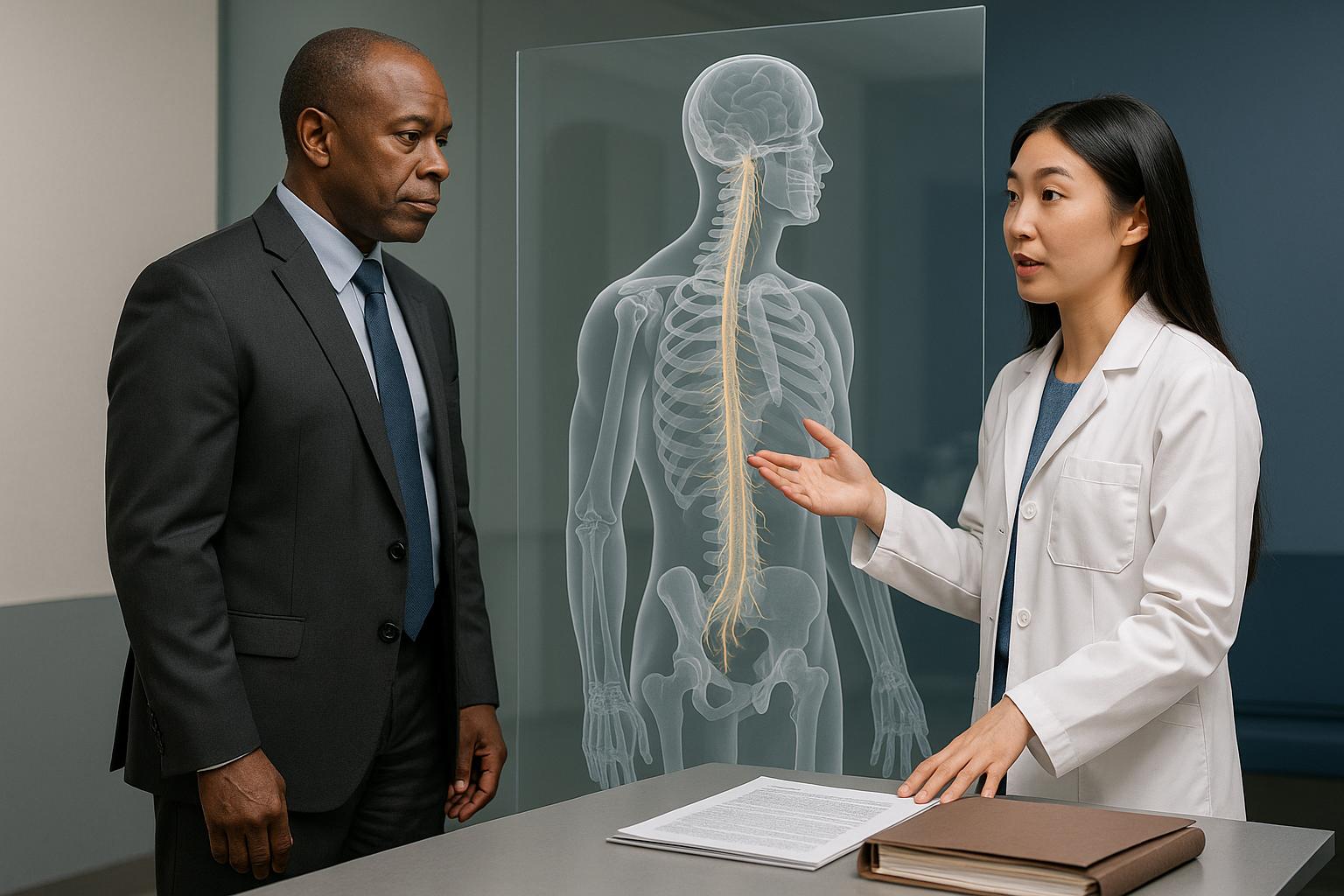
Before I meet the patient, I conduct an extensive document review. This phase often involves analyzing hundreds of pages of medical records, imaging studies, operative reports, and treatment notes. The goal is to understand the injury timeline, treatment history, and current clinical status before the physical examination begins.
I look for consistency between documented findings and reported symptoms. I also assess whether treatment progression follows standard protocols. Clinical standards for document review guide how I organize and analyze this information systematically.
When reviewing records in spinal cord injury cases, I pay particular attention to initial neurological assessments, imaging findings, and functional progression over time. These elements help me determine whether current impairments are consistent with the documented injury severity. Practitioners can refine their IME process by considering detailed information on mid-thoracic spinal cord injuries like T6.
The document review phase is critical because it allows me to identify gaps in documentation, inconsistencies in reported symptoms, or treatment approaches that deviate from standard care. This analysis informs the questions I ask during the history-taking portion of the exam.
The Physical Examination Component
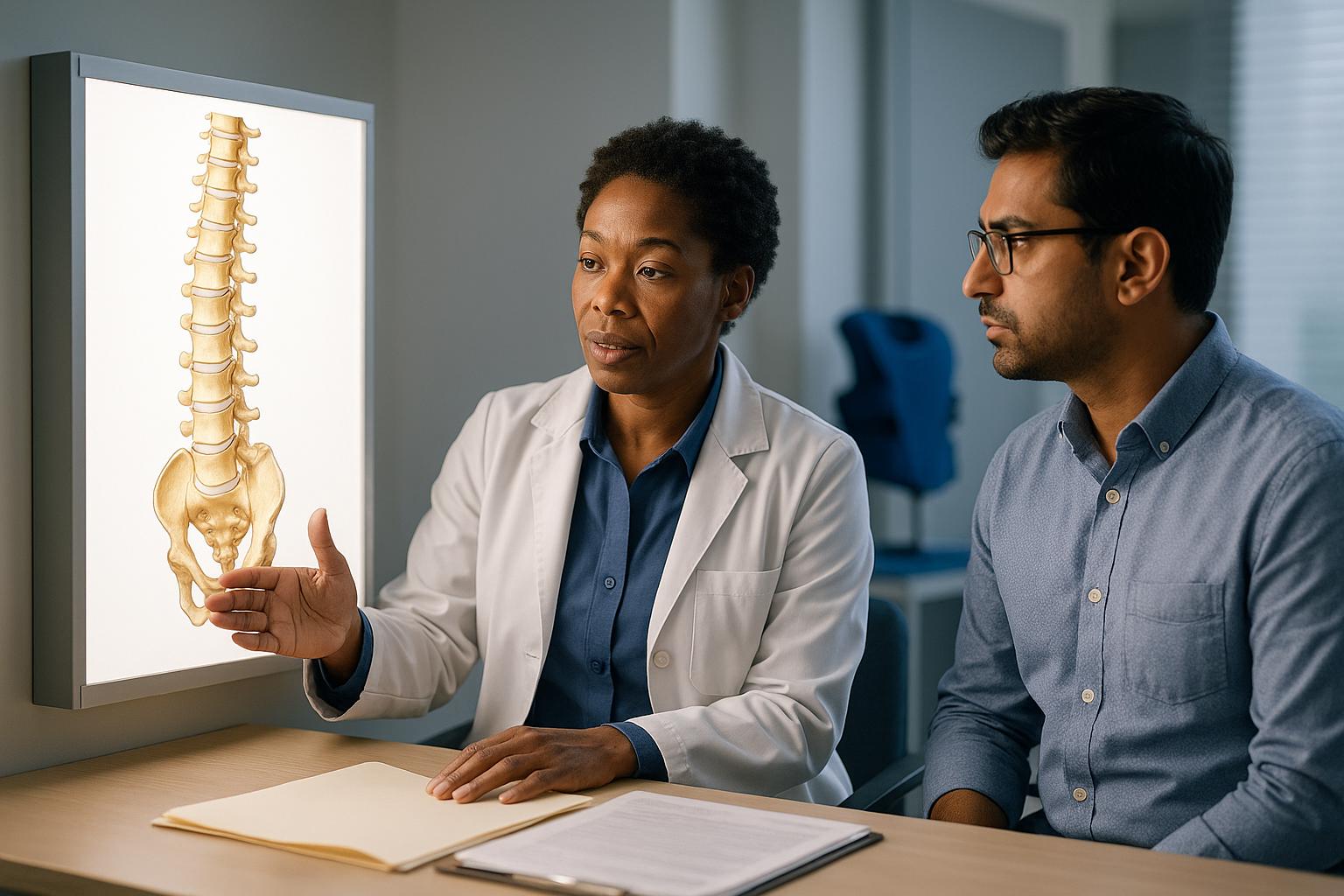
The physical examination typically lasts 45 to 90 minutes and includes detailed history-taking, physical assessment, and functional testing. I begin by asking the patient to describe their injury, symptoms, and functional limitations in their own words. This narrative often reveals important details not captured in medical records.
The physical exam itself is focused and systematic. For neurological injuries, I assess motor strength, sensory function, reflexes, and coordination. I also evaluate functional abilities like walking, balance, and fine motor control. Device-specific examination considerations apply when patients have implanted technologies like spinal cord stimulators.
In my evaluations, I document objective findings that can be measured and reproduced. I note discrepancies between reported limitations and observed function. I also assess effort and consistency throughout the examination, as these factors affect the reliability of findings.
The exam is not adversarial, but it is thorough. I explain each component to the patient and maintain a professional, neutral demeanor throughout. The goal is to gather accurate clinical data that will inform my medical opinion.
Report Generation and Medical Opinion Formulation
After completing the examination, I generate a detailed medical-legal report that addresses the specific questions posed by the requesting party. The report includes a summary of medical records reviewed, history obtained, physical examination findings, and my medical opinions.
My opinions address causation, current impairment level, treatment necessity, and maximum medical improvement status. Each opinion is supported by specific clinical findings and referenced to medical literature where appropriate. Post-examination documentation standards ensure that my reports meet legal defensibility requirements.
When formulating opinions about causation, I consider whether the documented injury mechanism is sufficient to produce the claimed impairments. I also assess whether alternative explanations exist for current symptoms. This analysis requires understanding both medical mechanisms and legal standards of proof.
The report is written for a legal audience, not a medical one. I avoid unnecessary jargon and explain technical concepts clearly. The goal is to provide opinions that withstand cross-examination and help resolve medical disputes in the case.
Objectivity and Potential Bias in the IME Process
The IME process faces inherent challenges to objectivity that attorneys should understand when evaluating examiner qualifications. The requesting party selects and pays the examiner, which creates potential for bias. Studies show that examiner conclusions can vary based on who requests the evaluation.
I address this challenge through transparent methodology and evidence-based analysis. My dual medical-legal training allows me to understand both clinical standards and legal requirements for expert testimony. I work with both plaintiff and defense teams, which reinforces my commitment to objective evaluation.
External factors like compensation status can affect outcome reporting, making examiner selection critical. Attorneys should evaluate whether an examiner has relevant board certifications, experience with the specific injury type, and a track record of defensible opinions.
In my practice, I focus on documenting objective findings and explaining the medical reasoning behind my opinions. I acknowledge uncertainty where it exists and avoid overstating conclusions beyond what the evidence supports. This approach produces reports that serve the legal process rather than advocating for either party.
My Approach to Independent Medical Examinations
Extensive experience in evaluating individuals with spinal cord and brain injuries has shown that the IME process works best when both the examiner and the attorney understand what makes an evaluation truly objective.
My dual training as a physician and attorney shapes how I approach every IME. I don’t just document clinical findings—I translate them into functional assessments that address the specific legal questions your case requires. From my unique perspective with both medical and legal credentials, I can bridge the gap between clinical evidence and courtroom standards.
“Having worked with numerous spinal cord injury cases, I’ve learned that the most defensible IME reports combine rigorous clinical assessment with clear documentation that withstands cross-examination. My approach focuses on objective, reproducible findings that serve the legal process rather than advocating for either party.”
Whether I’m working with plaintiff or defense counsel, my goal remains the same: provide medically sound opinions that help resolve disputes about causation, impairment, and treatment necessity. My triple board certification in Physical Medicine & Rehabilitation, Spinal Cord Injury Medicine, and Brain Injury Medicine ensures I bring specialized expertise to complex neurological injury cases.
Conclusion
In summary, the IME process provides a structured framework for obtaining objective medical opinions about injury causation, treatment necessity, and functional impairment. Understanding how examiners conduct document review, physical assessment, and report generation helps attorneys evaluate whether an IME will withstand cross-examination and serve their case strategy effectively.
As a physician and attorney, I bring dual credentials that allow me to bridge clinical findings and legal standards of proof. My triple board certification in Physical Medicine & Rehabilitation, Spinal Cord Injury Medicine, and Brain Injury Medicine ensures I understand the complex neurological injuries that often require IME evaluation.
Based in Reno, Nevada, Dr. Ellia Ciammaichella provides medical-legal services across nine licensed states including Texas, California, and Nevada. Through Ciammaichella Consulting Services, PLLC, I am available to travel for expert testimony and in-person evaluations when appropriate, and I also offer comprehensive record review and consultation services. This flexibility allows individuals and legal teams with complex cases to access consistent, expert analysis regardless of location.
If you are ready to take the next step, please request a consultation to discuss how my dual medical-legal expertise can provide the objective, defensible opinions your case requires.
This article is for educational purposes only and should not be used as a substitute for professional medical advice, diagnosis, or treatment. Always seek the advice of your physician or other qualified healthcare provider with any questions you may have regarding a medical condition or treatment options. Never disregard professional medical advice or delay in seeking it because of something you have read in this article.
Frequently Asked Questions
How long does an independent medical examination typically take?
Most IMEs last between 45 and 90 minutes, depending on injury complexity and the number of questions the requesting party needs addressed. The examination includes detailed history-taking, physical assessment, and functional testing.
I allocate sufficient time to conduct a thorough evaluation that produces defensible opinions, rather than rushing through a standardized checklist.
What documents should be provided before an IME?
The examiner should receive all relevant medical records, imaging studies, operative reports, treatment notes, and prior IME reports before the examination. Comprehensive document review allows me to identify inconsistencies, assess treatment progression, and formulate informed questions during the history-taking phase.
Missing documentation can limit the scope and reliability of my medical opinions.
Can an IME report be used in court proceedings?
Yes, IME reports are frequently used in workers’ compensation hearings, personal injury litigation, and disability claims. The report must meet legal defensibility standards, including clear documentation of examination findings, evidence-based reasoning, and opinions that address specific legal questions.
My dual medical-legal training ensures my reports withstand cross-examination and serve the legal process effectively.
About the Author
Dr. Ellia Ciammaichella, DO, JD, is a triple board-certified physician specializing in Physical Medicine & Rehabilitation, Spinal Cord Injury Medicine, and Brain Injury Medicine. With dual degrees in medicine and law, she offers a rare, multidisciplinary perspective that bridges clinical care and medico-legal expertise. Dr. Ciammaichella helps individuals recover from spinal cord injuries, traumatic brain injuries, and strokes—supporting not just physical rehabilitation but also the emotional and cognitive challenges of life after neurological trauma. As a respected independent medical examiner (IME) and expert witness, she is known for thorough, ethical evaluations and clear, courtroom-ready testimony. Through her writing, she advocates for patient-centered care, disability equity, and informed decision-making in both medical and legal settings.

Medical Expert Services
Dr. Ciammaichella provides expert medical consulting for attorneys handling complex injury cases: