Current Research Trends in Spinal Cord Injury
By Ellia Ciammaichella, DO, JD
Triple Board-Certified in Physical Medicine & Rehabilitation, Spinal Cord Injury Medicine, and Brain Injury Medicine
Quick Insights:
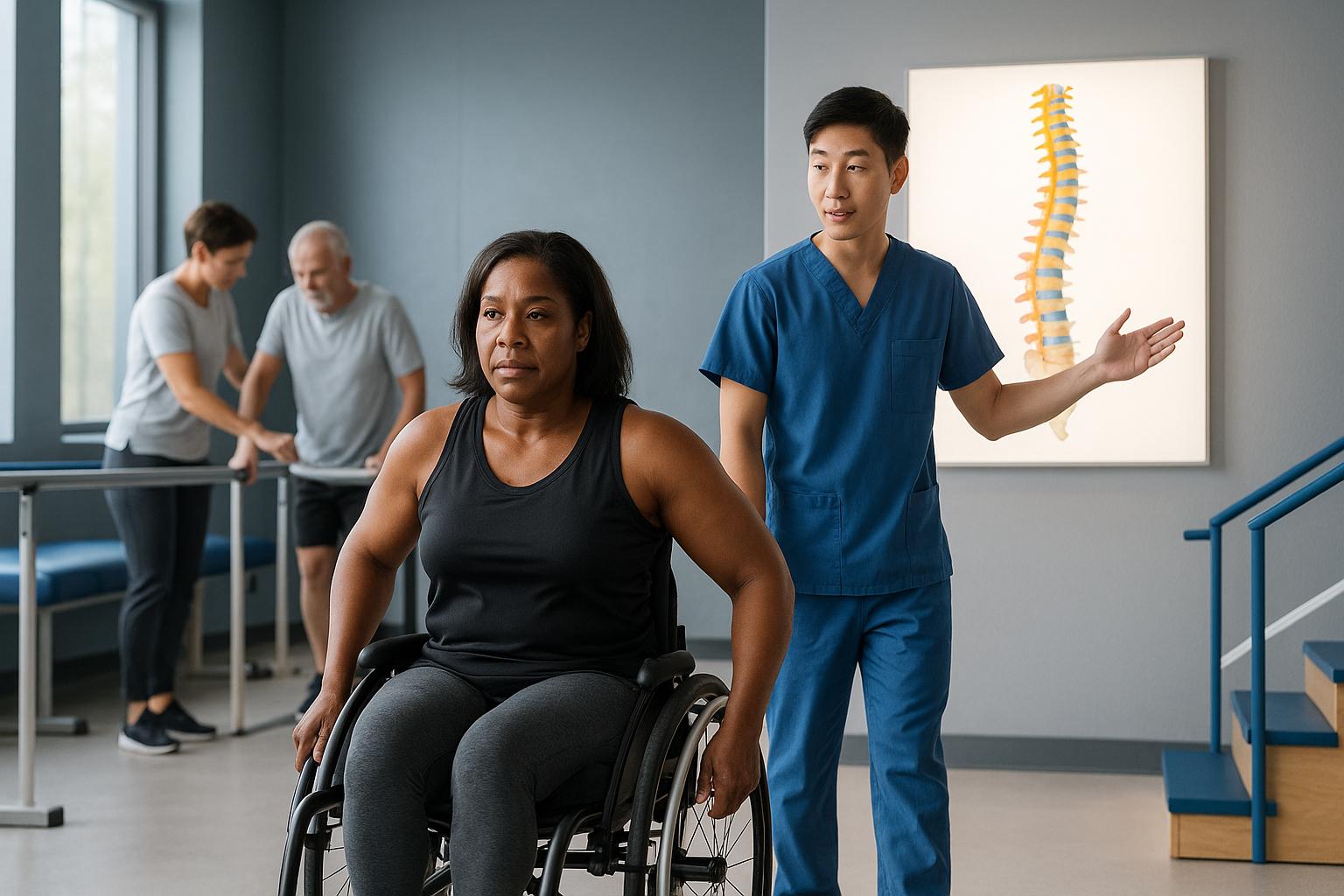
Research in spinal cord injury has entered a transformative era, with emerging therapies targeting neural circuit retraining, functional recovery, and autonomic restoration. Recent systematic reviews demonstrate that combining neuromodulation techniques (such as epidural and transcutaneous spinal cord stimulation) with intensive rehabilitation yields measurable improvements in motor function, gait, and independence. These findings carry significant implications for both clinical rehabilitation and medical-legal case evaluation. Attorneys handling catastrophic SCI cases benefit from physiatric expertise that addresses long-term functional outcomes and the evolving standard of care for spinal cord injury rehabilitation.
Key Takeaways
- Research suggests that epidural spinal cord stimulation combined with rehabilitation can produce meaningful improvements in motor and autonomic function across chronic SCI populations, though standardized protocols are still needed
- Studies indicate that robot-assisted gait training and transcutaneous spinal cord stimulation demonstrate modest but consistent gains in walking ability, lower-extremity strength, and functional independence, particularly in subacute incomplete injuries
- National research priorities now focus on four core pillars: neuroprotection, repair and regeneration, cell-based therapies, and retraining central nervous system circuits for functional recovery
- Current evidence supports neuromodulation and robotic therapies as adjuncts to conventional rehabilitation, but larger trials with standardized outcome measures are needed to establish optimal protocols and patient selection criteria
Why It Matters
Spinal cord injury affects an estimated 18,000 Americans annually, with lifetime costs that can range from $1.9 million to over $5 million depending on injury level and age at injury. For attorneys representing individuals with catastrophic SCI, staying current with research developments is critical for understanding what functional gains may be achievable through cutting-edge rehabilitation and for accurately projecting future medical needs, equipment costs, and attendant care requirements in life care plans. As neuromodulation and robotic therapies transition from experimental protocols to clinical practice, the standard of care for SCI rehabilitation is evolving, creating new considerations for medical-legal case evaluation. A physiatrist’s expertise in these advancing interventions is essential for translating research findings into actionable medical-legal opinions.
Understanding Current Research in Spinal Cord Injury
Research in spinal cord injury has shifted dramatically over the past decade. Where the field once focused primarily on neuroprotective strategies to prevent secondary injury in the acute phase, the current landscape emphasizes active neurorehabilitation and circuit retraining to restore function in individuals living with chronic SCI. A systematic review of epidural spinal cord stimulation in the Journal of Clinical Medicine (2024) examined 64 studies involving approximately 306 patients and found that epidural spinal cord stimulation, when combined with intensive rehabilitation, produced meaningful improvements in both motor and autonomic functions. These findings raise a fundamental question for both clinicians and attorneys: what does the current evidence tell us about the trajectory of SCI rehabilitation, and how should these findings inform medical-legal case evaluation?
I am Ellia Ciammaichella, DO, JD, triple board-certified in PM&R, SCI Medicine, and Brain Injury Medicine. Based in Reno, Nevada, I have watched these therapies move from research protocols into clinical application, and I bring both clinical expertise and legal training to catastrophic injury case evaluation. In my practice, attorneys frequently ask whether new research changes the functional prognosis for their clients, and the honest answer is that it depends on the individual’s injury characteristics, but the evidence is increasingly encouraging.
Important Clinical Context
Most emerging SCI therapies target incomplete injuries (ASIA B, C, D) rather than complete injuries (ASIA A), and “meaningful improvement” in the research literature often means gains in specific motor tasks or autonomic functions, not full recovery. The heterogeneity in stimulation parameters, rehabilitation protocols, and outcome measures across studies makes direct comparisons challenging. These therapies serve as adjuncts to comprehensive interdisciplinary rehabilitation, not replacements for it. Patient selection, injury chronicity (acute versus subacute versus chronic), and baseline functional status all influence outcomes. This context is essential for attorneys evaluating whether a plaintiff’s injury profile matches the populations studied in the current literature.
The Shift Toward Neural Circuit Retraining in SCI Research

The field of spinal cord injury rehabilitation has undergone a paradigm shift. Rather than focusing solely on protecting surviving neural tissue, researchers and clinicians now emphasize active strategies that aim to retrain surviving neural circuits below the injury level. The central nervous system retains remarkable plasticity even after chronic injury, and neuromodulation techniques (electrical stimulation applied to the spinal cord) can activate dormant circuits and enhance the nervous system’s response to rehabilitation training.
The National Institute of Neurological Disorders and Stroke (NINDS) outlines four core pillars driving current SCI research: neuroprotection, repair and regeneration, cell-based therapies, and retraining central nervous system circuits for functional recovery. Of these, circuit retraining now drives much of the clinical research, with investigators exploring how targeted electrical stimulation can reactivate spinal cord circuits that remain intact but inactive after injury.
Neuroprotection
Repair & Regeneration
Cell-Based Therapies
Circuit Retraining
While epidural stimulation research demonstrates meaningful improvements in motor and autonomic function, the variability in stimulation parameters across studies highlights the need for standardized protocols. The promise of these interventions is real, but current limitations in study design and protocol consistency must be acknowledged. From a physiatry perspective, this is fundamentally a rehabilitation medicine question, requiring expertise in neuroplasticity, motor learning, and functional outcome measurement to interpret what these findings mean for individual patients.
Emerging Neuromodulation and Robotic Rehabilitation Technologies
Epidural and Transcutaneous Spinal Cord Stimulation
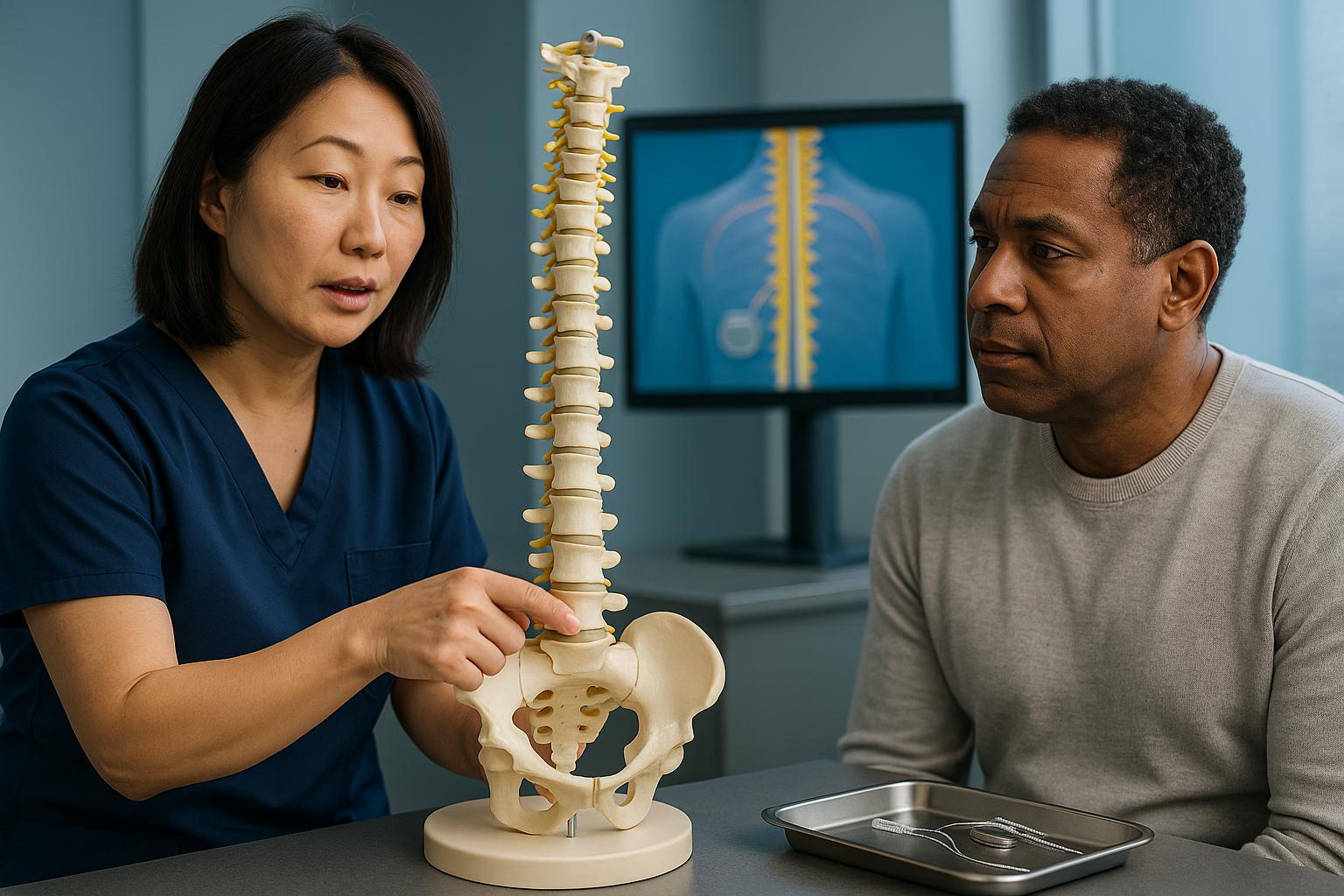
Two primary approaches to spinal cord neuromodulation have emerged in the research literature: epidural stimulation and transcutaneous stimulation. Epidural spinal cord stimulation (eSCS) involves surgically implanted electrodes placed on the dorsal surface of the spinal cord, while transcutaneous spinal cord stimulation (tSCS) uses surface electrodes applied to the skin over the spine, offering a noninvasive alternative.
The systematic review by Chalif et al. in the Journal of Clinical Medicine (2024) found that among patients receiving epidural stimulation, 44% achieved assisted or independent stepping or standing, 87% showed enhanced muscle activity, and 80% demonstrated improved overground walking. Autonomic improvements, including bladder, sexual, and bowel functions, were also documented. However, the variability in stimulation parameters across studies underscores the need for standardized treatment protocols before these interventions can be broadly recommended.
On the transcutaneous side, a double-blind RCT published in the Journal of NeuroEngineering and Rehabilitation (2025) demonstrated that pairing tSCS with Lokomat-based robotic training produced greater improvements in lower-extremity motor scores and gait metrics compared to sham stimulation in subacute incomplete SCI, with effects persisting at one-month follow-up. Both modalities require intensive rehabilitation to be effective; they are not standalone treatments.
Chalif et al. (Journal of Clinical Medicine, 2024, 64 studies, n = 306): 44% of patients achieved assisted or independent stepping/standing; 87% showed enhanced muscle activity; 80% demonstrated improved overground walking when epidural stimulation was paired with intensive rehabilitation.
Robot-Assisted Gait Training
Robotic exoskeletons and body-weight-supported treadmill systems (such as the Lokomat) provide repetitive, task-specific gait training with precise control over weight support, speed, and step pattern. A meta-analysis published in the Annals of Rehabilitation Medicine (2024) analyzed 23 randomized controlled trials involving 690 participants and found that robot-assisted gait training modestly improves activities of daily living, lower-extremity strength, walking ability, and endurance compared to conventional gait therapy. Subacute patients and those receiving interventions lasting more than two months experienced the greatest benefit. The effect sizes, while modest (standardized mean difference of 0.24 for functional outcomes), were supported by high-quality evidence, and the findings reinforce that robot-assisted gait training is most effective when integrated into a comprehensive rehabilitation program.
Metabolic and Body Composition Effects of Robotic Exoskeletons
A common question in rehabilitation is whether robotic exoskeletons provide cardiovascular or metabolic benefits beyond mobility training. A systematic review in the International Journal of Rehabilitation Research (2024) reviewed 10 studies and found that robotic exoskeleton training does not significantly increase energy expenditure compared to other exercise modalities, though it may reduce fat mass. These findings were limited by small sample sizes and study heterogeneity. While exoskeletons are valuable for gait training and functional mobility, they should not be considered primary cardiovascular exercise interventions based on the current evidence.
Functional Independence, Quality of Life, and Long-Term Outcomes
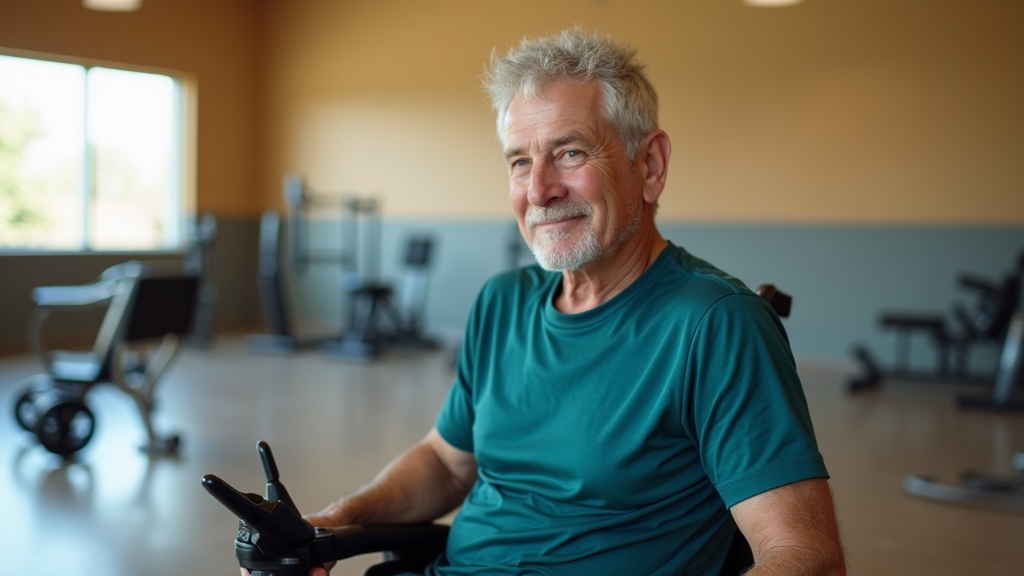
The ultimate measure of any advancing therapeutic approach is its impact on real-world function and independence, the outcomes that matter most in life care planning and damages assessment. A population-based study published in Spinal Cord (2022) examined functional independence across a Finnish SCI cohort of 884 individuals using the Spinal Cord Independence Measure Self-Report (SCIM-SR). The study demonstrated that functional independence varies significantly by lesion level and completeness, with AIS D classification showing optimal independence regardless of injury location, while higher neurological levels in AIS A, B, and C groups correlated with substantially reduced functional capacity.
These evolving interventions aim to shift individuals toward greater independence in mobility, self-care, and sphincter management, the domains that drive attendant care needs and equipment costs. Improved mobility and autonomic function (such as better bowel and bladder control and reduced orthostatic hypotension) can meaningfully reduce caregiver burden and enhance community participation. Return-to-work outcomes and long-term equipment needs, including wheelchairs, home modifications, and vehicle adaptations, remain significant cost drivers even when specific functional tasks improve. Research on the lifetime economic burden of SCI illustrates how home care, attendant services, and equipment drive long-term costs, and even modest functional gains can reduce these projections substantially.
In my experience, the difference between needing eight hours versus four hours of daily attendant care can represent millions of dollars over a lifetime, and that is where these advancing rehabilitation approaches may have their greatest impact on both patient quality of life and litigation damages calculations.
How Emerging SCI Research Affects Catastrophic Injury Litigation

Evolving research in spinal cord injury creates both opportunities and challenges in medical-legal case evaluation. For life care planning, novel therapeutic approaches may reduce future attendant care needs or improve functional prognosis, but they also introduce new cost categories: neuromodulation devices, robotic therapy sessions, and specialized rehabilitation programs. For standard of care evaluation, as therapies like transcutaneous stimulation and robot-assisted gait training become more widely available, failure to offer or refer for these interventions may become a standard-of-care issue in rehabilitation settings, particularly for subacute incomplete injuries where the evidence is strongest.
For expert witness testimony, attorneys need experts who can distinguish between experimental protocols and evidence-based interventions, interpret heterogeneous research findings, and project realistic functional outcomes based on a plaintiff’s specific injury characteristics. The updated CanPain SCI clinical practice guidelines published in Spinal Cord (2022) provides an example of how clinical practice guidelines continue to evolve; the updated CanPain SCI guidelines introduced three new screening and diagnosis recommendations and eight new treatment recommendations for neuropathic pain after SCI. Adherence to (or deviation from) such guidelines can inform standard of care analysis in litigation.
As Co-Chair of the Advocacy Committee for the Academy of Spinal Cord Injury Professionals, I maintain active involvement in advancing spinal cord injury care standards and translating research findings into clinical practice. With my subspecialty certification in Spinal Cord Injury Medicine and dual DO/JD credentials, I understand the nuances of this research from both a clinical rehabilitation perspective and from the standpoint of how these findings translate into legal damages frameworks.
When Should a Physiatrist Review Your SCI Case?
Certain case characteristics warrant consultation with a physiatrist who holds subspecialty training in spinal cord injury medicine. In my practice, I often review cases where an individual’s rehabilitation potential was underestimated, or where therapeutic approaches that could have made a meaningful difference were never discussed. A physiatrist’s perspective can identify these gaps and ensure that both current care and future projections are grounded in the best available evidence.
Red Flags That Warrant Physiatric SCI Case Review
Incomplete SCI (ASIA B, C, or D) where advancing rehabilitation approaches may significantly alter functional prognosis and life care costs
Cases where the plaintiff was offered or denied access to neuromodulation or robotic rehabilitation, raising standard-of-care questions
Life care plans that do not account for evolving rehabilitation technologies or that project static functional status without considering neuroplasticity and rehabilitation potential
Cases involving neuropathic pain management where adherence to clinical practice guidelines is at issue
For individuals with incomplete SCI who have not been offered specialized rehabilitation options, or who experience functional plateaus despite conventional therapy, evaluation by a physiatrist with subspecialty training in spinal cord injury medicine can clarify what the evidence supports and what additional interventions may be appropriate.
The Medical-Legal Consultation Process for SCI Cases
When attorneys engage my practice for SCI case review, the process follows a structured and thorough methodology designed to produce defensible, evidence-based opinions.
Record Review
Comprehensive analysis of medical records, imaging, rehabilitation notes, and existing life care plans
Clinical Assessment
Physiatric evaluation: motor/sensory testing, functional capacity, spasticity, autonomic function, and equipment needs
Evidence Synthesis
Integration of clinical findings with current research to assess standard of care, functional prognosis, and life care projections
Report & Testimony
Detailed written opinions and clear courtroom testimony translating rehabilitation concepts for legal audiences
The initial case review includes submission of medical records, injury imaging, rehabilitation documentation, and any existing life care plans or expert reports. My clinical assessment methodology encompasses motor and sensory testing, functional capacity evaluation, spasticity and tone assessment, autonomic function screening, and equipment and orthotic needs determination. I synthesize these findings with the current research evidence to determine whether care met the standard, whether functional prognosis was accurately projected, and whether life care cost estimates are supported by the evidence. My expert witness testimony and comprehensive case review services are structured to provide objective, unbiased opinions that withstand cross-examination.
Comparing SCI Assessment Approaches
| Assessment Domain | Physiatrist-Led SCI Assessment | General Rehabilitation or Orthopedic Assessment |
|---|---|---|
| Subspecialty Training | Board certification in PM&R plus subspecialty certification in SCI Medicine, with expertise in neuroplasticity and motor learning | General rehabilitation training or orthopedic focus, typically without subspecialty SCI certification |
| Functional Outcome Focus | Comprehensive evaluation of mobility, self-care, sphincter management, and community participation using validated SCI-specific measures (e.g., SCIM) | May focus on isolated impairments such as range of motion or strength, without SCI-specific functional assessment tools |
| Emerging Therapy Evaluation | Expertise in neuromodulation, robotic rehabilitation, and evidence-based patient selection based on injury characteristics | May have limited familiarity with cutting-edge SCI rehabilitation technologies and ongoing research |
| Autonomic Function Assessment | Screening and management of neurogenic bowel and bladder, orthostatic hypotension, autonomic dysreflexia, and temperature dysregulation | May not routinely assess autonomic complications associated with SCI |
| Life Care Planning Integration | Projects future needs based on injury-specific functional trajectory, equipment requirements, attendant care hours, and complication risk | General rehabilitation projections that may not account for SCI-specific cost drivers and complication considerations |
| Medical-Legal Expertise | Understanding of how SCI research translates into standard of care analysis, damages assessment, and expert testimony frameworks | Clinical expertise that may not extend to medical-legal consultation experience |
Conclusion
Spinal cord injury research is advancing at a remarkable pace, with neuromodulation and robotic rehabilitation technologies demonstrating meaningful functional improvements, particularly in incomplete injuries. For attorneys handling catastrophic SCI cases, understanding these research trends is essential for accurate life care planning, standard of care evaluation, and expert testimony. A physiatrist with subspecialty training in spinal cord injury medicine brings the clinical expertise and research fluency needed to translate the latest evidence into defensible medical-legal opinions. Results vary by individual, and outcomes depend on injury-specific factors that require careful clinical analysis.
If you are handling a case involving spinal cord injury where rehabilitation approaches, functional prognosis, or life care costs are at issue, I invite you to contact Ciammaichella Consulting Services for case review consultation. Licensed in nine states including Nevada, California, and Texas, I serve attorneys nationwide in catastrophic spinal cord injury litigation. You can also reach my office at (775) 902-6917 or ellia@ciammaichella.com to discuss your case.
Need Expert Medical-Legal Consultation for a Spinal Cord Injury Case?
I provide expert witness services, independent medical examinations, and comprehensive case reviews for attorneys handling spinal cord injury, traumatic brain injury, and stroke cases nationwide.
⚕ Medical Disclaimer
This article is for educational purposes only and does not replace professional medical advice, diagnosis, or treatment. The information presented reflects general medical knowledge and Dr. Ciammaichella’s clinical experience; it is not intended as legal advice or a substitute for case-specific medical-legal consultation. Always consult with a qualified physician regarding individual medical conditions and with an attorney regarding legal matters. Results and outcomes discussed in this article reflect specific study populations and clinical scenarios; individual circumstances vary.
⚖ Legal Disclaimer
Nothing in this article constitutes legal advice, creates an attorney-client relationship, or establishes a physician-patient relationship. The content is provided solely for informational and educational purposes. Case outcomes, medical-legal standards, and applicable law vary by jurisdiction. Attorneys and other professionals seeking case-specific guidance should consult directly with a qualified medical-legal expert. Ciammaichella Consulting Services PLLC expressly disclaims liability for any action taken or not taken in reliance on the information contained herein.
Triple Board-Certified in Physical Medicine & Rehabilitation, Spinal Cord Injury Medicine, and Brain Injury Medicine · Ciammaichella Consulting Services PLLC, Reno
Frequently Asked Questions
Medical Expert Services
Dr. Ciammaichella provides expert medical consulting for attorneys handling complex injury cases: