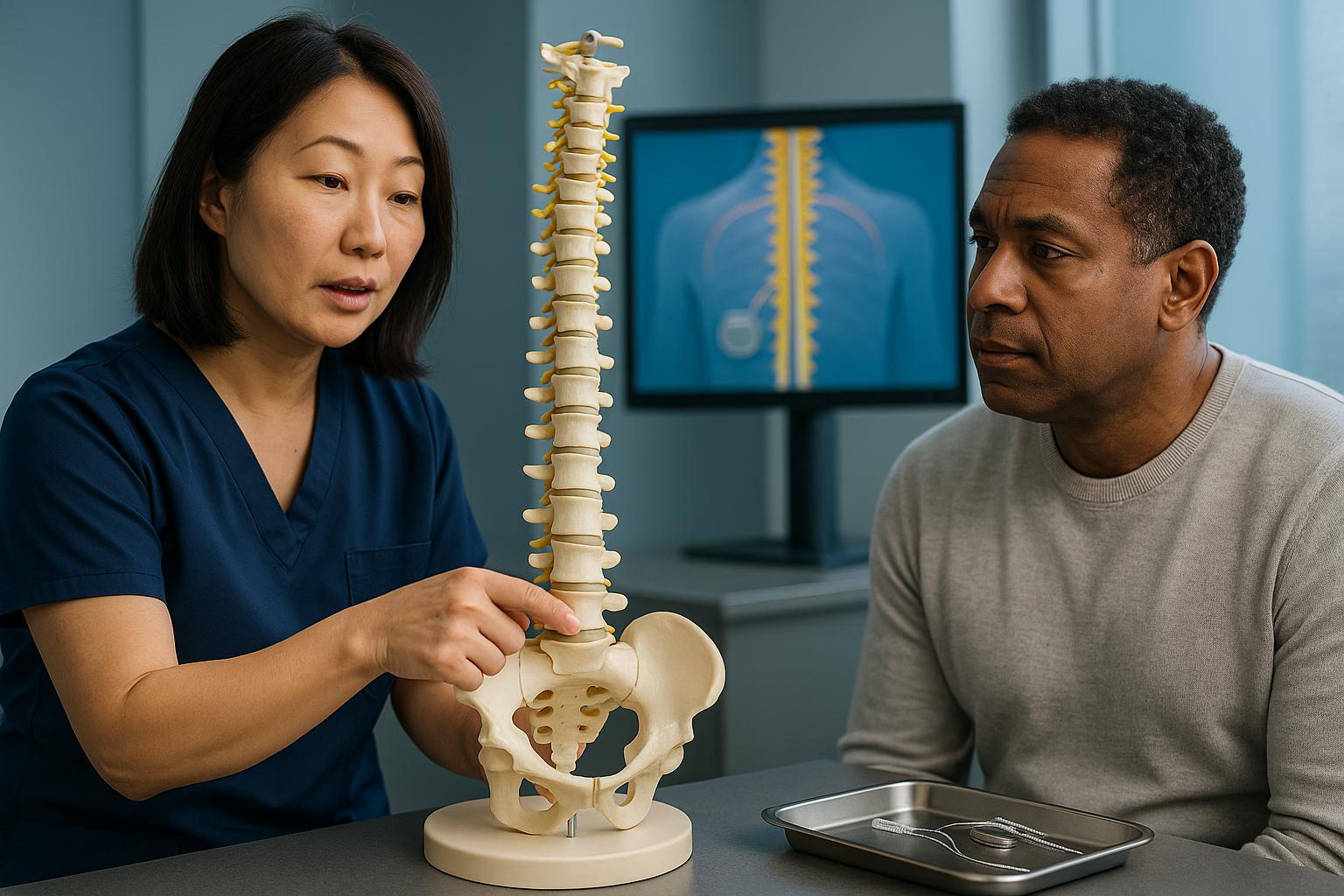
Spinal Cord Injury Spasticity: Expert Medical-Legal Documentation and Testimony for SCI Cases
By Dr. Ellia Ciammaichella, DO, JD, Triple Board-Certified in PM&R, SCI Medicine, and Brain Injury Medicine
Quick Insights
SCI spasticity and tone involves involuntary muscle stiffness and overactive reflexes after spinal cord injury—affecting movement, care needs, and legal case valuation. Up to 93% of SCI patients are impacted, often requiring expert assessment.
Key Takeaways
- Spasticity disrupts daily function and independence for individuals with spinal cord injury.
- Objective measurement tools like the Ashworth Scale are critical for legal credibility.
- Treatment ranges from physical modalities to medications; evidence is evolving.
- Expert witness services are available to attorneys in Texas, California, and nine additional states.
Why It Matters
SCI spasticity and tone directly impact case outcomes by determining long-term care needs and damages. For attorneys, understanding its objective effects is crucial for defensible claims—reducing ambiguity and addressing gaps left by insufficient expert analysis or vague reporting.
Introduction
As a physician who is also a licensed attorney, I have seen how SCI spasticity and tone present complex challenges at the intersection of medicine and law. Learn more about my unique dual DO/JD qualifications and background.
SCI spasticity and tone are defined as involuntary muscle stiffness (hypertonia) and exaggerated reflexes that occur after spinal cord injury, often impairing movement, daily living, and independence. For both clinicians and litigants, understanding what SCI spasticity and tone—and how it is measured—is crucial, as this condition can alter care needs, increase long-term costs, and directly influence the outcome of legal claims.
My dual training enables me to provide objective analysis for both medical professionals and legal teams, supporting fair assessment of damages in SCI cases. Research shows that up to 93% of individuals with spinal cord injury experience spasticity, making rigorous evaluation and documentation essential for defensible casework.
This article will clarify the clinical definitions, real-world consequences, and legal implications of SCI spasticity and tone—arming you with the evidence needed for credible, case-ready arguments.
What Are Spasticity and Tone in Spinal Cord Injury?
Spasticity and tone in spinal cord injury (SCI) refer to involuntary muscle stiffness (hypertonia) and exaggerated reflexes that result from disrupted communication between the brain and spinal cord. In summary, SCI spasticity and tone are characterized by increased resistance to passive movement and heightened muscle reflexes, often leading to functional impairment.
Key Definitions and Clinical Criteria
Spasticity is defined as a velocity-dependent increase in muscle tone, meaning muscles become stiffer the faster they are moved. Tone refers to the baseline tension present in muscles, which can become abnormally elevated after SCI.
Clinically, I use standardized scales such as the Modified Ashworth Scale to quantify these changes, ensuring objective and reproducible assessment. This approach is essential for both clinical management and legal documentation.
From my unique perspective with both medical and legal training, I can translate complex medical findings into precise documentation that clearly establishes functional limitations for both plaintiff and defense teams. Accurately defining spasticity and tone is not just a matter of scientific description—it directly impacts the clarity and admissibility of evidence in court.
Typical Presentations in SCI
In my practice, I frequently encounter individuals with SCI who exhibit muscle tightness, spasms, and involuntary movements. These symptoms can fluctuate throughout the day and may be triggered by movement, pain, or even changes in position.
The severity and distribution of spasticity depend on the level and completeness of the spinal cord injury, with lower limb involvement being most common.
Extensive experience in evaluating individuals with spinal cord and brain injuries has shown that detailed functional assessment, beyond basic diagnosis, is essential for accurately delineating damages in legal proceedings.
Causes and Mechanisms of Spasticity in SCI
Spasticity in SCI arises from the loss of inhibitory signals from the brain to the spinal cord, resulting in overactive reflex arcs and increased muscle tone. The underlying pathophysiology involves both supraspinal and spinal mechanisms, including altered neurotransmitter release and changes in motor neuron excitability. I have observed that the degree of spasticity can evolve over time, often intensifying in the weeks to months following injury.
Research demonstrates that mechanical modalities, such as continuous passive movement and robotic-assisted therapy, have shown potential in reducing spasticity; however, further high-quality research is needed to confirm their long-term benefits and underlying mechanisms.
Understanding these mechanisms is crucial for selecting appropriate interventions and for explaining the medical basis of spasticity in legal proceedings.
Extensive experience in treating individuals with SCI indicates that differentiating between transient post-injury tone changes and persistent, disabling spasticity is crucial for establishing appropriate life care plans in litigation. This distinction guides both treatment and the quantification of future care needs.
Functional Impact of Spasticity and Altered Tone
Spasticity and altered tone can profoundly affect daily life and independence for individuals with SCI. The resulting muscle stiffness, pain, and involuntary movements often limit mobility, self-care, and participation in work or social activities.
Impact on Daily Life and Independence
In my experience, spasticity frequently impedes transfers, wheelchair use, and basic hygiene tasks. Many individuals require additional assistance or adaptive equipment, which increases care needs and associated costs. According to recent clinical research, spasticity is a leading cause of functional limitations and reduced quality of life in SCI.
- Difficulty with walking or transferring
- Increased risk of falls and injuries
- Pain and sleep disturbances
- Greater reliance on caregivers
While some medical experts focus solely on diagnosis, my approach emphasizes comprehensive functional assessment that provides all parties—physicians, attorneys, and litigants—with clear, accessible documentation of impairments. Outlining daily functional impacts in objective terms is key to supporting claims related to loss of independence or future care requirements.
Implications for Damages and Life Care Costs
From a medico-legal perspective, the functional impact of spasticity directly informs damage calculations and life care planning. I routinely document how spasticity increases the need for personal care, therapy, and durable medical equipment. This objective evidence is critical for substantiating claims and ensuring fair compensation. Studies confirm that spasticity-related impairments drive long-term care costs and influence legal outcomes.
Assessment and Evaluation Methods for Spasticity
Accurate assessment of spasticity is essential for both clinical management and legal documentation. I employ a combination of objective measurement tools and clinical observation to ensure a comprehensive evaluation.
Objective Measurement Tools
The Modified Ashworth Scale (MAS) and Tardieu Scale are widely used to quantify muscle tone and spasticity. These tools provide standardized, reproducible scores that are critical for legal credibility. I also utilize biomechanical measures, such as H-reflex testing, to further characterize the severity and distribution of spasticity.
Comprehensive assessment protocols, as outlined in current systematic reviews, recommend integrating both clinical and instrumental measures for robust evaluation.
Recent clinical trials emphasize the importance of including both clinical and biomechanical outcome measures in SCI assessment studies, study criteria, and outcome measures. This dual approach strengthens the objectivity and defensibility of my expert reports.
Extensive experience with spinal cord injury cases indicates that accurate functional assessment and documentation are equally valuable for plaintiffs seeking fair compensation and defendants requiring objective analysis. Objective data on spasticity are often the deciding factor in contested litigation, particularly where functional capacity is debated.
Differentiating Spasticity from Similar Conditions
It is imperative to distinguish spasticity from other causes of increased muscle tone, such as rigidity or contracture. In my dual role as a physician and legal expert, I carefully assess for features like velocity dependence, clonus, and reflex changes to ensure accurate diagnosis.
This distinction is vital for both treatment planning and legal testimony, as misclassification can lead to inappropriate care recommendations or flawed damage assessments.
When to Seek Medical Attention
If an individual with SCI experiences sudden worsening of spasticity, severe pain, or new loss of function, it is essential to consult a physician promptly. These symptoms may indicate underlying complications requiring immediate intervention.
Treatment Options: An Overview for Legal Audiences
Treatment of SCI spasticity and tone is multifaceted, encompassing physical, pharmacological, and emerging interventions. My approach is tailored to the individual’s functional goals and legal context, ensuring that all recommendations are evidence-based and clearly documented.
Mainstay Medical Treatments
First-line treatments include oral medications such as baclofen and tizanidine, which reduce muscle tone by modulating neurotransmitter activity. For focal spasticity, I often recommend botulinum toxin injections, which target specific muscle groups. Intrathecal baclofen pumps may be considered for severe, generalized spasticity.
These pharmacological strategies are supported by clinical guidelines and are routinely incorporated into my expert reports.
From my perspective as a triple board-certified physiatrist, I emphasize the need to clearly document both the rationale and expected outcomes of each intervention within my medico-legal reports. This helps the court—and every involved party—understand the direct connection between observed impairment and the prescribed treatment.
Emerging Non-Invasive Interventions
Recent advances in non-invasive therapies, such as transcutaneous spinal cord stimulation (tSCS) and robotic-assisted movement, offer promising alternatives or adjuncts to traditional treatments. Studies have shown that tSCS can reduce leg spasticity and improve voluntary movement in SCI tSCS efficacy for SCI spasticity.
Mechanical modalities, including continuous passive movement, have also demonstrated consistent reductions in spasticity, though further research is needed to establish long-term outcomes.
In select cases, spinal cord stimulation (SCS) has been associated with improved upper extremity function by decreasing spasticity, as documented in recent case studies improved UE function via SCS. I integrate these emerging options into my recommendations when supported by objective evidence and patient-specific factors.
Medico-Legal Documentation and Testimony
Objective, standardized documentation is the cornerstone of credible medico-legal testimony in SCI spasticity cases. I ensure that all clinical findings are clearly translated into language that is accessible to both legal professionals and the court.
Best Practices for Reporting
My reports include detailed descriptions of assessment methods, objective scores, and the functional impact of spasticity. I reference validated tools and cite relevant research to support my conclusions.
This level of rigor is essential for withstanding legal scrutiny and supporting defensible claims. As highlighted in current literature, objective assessment is critical for legal credibility.
In my experience, attorneys frequently express concerns about expert reports that are overly technical or lack functional clarity. My dual qualification allows me to avoid these pitfalls by distilling complex clinical data into actionable information for courts and litigants.
Translating Clinical Findings to Courtroom Language
I specialize in bridging the gap between complex medical concepts and legal standards. My dual training allows me to explain the implications of spasticity and tone in terms of damage, care needs, and long-term outcomes.
I am equally comfortable supporting defense or plaintiff teams, always prioritizing objectivity and clarity. This approach ensures that my testimony is both persuasive and grounded in the latest scientific evidence.
If you require comprehensive medical assessment and legal applications—including expert witness testimony and functional evaluations—take advantage of my integrated medical-legal services tailored for both attorneys and healthcare professionals.
Choosing the Right Expert for SCI Cases
Selecting an expert with both clinical and legal expertise is vital for robust case outcomes. As one of the few dual-degreed, triple board-certified specialists in the United States, I offer a unique perspective that integrates medical rigor with legal acumen.
I provide expert medical consulting services specializing in disability complications of spinal cord injury, traumatic brain injury (TBI), stroke, and other neuromuscular diseases. My experience includes working with attorneys across multiple states, delivering objective analysis that supports fair and thorough damage assessment.
This dual perspective is invaluable for cases where the functional impact of spasticity and tone must be clearly delineated and defensibly presented in court.
My Approach to Patient Care and Expert Testimony
Delivering objective, defensible analysis in cases of SCI spasticity and tone requires more than clinical expertise—it demands a rigorous, evidence-based approach that bridges the gap between medicine and law.
As a dual-degreed physician and attorney, I have developed a methodology that prioritizes both the scientific validity of my assessments and the clarity of my documentation for legal proceedings. My triple board-certification in Physical Medicine & Rehabilitation, Spinal Cord Injury Medicine, and Brain Injury Medicine ensures that every evaluation is grounded in the latest research and best practices.
I am committed to providing comprehensive, unbiased evaluations that withstand legal scrutiny. This includes the use of standardized measurement tools, detailed functional assessments, and transparent reporting of findings. My experience working with both plaintiffs and defendants across multiple jurisdictions has reinforced the importance of objectivity and precision in every case.
Ultimately, my goal is to ensure that every attorney, physician, and litigant I work with receives a clear, actionable analysis that supports fair outcomes—whether in the clinic or the courtroom.
SCI Spasticity and Tone Expertise in Reno
As a physician based in Reno, I recognize the unique needs of individuals and legal professionals navigating spinal cord injury cases in this region. The local climate, healthcare infrastructure, and community resources can all influence the management and documentation of SCI spasticity and tone.
My Reno-based practice serves as a hub for both advanced medical assessment and legal consulting, offering in-person evaluations as well as telemedicine services to clients across Nevada and beyond. I am licensed in multiple states, including Texas, California, and several others, which allows me to provide expert witness and consulting services for cases with multi-jurisdictional considerations.
Attorneys, claims adjusters, and local physicians in Reno benefit from my dual expertise, whether they require objective impairment ratings, life care planning input, or clear, court-ready documentation. My approach ensures that every case receives individualized attention, with recommendations tailored to the specific legal and medical context of the Reno area.
If you are seeking a triple board-certified, dual-degreed expert for SCI spasticity and tone in Reno or require telemedicine consultation across state lines, I invite you to connect with me to discuss your case or schedule a virtual second opinion.
Conclusion
SCI spasticity and tone, defined as involuntary muscle stiffness and abnormal reflexes following spinal cord injury, present substantial challenges for both medical management and legal casework. In summary, objective assessment and rigorous documentation are essential to delineate functional impact, inform treatment, and support defensible legal outcomes.
My dual qualifications as a physician and attorney enable me to bridge clinical evidence with legal standards, ensuring that every litigant and attorney receives precise, actionable analysis.
Based in Reno, I provide specialized services across multiple states, including Texas, California, and Colorado, as well as others, through both telemedicine and in-person consultations. I am willing to travel as an expert witness, which benefits individuals with complex cases requiring nuanced, multi-jurisdictional expertise.
I invite you to schedule a consultation TODAY to optimize your medical recovery and secure robust legal documentation. Prompt action not only improves clinical outcomes but also strengthens your legal position, offering peace of mind and confidence during challenging times.
This article is for educational purposes only and should not be used as a substitute for professional medical advice, diagnosis, or treatment. Always seek the advice of your physician or other qualified healthcare provider with any questions you may have regarding a medical condition or treatment options. Never disregard professional medical advice or delay in seeking it because of something you have read in this article.
Frequently Asked Questions
What is SCI spasticity and tone, and why does it matter in legal cases?
SCI spasticity and tone refer to involuntary muscle stiffness and abnormal reflexes after spinal cord injury. These impairments can significantly limit function and independence. In legal cases, objective measurement and documentation of spasticity are critical for establishing damages, care needs, and supporting fair outcomes for both plaintiffs and defendants.
How can I access your spinal cord injury expertise regardless of my location?
I offer both telemedicine and in-person consultations for individuals and attorneys across all states where I am licensed, including Texas, California, Colorado, and others. My willingness to travel as an expert witness ensures that even complex, multi-state cases receive comprehensive evaluation and clear, court-ready documentation.
How does your combined medical and legal expertise benefit spinal cord injury cases?
My dual training as a physician and attorney allows me to translate complex clinical findings into precise, objective reports that meet legal standards. This approach ensures that functional impairments are clearly documented, supporting robust damage assessment and defensible testimony in court. My expertise benefits both medical recovery and legal clarity.
About the Author
Dr. Ellia Ciammaichella, DO, JD, is a triple board-certified physician specializing in Physical Medicine & Rehabilitation, Spinal Cord Injury Medicine, and Brain Injury Medicine. With dual degrees in medicine and law, she offers a rare, multidisciplinary perspective that bridges clinical care and medico-legal expertise. Dr. Ciammaichella helps individuals recover from spinal cord injuries, traumatic brain injuries, and strokes—supporting not just physical rehabilitation but also the emotional and cognitive challenges of life after neurological trauma. As a respected independent medical examiner (IME) and expert witness, she is known for thorough, ethical evaluations and clear, courtroom-ready testimony. Through her writing, she advocates for patient-centered care, disability equity, and informed decision-making in both medical and legal settings.
Medical Expert Services
Dr. Ciammaichella provides expert medical consulting for attorneys handling complex injury cases: