Maximizing Case Value Through Stroke Rehabilitation Documentation: What Every Attorney Must Understand
By Dr. Ellia Ciammaichella, DO, JD, Triple Board-Certified in PM&R, SCI Medicine, Brain Injury Medicine
Quick Insights
Stroke rehabilitation is a multidisciplinary process that supports physical, cognitive, and emotional recovery after stroke, with individualized milestones shaping both patient outcomes and legal damage calculations for cases across multiple states.
Key Takeaways
- Functional gains in stroke rehabilitation are tracked through documented milestones and inform legal damages.
- Research underscores personalized rehab and early intervention for better recovery outcomes.
- Telemedicine allows expert witness and consultation services for cases in Texas, California, Nevada, and beyond.
- Attorneys must link milestone documentation to damages when defending high-stakes injury claims.
Why It Matters
Stroke rehabilitation shapes not just a patient’s future but also case value and defensibility in court. For attorneys, translating rehabilitation milestones into credible damages is crucial—research indicates that complete, timeline-driven documentation can be the difference in complex, multistate claims.
Introduction
As a triple-board-certified physician and attorney, I have observed that stroke rehabilitation is the linchpin connecting clinical recovery to defensible legal outcomes.
Visit my DO/JD dual qualifications and professional background to learn more about my experience as both a board-certified physiatrist and attorney.
Stroke rehabilitation is a structured, multidisciplinary process that addresses the physical, cognitive, and emotional sequelae of a cerebrovascular accident, with carefully documented milestones serving as the objective evidence upon which both patient prognosis and legal damages are determined.
For attorneys, understanding what constitutes a rehabilitation milestone—and how it translates into functional recovery—enables more precise calculation of damages and strengthens the evidentiary basis for claims or defenses.
My dual training in medicine and law allows me to bridge the gap between clinical complexity and legal necessity. According to comprehensive research evaluating 19 national and international stroke rehabilitation guidelines, consensus exists regarding the need for high-quality, evidence-based documentation to support both therapeutic decisions and legal arguments.
This article will clarify how stroke rehabilitation milestones directly impact legal damages, equipping you with actionable strategies for your next case.
What Is Stroke Rehabilitation?
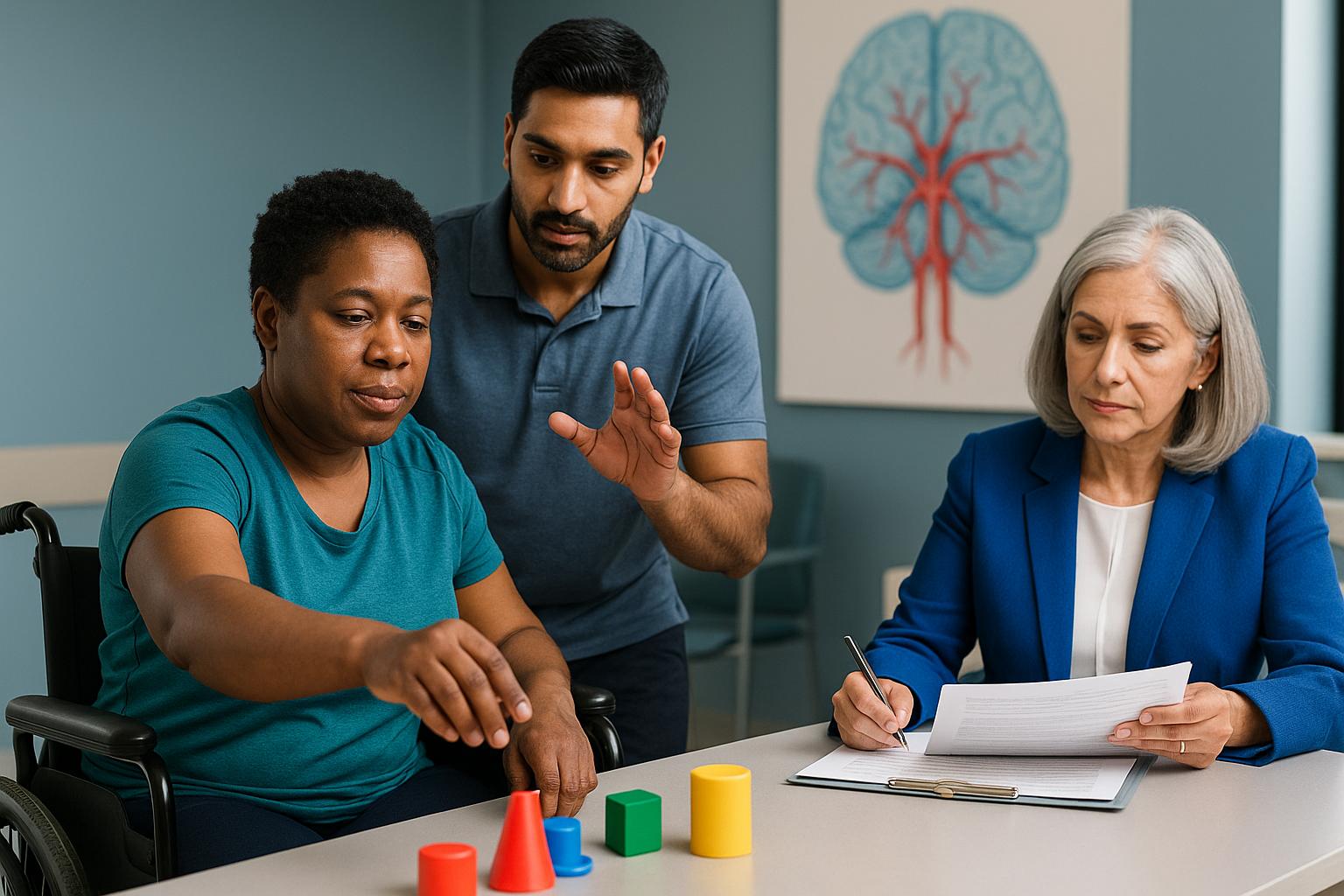
Stroke rehabilitation is a comprehensive, multidisciplinary process designed to restore function and independence following a cerebrovascular accident. This process encompasses physical, cognitive, and emotional domains, with each aspect requiring targeted interventions.
In my practice, I have found that the most effective programs are those that integrate evidence-based therapies, such as physical therapy, occupational therapy, and speech-language pathology, tailored to the individual’s deficits and goals.
The primary objective is to maximize recovery by promoting the brain’s ability to reorganize and form new connections. According to systematic reviews on exercise and pharmacological interventions, structured rehabilitation can significantly reduce post-stroke fatigue and improve overall functional outcomes. This is particularly relevant for attorneys, as the degree and pace of recovery directly inform the quantification of damages.
As a triple board-certified physician and attorney, I consider not only the clinical aspects of recovery but also how stroke rehabilitation documentation can be translated into legally meaningful information. From my perspective as a dual-trained expert, thorough and objective rehabilitation records create the necessary bridge between medical progress and the evidence required for credible damage assessments or defenses.
Rehabilitation is not a static process; it evolves as the individual progresses through acute, subacute, and chronic phases. Each phase is characterized by specific goals and measurable milestones, which serve as objective evidence in both clinical and legal contexts. I emphasize the importance of early intervention, as research consistently demonstrates that timely rehabilitation yields superior outcomes.
Critical Stroke Rehabilitation Milestones
Stroke rehabilitation milestones are commonly used to track progress in physical, cognitive, and communicative domains. These milestones are essential for both clinical management and legal documentation, as they provide a timeline of recovery and functional gains.
Physical Milestones and Timeline
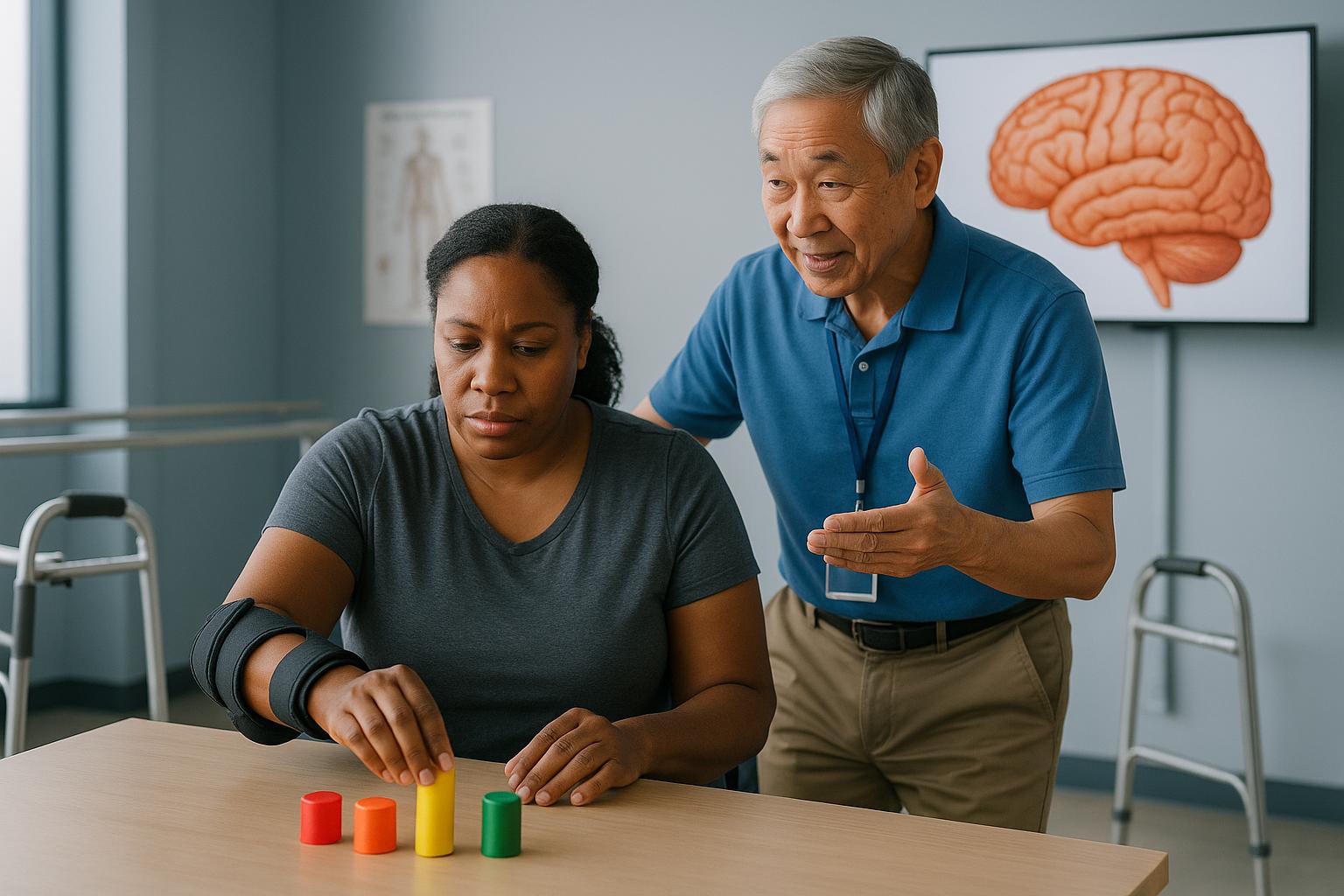
Physical rehabilitation often focuses on improving mobility, balance, and strength. Common goals in stroke rehabilitation include achieving independent bed mobility, transferring from bed to chair without assistance, ambulating with or without assistive devices, and restoring fine motor skills.
Documenting the timeline for each rehabilitation goal may help in understanding the recovery process. Systematic reviews highlight the role of motor imagery and neuroplasticity in accelerating these gains. Additionally, high-intensity rehabilitation protocols have been shown to yield faster and more robust improvements. Clinical trial data further support that early initiation of rehabilitation correlates with better long-term outcomes.
“In my 15+ years of practice evaluating individuals with spinal cord and brain injuries, I’ve found that detailed functional assessment, beyond basic diagnosis, is essential for accurately delineating damages in legal proceedings.” This approach is equally vital in the context of stroke, where subtle distinctions in functional gains can have a substantial impact on both prognosis and legal outcomes.
Cognitive and Communication Improvements
Cognitive rehabilitation often targets improvements in memory, attention, and executive function, while communication therapy focuses on language comprehension and expression.
Achieving independence in activities of daily living and effective communication are important for quality of life and may influence legal assessments. I have observed that recovery in cognitive and communicative domains may continue for extended periods, often requiring ongoing, specialized interventions.
When evaluating legal claims, I meticulously document each cognitive and communicative gain, as these are frequently contested in court. The use of standardized assessments may contribute to objectivity and defensibility in rehabilitation documentation.
Based on treating hundreds of patients with neurologic injuries, I have consistently seen that even small advancements in cognitive or language function can alter the calculation of damages and influence litigation outcomes.
When to Seek Medical Attention
Seek immediate medical attention from a physician if there is sudden loss of consciousness, new onset of severe weakness, or difficulty speaking or understanding language.
Translating Milestones to Damages
The translation of rehabilitation milestones into legal damages requires a nuanced understanding of both medical progress and legal standards. Each documented milestone serves as a quantifiable indicator of functional recovery, which can be directly linked to economic and non-economic damages in litigation.
Milestone Documentation in Court
Accurate and detailed documentation is the cornerstone of defensible expert testimony. I ensure that every milestone is recorded with objective measures, such as standardized scales and timelines.
Research underscores the value of personalized, patient-centric rehabilitation and tele-rehabilitation in improving outcomes, which must be reflected in the medical record. This level of detail allows attorneys to substantiate claims for lost wages, diminished earning capacity, and future care needs.
From my unique perspective with both medical and legal training, I can translate complex medical findings into precise documentation that clearly establishes functional limitations for both plaintiff and defense teams.
While some medical experts focus solely on diagnosis, my approach emphasizes comprehensive functional assessment that provides all parties—physicians, attorneys, and litigants—with clear, accessible documentation of impairments.
learn more about my medical-legal services and expert witness capabilities if you’re seeking both medical assessment and legal applications for your case.
Common Pitfalls in Rehab Testimony
Common pitfalls include vague or inconsistent documentation, failure to link milestones to functional outcomes, and lack of clarity regarding prognosis. In my dual role as a physician and legal expert, I have seen cases undermined by incomplete records or ambiguous language. To avoid these issues, I advocate for the use of validated assessment tools and clear, chronological narratives that withstand cross-examination.
“Having worked with hundreds of spinal cord injury cases, I’ve found that accurate functional assessment and documentation are equally valuable for plaintiffs seeking fair compensation and defendants requiring objective analysis.” The key is ensuring that every observation is tied to how it directly impacts the litigant’s daily life and potential for independence or ongoing care.
Pathways to Functional Recovery
Functional recovery after stroke is achieved through a combination of traditional therapies and emerging technologies. The integration of advanced modalities can enhance outcomes, particularly when tailored to the individual’s needs.
Advanced Technologies (BCI, Robotics, TMS)
Innovative interventions such as brain-computer interface (BCI), robotic-assisted therapy, and transcranial magnetic stimulation (TMS) are increasingly incorporated into rehabilitation protocols.
Meta-analyses demonstrate that robotic therapy accelerates motor recovery, especially during the subacute phase. Brain stimulation techniques are most effective when initiated within three months post-stroke, capitalizing on heightened neuroplasticity. In my practice, I have observed that combining these technologies with conventional therapy yields superior results for select individuals.
From my perspective as a physiatrist specializing in neurorehabilitation, integrating technology is most successful when it is guided by ongoing, functional assessment rather than technology for technology’s sake. The most significant clinical and legal improvements are achieved when advanced modalities are matched to the unique deficit profile of each litigant.
Patient-Centered, Individualized Approaches
Personalized rehabilitation plans, developed in collaboration with the individual and their caregivers, are now the standard of care.
Systematic reviews confirm that patient-centric models improve both physical and cognitive outcomes. I prioritize shared decision-making and regular reassessment to ensure that interventions remain aligned with evolving goals. This approach not only optimizes recovery but also provides a robust framework for legal analysis of damages.
In complex litigation, I have found that a clear, individualized rehabilitation trajectory—supported by documentation of each milestone—enables all parties to understand both the achieved and potential levels of functional independence. This is particularly critical for life care planning and future damages estimation.
Expert Documentation: Legal Significance
Expert documentation bridges the gap between clinical progress and legal argumentation. As a triple board-certified physician and attorney, I am uniquely positioned to translate complex medical findings into clear, actionable legal evidence.
Elements Attorneys Should Look For
- Objective, time-stamped milestones
- Use of validated assessment tools
- Clear linkage between functional gains and daily living activities
- Prognostic statements grounded in evidence
I consistently employ these elements in my reports, ensuring that each claim is substantiated by defensible data. Guidelines from leading organizations reinforce the necessity of rigorous documentation for both clinical and legal purposes.
From my experience, it is often the narrative clarity and specificity of these elements—rather than the volume of documentation—that distinguishes defensible, influential expert testimony from generic or challenged reports.
Building a Compelling Narrative
A compelling medico-legal narrative weaves together clinical milestones, functional outcomes, and their impact on the litigant’s life. I structure my expert opinions to clearly delineate the causal relationship between the stroke, the rehabilitation process, and the resulting limitations or capabilities. This methodical approach enhances the credibility of the testimony and supports robust damage calculations.
In summary, my unique dual credentialing as both a physiatrist and attorney allows me to serve as a bridge between the medical reasoning underpinning stroke rehabilitation and the precise, actionable narratives attorneys require in high-stakes litigation.
My Approach to Patient Care
As a triple board-certified physician and attorney, my approach to stroke rehabilitation is grounded in both clinical rigor and legal precision. I believe that every individual’s recovery journey is unique, requiring a tailored plan that addresses not only physical and cognitive deficits but also the documentation standards necessary for legal proceedings.
In my practice, I emphasize the use of validated assessment tools and objective milestone tracking. This ensures that each functional gain is not only clinically meaningful but also defensible in court, providing attorneys with the robust evidence needed for accurate damage calculations.
My dual training in medicine and law allows me to bridge the gap between complex medical realities and the evidentiary requirements of litigation. I am committed to ongoing professional development, regularly engaging with national guidelines and research to ensure that my methods reflect the highest standards of care.
Ultimately, my goal is to deliver rehabilitation and expert analysis that withstands scrutiny—whether in the clinic or the courtroom—so that litigants and their legal teams can proceed with confidence.
Stroke Rehabilitation and Legal Consulting in Reno
Stroke rehabilitation in Reno presents unique opportunities and challenges due to the region’s diverse population and evolving healthcare landscape. As a physician based in Reno with licensure across multiple states, I am able to offer both in-person and telemedicine consultations, ensuring that individuals and attorneys throughout Nevada and beyond have access to specialized expertise.
The climate and altitude in Reno can influence recovery timelines, particularly for those with cardiovascular or respiratory considerations. My practice is equipped to address these local factors, integrating them into both rehabilitation planning and medico-legal documentation.
Reno serves as the hub for my multidisciplinary services, supporting not only local patients but also attorneys, claims adjusters, and litigants seeking expert witness or independent medical evaluation (IME) services. My dual medical-legal background allows me to provide comprehensive assessments that are relevant for both clinical care and legal proceedings.
If you are in Reno or the surrounding region and require a nuanced, court-ready evaluation of stroke rehabilitation milestones, I invite you to connect with me for a virtual second opinion or to request an IME consultation tailored to your needs.
Conclusion
Stroke rehabilitation is a multidisciplinary process that not only drives functional recovery but also forms the evidentiary backbone for legal damage assessments. In summary, timely, individualized rehabilitation—documented with objective milestones—optimizes both clinical outcomes and the defensibility of damages in litigation.
My dual qualifications as a triple board-certified physician and attorney uniquely position me to translate complex medical progress into clear, actionable legal documentation, ensuring that every litigant’s recovery is accurately represented.
Based in Reno, I provide specialized services across multiple states, including Texas, California, and Colorado, and others through both telemedicine and in-person consultations. I am willing to travel as an expert witness, offering flexibility that benefits litigants with complex, multistate cases.
I invite you to schedule a consultation TODAY to secure the highest standard of medical recovery and ensure robust legal documentation. Prompt action supports better outcomes and stronger legal protection, giving you confidence and peace of mind during challenging times. For a comprehensive, court-ready evaluation, connect with me for a virtual or in-person assessment.
Recent advances in patient-centric, multidisciplinary stroke rehabilitation reinforce the importance of individualized care and meticulous documentation for both medical and legal success.
This article is for educational purposes only and should not be used as a substitute for professional medical advice, diagnosis, or treatment. Always seek the advice of your physician or other qualified healthcare provider with any questions you may have regarding a medical condition or treatment options. Never disregard professional medical advice or delay in seeking it because of something you have read in this article.
Frequently Asked Questions
What is the role of stroke rehabilitation in legal cases?
Stroke rehabilitation provides objective milestones that document a litigant’s functional recovery. These milestones are essential for quantifying damages, supporting both economic and non-economic claims. Accurate, time-stamped records allow attorneys to link medical progress directly to legal outcomes, making the rehabilitation process central to defensible expert testimony.
How can I access your stroke rehabilitation expertise regardless of my location?
I offer both telemedicine and in-person consultations for stroke rehabilitation across multiple states, including Texas, California, Colorado, and others. My multi-state licensure and willingness to travel as an expert witness ensure that litigants and attorneys nationwide can benefit from my specialized, dual medical-legal expertise, regardless of geographic location.
How does expert documentation of stroke milestones impact damage assessment for attorneys?
Expert documentation translates clinical milestones into clear, objective evidence for legal proceedings. By using validated assessment tools and detailed narratives, I ensure that every functional gain or limitation is defensible in court. This approach has been validated through extensive clinical and legal experience, supporting fair and accurate damage calculations for both plaintiffs and defendants.
About the Author
Dr. Ellia Ciammaichella, DO, JD, is a triple board-certified physician specializing in Physical Medicine & Rehabilitation, Spinal Cord Injury Medicine, and Brain Injury Medicine. With dual degrees in medicine and law, she offers a rare, multidisciplinary perspective that bridges clinical care and medico-legal expertise. Dr. Ciammaichella helps individuals recover from spinal cord injuries, traumatic brain injuries, and strokes—supporting not just physical rehabilitation but also the emotional and cognitive challenges of life after neurological trauma. As a respected independent medical examiner (IME) and expert witness, she is known for thorough, ethical evaluations and clear, courtroom-ready testimony. Through her writing, she advocates for patient-centered care, disability equity, and informed decision-making in both medical and legal settings.
Medical Expert Services
Dr. Ciammaichella provides expert medical consulting for attorneys handling complex injury cases: