Stroke Aphasia Recovery: Proven Pathways to Reclaim Your Voice
By Ellia Ciammaichella, DO, JD
Triple Board-Certified in Physical Medicine & Rehabilitation, Spinal Cord Injury Medicine, and Brain Injury Medicine
Quick Insights
Stroke aphasia is a language disorder caused by brain damage that affects speaking, understanding, reading, or writing. It occurs when stroke damages the brain’s language centers, typically in the left hemisphere. The condition does not reflect intelligence but disrupts how the brain processes words. Early, intensive speech-language therapy offers the strongest recovery potential, though outcomes vary by stroke severity and location.
Key Takeaways
- Early intensive therapy—20 to 50 hours over four to five days weekly—yields best outcomes.
- Brain stimulation techniques like rTMS can safely enhance speech therapy results across language domains.
- Aphasia type depends on which brain region was damaged, affecting expression or comprehension differently.
- Recovery continues for months to years, with the most rapid gains typically occurring in the first three to six months.
Why It Matters
Losing the ability to communicate isolates patients from loved ones and disrupts daily independence. Understanding stroke aphasia recovery pathways helps families set realistic expectations and pursue evidence-based interventions. Timely, intensive rehabilitation can restore meaningful communication and improve quality of life after stroke.
Introduction
As a board-certified physician and attorney, I evaluate stroke aphasia cases where communication loss profoundly affects legal and functional outcomes. My dual background as Ellia Ciammaichella, DO, JD, enables me to combine clinical expertise with a deep understanding of medico-legal implications in these complex situations.
Stroke aphasia is a language disorder caused by brain damage that disrupts speaking, understanding, reading, or writing. It occurs when a stroke damages the brain’s language centers, typically in the left hemisphere. The condition does not reflect intelligence but disrupts how the brain processes words.
Early intervention matters because recovery potential is greatest in the first months after stroke. Intensive speech-language therapy combined with emerging neuromodulation techniques can restore meaningful communication. Understanding which brain regions were affected helps predict recovery patterns and guide rehabilitation planning.
This article explains aphasia types, evidence-based interventions, and realistic recovery timelines for legal and medical professionals evaluating post-stroke communication deficits.
What Is Aphasia After Stroke?
Stroke aphasia occurs when brain damage disrupts the neural networks responsible for language processing. The left hemisphere typically controls language function in most people. When stroke damages these regions, patients lose the ability to translate thoughts into words or comprehend what others say.
Aphasia assessment requires a multidisciplinary approach that includes speech-language pathologists, physicians, and communication partners. I evaluate these cases by examining imaging studies to identify which language centers sustained damage. The location and extent of injury determine whether a patient struggles more with expression, comprehension, or both.
Intelligence remains intact in aphasia. The brain simply cannot access or process language the way it did before the stroke. This distinction matters in legal contexts because cognitive capacity and communication ability are separate functions. A patient may understand complex concepts but cannot verbalize them, or may speak fluently but with meaningless content.
Types of Aphasia and Their Impact on Communication
Different stroke locations produce distinct aphasia patterns. Broca’s aphasia results from damage to the frontal lobe’s language production area. Patients understand speech but struggle to form words or sentences. Their speech sounds effortful and choppy, often limited to single words or short phrases.
Wernicke’s aphasia stems from damage to the temporal lobe’s comprehension center. These patients speak fluently but with jumbled, nonsensical content. They cannot understand spoken or written language, making communication profoundly difficult despite preserved speech rhythm and grammar.
Global aphasia involves extensive damage to multiple language regions. Patients have severe impairments in both expression and comprehension. This represents the most devastating form of stroke aphasia, often requiring long-term intensive rehabilitation and alternative communication strategies.
Anomic aphasia primarily affects word retrieval. Patients know what they want to say but cannot find the right words. This type often emerges during recovery from more severe aphasia forms or results from smaller, strategic strokes affecting word-finding networks.
For a deeper understanding of language disruptions due to injury, you may also want to explore the differences between how recovery milestones are evaluated after spinal cord injury.
How Speech-Language Therapy Supports Recovery
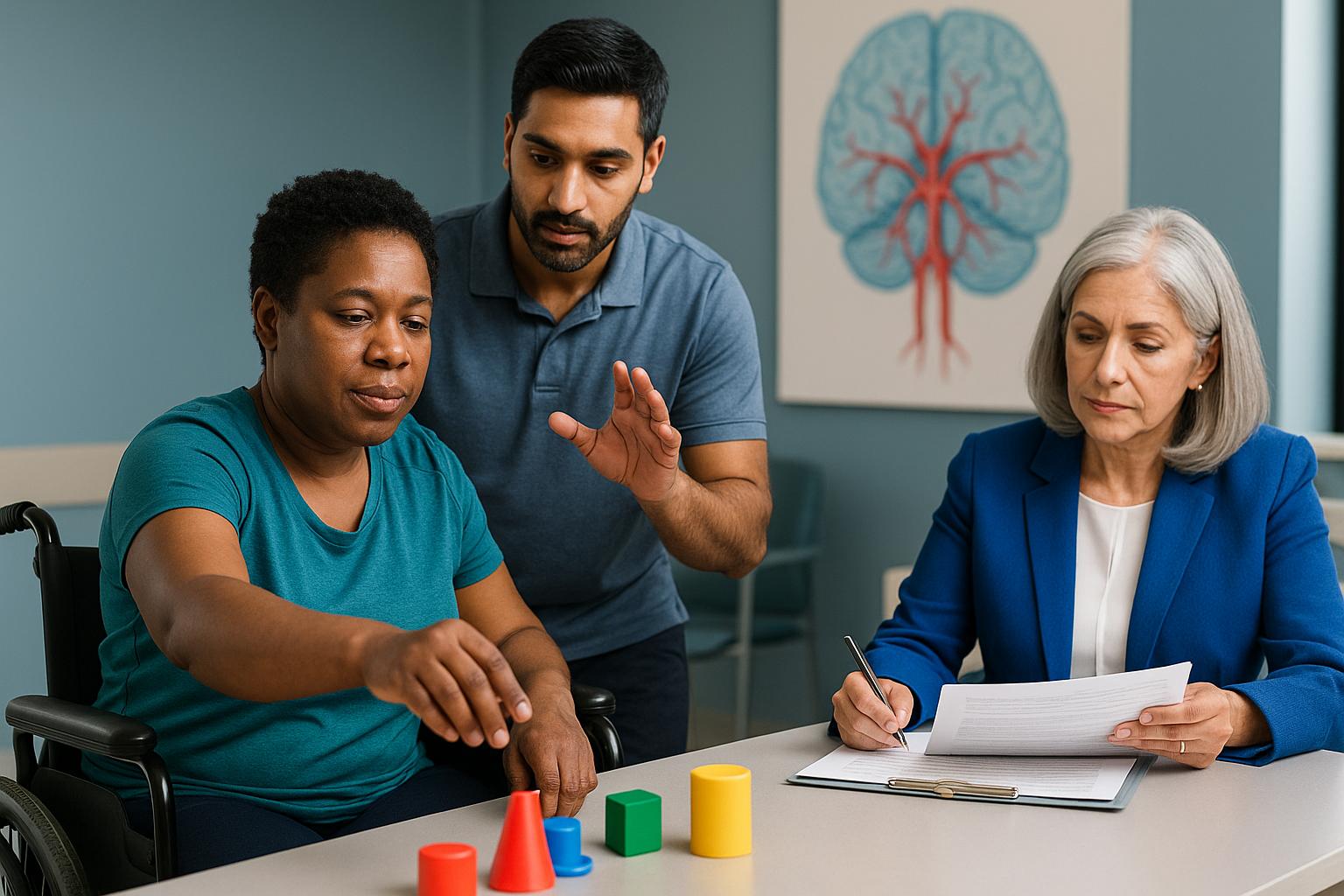
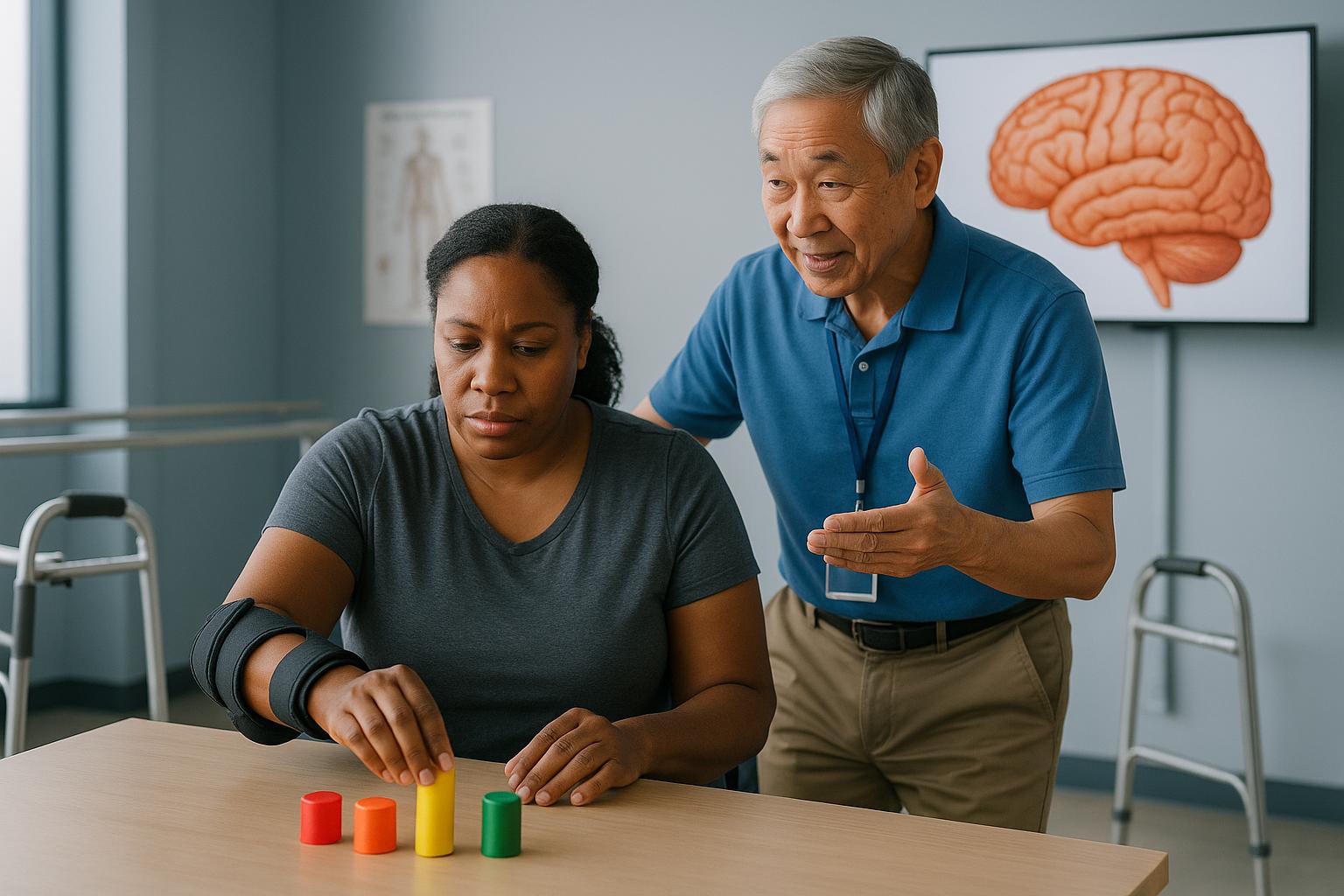
Speech-language therapy remains the foundation of stroke aphasia rehabilitation. Evidence shows that early, intensive therapy yields the best outcomes, with protocols delivering twenty to fifty hours over four to five days weekly producing measurable gains.
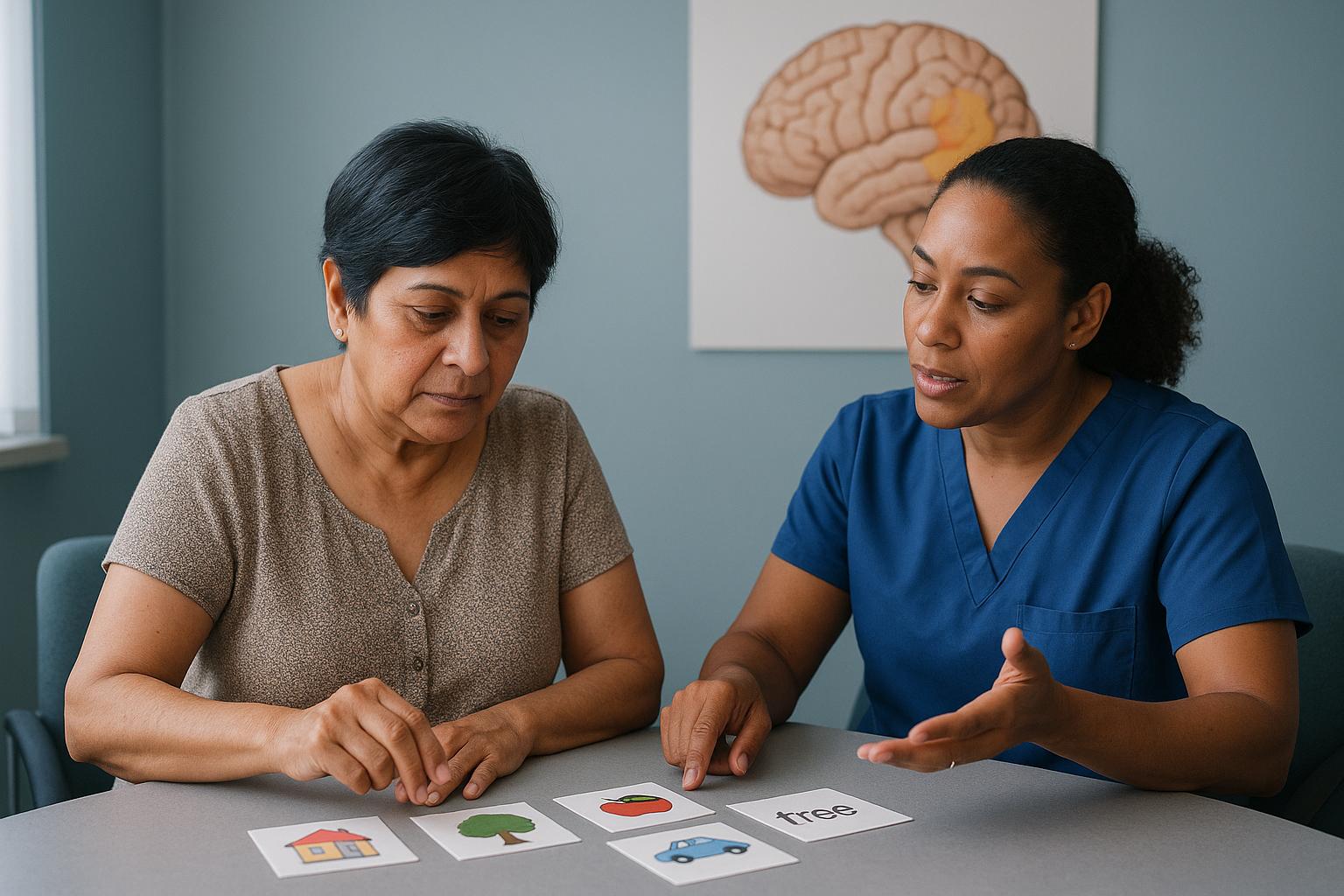
Therapy targets specific language deficits identified during a comprehensive assessment. For expression difficulties, clinicians use repetition exercises, word-finding strategies, and sentence construction practice. Comprehension training involves following commands, answering questions, and processing increasingly complex verbal information.
The brain’s neuroplasticity drives recovery. Intensive practice strengthens surviving neural pathways and recruits adjacent brain regions to assume language functions. This reorganization occurs most readily in the first six months after stroke, though improvement can continue for years with sustained effort.
In my evaluations, I look for documentation of therapy intensity, patient engagement, and measurable progress. These factors help determine whether observed deficits reflect maximal recovery or inadequate rehabilitation. The difference significantly impacts prognosis and life care planning in legal contexts.
Emerging Interventions: Brain Stimulation and Technology
Repetitive transcranial magnetic stimulation modulates cortical excitability in language networks, potentially enhancing therapy effectiveness. This non-invasive technique uses magnetic pulses to stimulate or inhibit specific brain regions involved in language processing.
Research demonstrates that rTMS combined with speech therapy safely improves multiple language domains compared to therapy alone. The stimulation appears to prime neural circuits, making them more responsive to subsequent language practice. Safety profiles across multiple trials support its use as an adjunctive intervention.
Different rTMS protocols target distinct mechanisms. Low-frequency stimulation typically inhibits overactive regions in the unaffected hemisphere, while high-frequency stimulation excites damaged language areas. The optimal approach depends on lesion location and aphasia type, requiring individualized treatment planning.
Computerized speech therapy increases self-training engagement and supports independent practice. Digital platforms allow patients to practice language exercises independently between formal therapy sessions. This technology shows particular promise for mild to moderate aphasia, where patients can follow on-screen instructions and receive immediate feedback.
Recovery Timelines and Prognostic Factors
The first three to six months after a stroke represent the period of most rapid recovery. Neural reorganization occurs most readily during this window, making intensive intervention particularly valuable. Spontaneous recovery also contributes to early gains, though distinguishing it from therapy effects remains challenging.
Recovery continues beyond six months but typically at a slower pace. Patients may show measurable improvement for one to two years post-stroke with sustained rehabilitation. Some individuals demonstrate gains even years later, particularly when new interventions or increased therapy intensity are introduced.
Stroke severity and lesion size strongly influence outcomes. Larger strokes affecting multiple language regions generally produce more severe, persistent deficits. Smaller, strategic strokes may cause significant initial impairment but allow better recovery potential through neural reorganization.
If you are interested in how neurological location and severity impact other forms of acquired deficits, you may want to review the expert recognition guide for AICA stroke symptoms.
Age, overall health, and cognitive status also affect prognosis. Younger patients with fewer comorbidities typically recover more language function. Pre-existing cognitive impairment or subsequent strokes complicate rehabilitation and limit ultimate recovery. When evaluating cases, I consider these factors alongside therapy documentation to form opinions about expected versus achieved outcomes.
My Approach to Aphasia Evaluation
In my years practicing as a physiatrist—and drawing on over two decades of combined medical and legal expertise—I’ve found that stroke aphasia cases require both clinical precision and clear functional documentation for legal proceedings.
From my unique perspective with both medical and legal training, I assess not only which language networks sustained damage but also how those deficits translate into measurable communication limitations. I review imaging studies alongside therapy records to determine whether observed impairments reflect maximal recovery or inadequate rehabilitation intensity.
If your case involves the need for independent medical opinion, I provide objective medical-legal consulting, including expert witness testimony, IMEs, and comprehensive case review for stroke aphasia and related neurological conditions.
When evaluating stroke aphasia for litigation, I examine therapy dosing, patient engagement, and documented progress against evidence-based benchmarks. This dual-trained approach allows me to provide physicians, attorneys, and litigants with accessible explanations of complex neuro-rehabilitation concepts—whether supporting plaintiffs seeking fair compensation or defendants requiring objective functional analysis.
My goal is to bridge the gap between clinical outcomes and legal standards, ensuring all parties understand both the medical mechanisms driving language recovery and the realistic prognosis for long-term communication function.
Conclusion
In summary, stroke aphasia disrupts language processing when brain injury damages critical communication networks, typically in the left hemisphere. I evaluate these cases by examining imaging studies, therapy records, and functional outcomes to determine whether observed deficits reflect maximal recovery or inadequate rehabilitation.
Research demonstrates that non-invasive brain stimulation combined with speech therapy can safely modulate language recovery across multiple domains. Early, intensive intervention—ideally twenty to fifty hours over four to five days weekly—offers the strongest recovery potential, though outcomes depend on stroke severity, lesion location, and sustained rehabilitation engagement.
Based in Reno, Nevada, Dr. Ellia Ciammaichella provides medical-legal services through Ciammaichella Consulting Services, PLLC, across licensed states such as Texas, California, and Colorado. I am available to travel for expert testimony and in-person evaluations when appropriate. This flexibility allows individuals and legal teams with complex cases to access consistent, expert analysis regardless of location.
I invite you to request a consultation today to discuss how my dual medical and legal training can clarify both the clinical trajectory and functional implications of stroke aphasia for your case, whether you need an objective assessment for life care planning or expert testimony that bridges rehabilitation science and legal standards. I provide accessible explanations that support fair evaluation of communication deficits and recovery potential.
This article is for educational purposes only and should not be used as a substitute for professional medical advice, diagnosis, or treatment. Always seek the advice of your physician or other qualified healthcare provider with any questions you may have regarding a medical condition or treatment options. Never disregard professional medical advice or delay in seeking it because of something you have read in this article.
Frequently Asked Questions
What is the difference between aphasia and dysarthria after a stroke?
Aphasia is a language disorder affecting how the brain processes words, impacting speaking, understanding, reading, or writing. Dysarthria is a motor speech disorder caused by muscle weakness or coordination problems that makes speech sound slurred or effortful.
Aphasia patients know what they want to say but cannot access the words, while dysarthria patients have intact language but struggle with physical speech production. Both conditions can occur together after a stroke, requiring different rehabilitation approaches.
How long does aphasia recovery take after a stroke?
Recovery timelines vary by stroke severity and lesion size. The first three to six months show the most rapid improvement, with intensive therapy yielding the strongest gains during this window. Measurable progress can continue for one to two years with sustained rehabilitation.
Evidence shows that early, intensive therapy—twenty to fifty hours over four to five days weekly—produces the best outcomes. Some patients demonstrate continued gains even years later when new interventions or increased therapy intensity are introduced.
Can someone with severe aphasia regain the ability to communicate?
Recovery potential depends on stroke extent, affected brain regions, and rehabilitation intensity. Global aphasia, involving extensive damage to multiple language areas, represents the most severe form and typically requires long-term intensive therapy.
While complete language restoration may not occur, many patients develop functional communication through alternative strategies, augmentative devices, or compensatory techniques. Early intervention, family involvement, and sustained therapy maximize recovery potential even in severe cases.
About the Author
Dr. Ellia Ciammaichella, DO, JD, is a triple board-certified physician specializing in Physical Medicine & Rehabilitation, Spinal Cord Injury Medicine, and Brain Injury Medicine. With dual degrees in medicine and law, she offers a rare, multidisciplinary perspective that bridges clinical care and medico-legal expertise. Dr. Ciammaichella helps individuals recover from spinal cord injuries, traumatic brain injuries, and strokes—supporting not just physical rehabilitation but also the emotional and cognitive challenges of life after neurological trauma. As a respected independent medical examiner (IME) and expert witness, she is known for thorough, ethical evaluations and clear, courtroom-ready testimony. Through her writing, she advocates for patient-centered care, disability equity, and informed decision-making in both medical and legal settings.
Medical Expert Services
Dr. Ciammaichella provides expert medical consulting for attorneys handling complex injury cases: