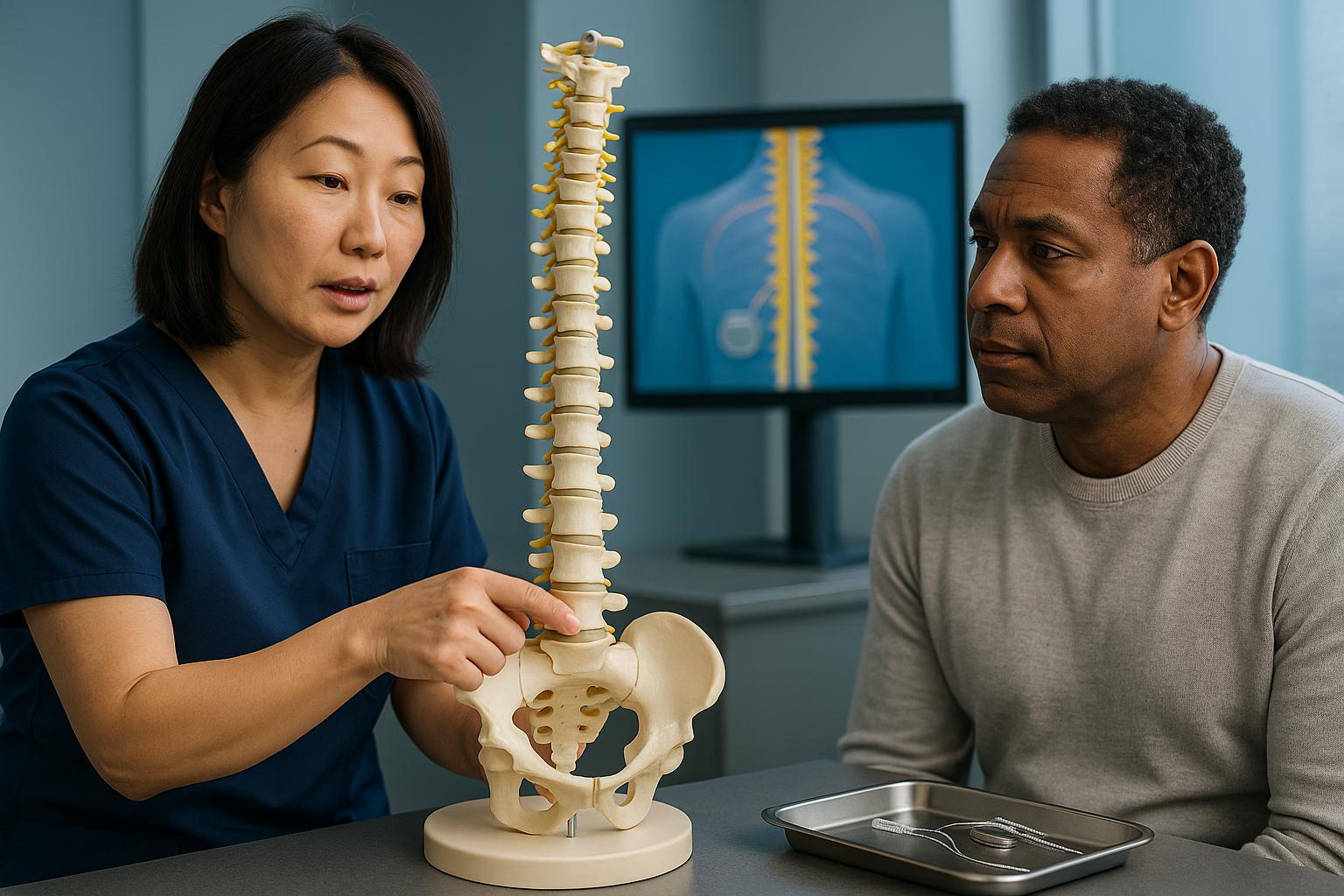
Autonomic Dysfunction After T6 Spinal Cord Injury
By Ellia Ciammaichella, DO, JD
Triple Board-Certified in Physical Medicine & Rehabilitation, Spinal Cord Injury Medicine, and Brain Injury Medicine

Quick Insights:
T6 autonomic dysfunction represents one of the most consequential yet under-recognized complications following spinal cord injury, disrupting the body’s ability to regulate blood pressure, heart rate, and temperature through involuntary pathways. Research suggests that injuries at or above the sixth thoracic vertebra sever critical communication between the brain and the sympathetic nervous system, creating conditions for life-threatening autonomic dysreflexia and chronic cardiovascular instability. Standardized evaluation and staged management protocols—including blood pressure monitoring, trigger prevention, and patient education—can significantly reduce emergency complications and improve long-term outcomes. Attorneys handling catastrophic spinal cord injury cases benefit from physiatric expertise that addresses the full spectrum of autonomic complications, from acute management failures to lifetime cost projections.
Key Takeaways
- Injuries at or above T6 sever communication between the brain and sympathetic nervous system, causing uncontrolled blood pressure spikes, temperature dysregulation, and sweating abnormalities
- Autonomic dysreflexia—a sudden, dangerous rise in blood pressure triggered by stimuli below the injury level—affects the majority of individuals with injuries at T6 or above and constitutes a medical emergency requiring immediate intervention
- Effective management combines trigger identification, non-pharmacologic interventions, standardized monitoring protocols, and patient education to prevent complications
- Medical-legal cases involving T6 SCI require physiatrist expertise to evaluate whether autonomic complications were appropriately anticipated, monitored, and managed throughout acute care and rehabilitation
Why It Matters
Autonomic dysfunction after T6 spinal cord injury represents one of the most serious and under-recognized complications in catastrophic injury medicine. Attorneys handling spinal cord injury cases across the United States encounter medical records where autonomic complications—particularly autonomic dysreflexia episodes—were either inadequately managed or failed to trigger appropriate preventive protocols during rehabilitation. For the estimated 17,000 Americans who sustain spinal cord injuries annually, many involving thoracic-level trauma, understanding autonomic dysfunction is critical to evaluating both the level of care delivered and the lifetime costs of managing these complications. The intersection of cardiovascular instability, temperature regulation failure, and emergency care needs creates complex damages calculations that require specialized physiatry expertise.
Understanding Autonomic Dysfunction in T6 Spinal Cord Injury
Why does the T6 level represent a critical threshold for autonomic complications after spinal cord injury? The answer lies in anatomy: injuries at or above the sixth thoracic vertebra disconnect the brain from the majority of the sympathetic nervous system, creating a cascade of cardiovascular, thermoregulatory, and other autonomic control problems that persist throughout the patient’s lifetime. A comprehensive clinical practice guideline published in Topics in Spinal Cord Injury Rehabilitation (2021) synthesizing blood pressure, sweating, and temperature dysfunction management after SCI emphasizes that standardized evaluation and staged intervention protocols are essential to preventing serious complications in this population.
In my practice, I see t6 autonomic dysfunction cases where early recognition and protocol adherence could have prevented serious complications—yet the medical records reveal gaps in monitoring, education, and follow-up that constitute departures from the expected standard of care. Dr. Ellia Ciammaichella, DO, JD, brings dual physician-attorney perspective to evaluating autonomic complications in catastrophic injury litigation. Based in Reno, Nevada, and licensed across multiple states, I provide medical-legal consulting that bridges the gap between complex autonomic physiology and the legal standards attorneys need to build compelling cases.
Important Clinical Context
Autonomic dysfunction severity correlates directly with injury level and completeness—higher and more complete injuries produce more severe autonomic impairment. Autonomic dysreflexia typically emerges after spinal shock resolves, usually weeks to months post-injury, though it can present acutely. These complications are predictable based on injury level, making prevention and monitoring protocols a prevailing clinical practice expectation in any rehabilitation setting. The T6 threshold is critical because sympathetic outflow to major vascular beds originates from the T6-L2 spinal cord segments; injuries at or above T6 leave the majority of sympathetic control isolated from brain regulation, setting the stage for the autonomic instability that defines this clinical picture.
The Physiology of Autonomic Disruption at T6

The autonomic nervous system normally maintains homeostasis through a carefully orchestrated balance between sympathetic and parasympathetic activity. Sympathetic preganglionic neurons originate in the thoracolumbar spinal cord (T1-L2), with the splanchnic circulation—controlling the majority of the body’s vascular resistance—innervated from T6-L2. When a spinal cord injury occurs at or above T6, supraspinal control over this sympathetic outflow is lost. However, the spinal reflex arcs below the injury remain intact and become hyperactive without descending inhibition from the brainstem and hypothalamus.
This creates the physiological substrate for autonomic dysreflexia: noxious stimuli below the injury level—bladder distension, bowel impaction, skin breakdown—trigger massive sympathetic discharge that the brain cannot modulate or inhibit. The resulting unopposed vasoconstriction produces dangerous blood pressure elevations. Simultaneously, the intact parasympathetic nervous system attempts to compensate through the vagus nerve (which exits above the injury), producing characteristic bradycardia above the injury level—a paradoxical finding that clinicians must recognize immediately.
Temperature regulation is equally compromised. Loss of hypothalamic control over sweating and vasomotor responses below the injury level means the body cannot effectively dissipate or conserve heat through its largest surface area. Preclinical research published in the Journal of Applied Physiology (2020) comparing cervical and high thoracic spinal cord injuries has demonstrated that even injuries at different thoracic levels produce distinct autonomic and cardiovascular profiles, confirming that injury level is a primary determinant of autonomic consequences—a finding with direct implications for predicting complications based on documented neurological level.
Lujan & DiCarlo (Journal of Applied Physiology 2020): Preclinical models demonstrate that injuries above and below the T2 level—the peak of spinal cord projections to the stellate ganglia providing over 90% of cardiac sympathetic supply—produce remarkably different cardiovascular outcomes, including differences in resting blood pressure, heart rate, and stress-induced responses.
Clinical Manifestations and Management of Autonomic Complications
Autonomic Dysreflexia: Recognition and Acute Management
Autonomic dysreflexia (AD) is a sudden, potentially life-threatening rise in blood pressure—typically 20-40 mmHg or more above baseline—triggered by noxious stimuli below the injury level. The classic triggers include bladder distension, bowel impaction, tight clothing, pressure injuries, ingrown toenails, and fractures. Patients present with severe headache, profuse sweating above the injury level, facial flushing, nasal congestion, and paradoxical bradycardia.

The immediate management protocol requires sitting the patient upright to induce orthostatic reduction in blood pressure, removing tight clothing and constricting devices, and systematically identifying the trigger—checking catheter patency for bladder distension and assessing for bowel impaction. If blood pressure remains dangerously elevated after trigger removal, short-acting antihypertensive agents may be required. The American Academy of Physical Medicine and Rehabilitation (PM&R Knowledge Now, 2023) emphasizes that AD recognition, trigger identification, and emergency management protocols constitute fundamental clinical practice expectations for any clinician managing patients with injuries at or above T6.
A systematic review published in Archives of Physical Medicine and Rehabilitation (2009) found that while multiple pharmacologic and non-pharmacologic strategies exist for AD management, most evidence comes from non-randomized designs and study quality remains variable—underscoring that optimal protocols continue to evolve, but the obligation to implement evidence-based prevention strategies is well established. In my experience, the most critical failure I encounter in case reviews is not the absence of pharmacologic intervention during an episode but the absence of prevention protocols—optimized bowel and bladder programs, skin care regimens, and patient education that prevent triggers from occurring in the first place.
Cardiovascular Instability and Orthostatic Hypotension
Individuals with T6 SCI experience not only hypertensive crises during AD episodes but also chronic hypotension and orthostatic intolerance. Loss of sympathetic vascular tone causes blood pooling in the lower extremities and splanchnic circulation when upright, producing dizziness, fatigue, and syncope during transfers and mobility training. This cardiovascular instability directly impedes rehabilitation progress.
Management strategies include compression garments—abdominal binders and compression stockings—gradual mobilization protocols, adequate hydration, and in some cases pharmacologic support with agents such as midodrine. Published guidelines in Topics in Spinal Cord Injury Rehabilitation (2021) recommend individualized blood pressure monitoring protocols and staged management approaches during rehabilitation that account for both the hypotensive baseline and the risk of hypertensive crises.
Temperature Dysregulation and Neurogenic Fever
T6 SCI disrupts thermoregulation through loss of sweating below the injury level, impaired vasomotor control, and diminished ability to generate heat through shivering in denervated muscle groups. This creates vulnerability to both hyperthermia—particularly in warm environments or during exercise—and hypothermia during cold exposure.
Neurogenic fever—fever occurring in the acute phase after SCI without infectious cause—presents a specific diagnostic challenge. A systematic review in Global Spine Journal (2016) found that fever of all origins occurs in approximately 50% of acute SCI cases, with neurogenic fever specifically accounting for a mean incidence of 8%. The pathogenesis remains incompletely understood, and effective prevention and treatment strategies are under-researched—often requiring empiric management and careful monitoring to rule out infection before attributing fever to neurogenic causes. Long-term temperature management requires environmental controls, hydration monitoring, and comprehensive caregiver education about heat and cold exposure risks.
Long-Term Implications and Quality of Life Considerations

The burden of recurrent autonomic dysreflexia episodes extends far beyond acute medical emergencies. Patients face ongoing emergency department visits, complex medication management, and lifestyle modifications to avoid triggers. Research from the International Collaboration on Repair Discoveries (ICORD, 2017) highlights the substantial economic burden of AD-related emergencies, encompassing costs beyond standard SCI care that attorneys must account for in damages calculations.
Autonomic instability also limits functional independence. Cardiovascular lability can reduce tolerance for upright positioning, diminish exercise capacity, and impede community reintegration. The International Standards to Document Remaining Autonomic Function after Spinal Cord Injury (Spinal Cord, 2023) provide validated measures for objectively linking autonomic deficits—including cardiovascular and thermoregulatory domains—to functional independence outcomes and caregiver burden, enabling precise documentation of how autonomic dysfunction contributes to disability beyond motor and sensory impairment.
Return-to-work implications are significant: cardiovascular instability and temperature intolerance may limit work environments and require substantial accommodations. Comprehensive life care planning must account for autonomic monitoring equipment, caregiver training on AD recognition and management, environmental control systems for temperature regulation, and ongoing physiatry follow-up. Population-based research in Archives of Physical Medicine and Rehabilitation (2021) on the economic costs of traumatic SCI—including attendant care, home modifications, and employment disruption—provides the economic framework for projecting lifetime costs, some of which are directly attributable to autonomic complications.
Medical-Legal Considerations in T6 Autonomic Dysfunction Cases
Autonomic dysfunction after T6 SCI creates multiple evaluation points in medical-legal proceedings. First, standard of care during acute hospitalization and inpatient rehabilitation: were autonomic complications anticipated based on the documented injury level? Were blood pressure monitoring protocols implemented? Was the patient and family educated about AD triggers and emergency management before discharge? Were bowel and bladder programs optimized to prevent known AD triggers?
ICORD (2017): Autonomic dysreflexia generates costs beyond standard SCI care—including AD-specific emergency department visits, specialized monitoring equipment, and caregiver training on trigger recognition and emergency response—that must be separately quantified in damages assessments for catastrophic spinal cord injury cases.
Second, damages assessment requires quantifying costs that extend beyond standard SCI care—emergency department visits for AD episodes, home blood pressure monitoring equipment, environmental control systems, caregiver training time, and ongoing physiatry follow-up. As both a physician and attorney, I evaluate whether the medical team recognized the predictable autonomic risks at the T6 level and implemented appropriate prevention and monitoring protocols—failures here often constitute departures from standard of care.
Third, life care planning must project lifetime needs for autonomic monitoring, trigger prevention, and complication management—projections that require deep familiarity with the natural history of autonomic dysfunction after SCI. Fourth, evaluating whether autonomic complications were appropriately managed requires understanding of SCI physiology, rehabilitation protocols, and accepted practice expectations—expertise that triple board certification in Physical Medicine & Rehabilitation, Spinal Cord Injury Medicine, and Brain Injury Medicine specifically provides, and that general neurologists or orthopedic surgeons typically lack. As Co-Chair of the Advocacy Committee for the Association of Spinal Cord Injury Professionals, I maintain active involvement in advancing policy and professional standards in spinal cord injury medicine.
When Should You Seek a Physiatrist’s Expertise on Autonomic Dysfunction?
Attorneys and patients should recognize specific indicators that a T6 SCI case warrants physiatrist review.
Red Flags in Medical Records
Documented AD episodes during acute care or rehabilitation without evidence of protocol implementation or family education
Discharge summaries for T6 or higher SCI that lack autonomic dysfunction counseling or emergency management instructions
Emergency department visits for hypertensive crisis or syncope in an individual with known T6 SCI, suggesting inadequate outpatient management or education
Life care plans that omit autonomic monitoring equipment, caregiver training costs, or environmental control needs
For patients and families: seek physiatrist consultation if you or a loved one with T6 or higher SCI experiences severe headaches accompanied by blood pressure changes, recurrent dizziness during transfers, difficulty regulating body temperature, or frequent emergency department visits for blood pressure problems. In my experience, autonomic complications are often under-addressed in discharge planning and life care plans. When I review records and see T6 or higher injury without documented autonomic education or monitoring protocols, that is a red flag warranting detailed evaluation.
The Medical-Legal Consultation Process for Autonomic Dysfunction Cases

Attorneys engaging Dr. Ciammaichella for a T6 autonomic dysfunction case can expect a structured, thorough process.
Record Review
Comprehensive analysis of medical records, monitoring protocols, and discharge planning
Clinical Assessment
Detailed autonomic history, cardiovascular assessment, and functional capacity evaluation
Opinion Formation
Written opinions on clinical practice compliance, causation, and lifetime damages projections
Testimony
Deposition and trial testimony grounded in dual DO/JD expertise
Comprehensive medical-legal review and expert testimony services include detailed narrative reports with cited medical literature, clear explanations of physiology and accepted clinical practice, and itemized damages projections. The goal is accurate, objective assessment—not advocacy—grounded in the thoroughness and objectivity that define every engagement.
Comparing Assessment Approaches for Autonomic Dysfunction
| Assessment Domain | Physiatrist-Led Assessment | General Neurology or Primary Care |
|---|---|---|
| Scope of Evaluation | Comprehensive autonomic function testing including orthostatic vital signs, temperature regulation assessment, AD trigger identification, and functional impact analysis | Typically focused on neurological examination and basic vital sign monitoring without specialized autonomic protocols |
| Rehabilitation Integration | Assessment conducted in context of mobility training, bowel/bladder program optimization, and equipment needs to prevent autonomic complications | Assessment often occurs in isolation from rehabilitation activities and may not address trigger prevention strategies |
| Long-Term Management | Detailed protocols for AD prevention, caregiver training curriculum, environmental modification recommendations, and ongoing monitoring schedules | General recommendations for blood pressure monitoring and emergency care without rehabilitation-specific protocols |
| Life Care Planning | Itemized projections of autonomic-related costs including monitoring equipment, caregiver training time, emergency care frequency, and environmental controls | May provide general cost estimates without specialized knowledge of autonomic complication management needs |
| Medical-Legal Documentation | Detailed opinions linking autonomic dysfunction to injury level, evaluating standard of care in prevention and management, and quantifying damages with cited literature | Typically provides diagnostic opinions without rehabilitation or life care planning context |
| Patient & Family Education | Structured education on AD recognition, trigger avoidance, emergency management, and lifestyle modifications delivered in rehabilitation context | General counseling on symptoms and when to seek care without comprehensive trigger prevention training |
Conclusion
Autonomic dysfunction after T6 spinal cord injury represents a predictable, serious complication requiring specialized expertise to manage clinically and to evaluate in medical-legal contexts. Proper assessment demands understanding of SCI physiology, rehabilitation protocols, and life care planning methodology—expertise concentrated in physiatry, particularly the spinal cord injury medicine subspecialty.
If you are handling a case involving T6 or higher spinal cord injury—particularly where autonomic complications have occurred or life care planning is at issue—contact Dr. Ciammaichella for comprehensive case evaluation. Licensed in nine states including Nevada, California, and Texas, I serve attorneys nationwide in catastrophic spinal cord injury cases, providing expert testimony, independent medical examinations, and comprehensive case reviews. The combination of physician-attorney perspective and deep subspecialty expertise ensures that every opinion is grounded in both clinical rigor and an understanding of the legal standards at stake. Results and outcomes depend on individual circumstances, and each case requires thorough, case-specific analysis.
Need Expert Medical-Legal Consultation on Autonomic Dysfunction?
Dr. Ciammaichella provides expert witness services, independent medical examinations, and case reviews for attorneys handling spinal cord injury cases nationwide. Contact us at (775) 902-6917 or ellia@ciammaichella.com.
This article is for educational purposes only and does not replace professional medical advice, diagnosis, or treatment. The information presented reflects general medical knowledge and Dr. Ciammaichella’s clinical experience; it is not intended as legal advice or a substitute for case-specific medical-legal consultation. Always consult with a qualified physician regarding individual medical conditions and with an attorney regarding legal matters. Results and outcomes discussed in this article reflect specific study populations and clinical scenarios; individual circumstances vary.
Triple Board-Certified in Physical Medicine & Rehabilitation, Spinal Cord Injury Medicine, and Brain Injury Medicine · Ciammaichella Consulting Services PLLC, Reno
Frequently Asked Questions
Medical Expert Services
Dr. Ciammaichella provides expert medical consulting for attorneys handling complex injury cases: