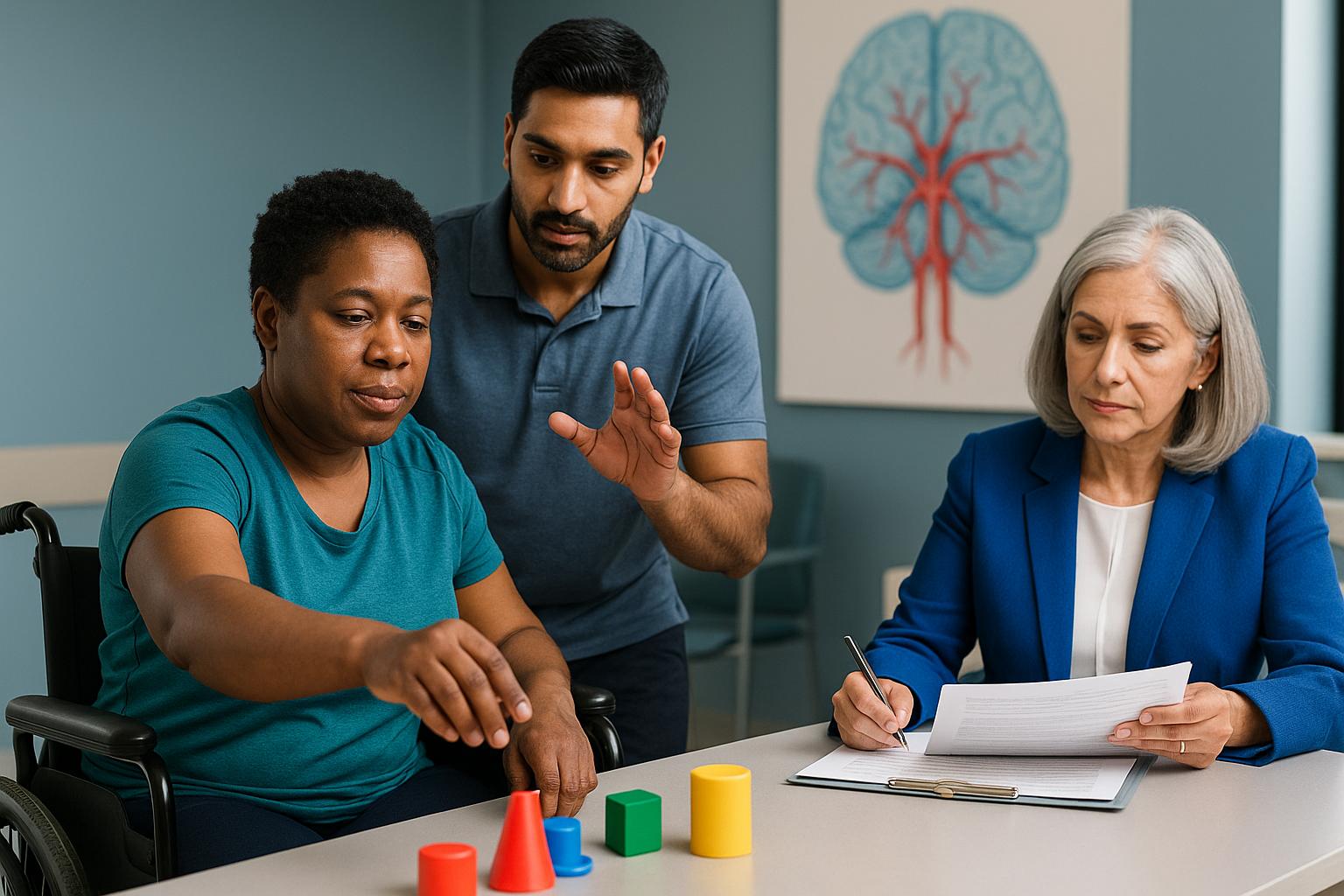
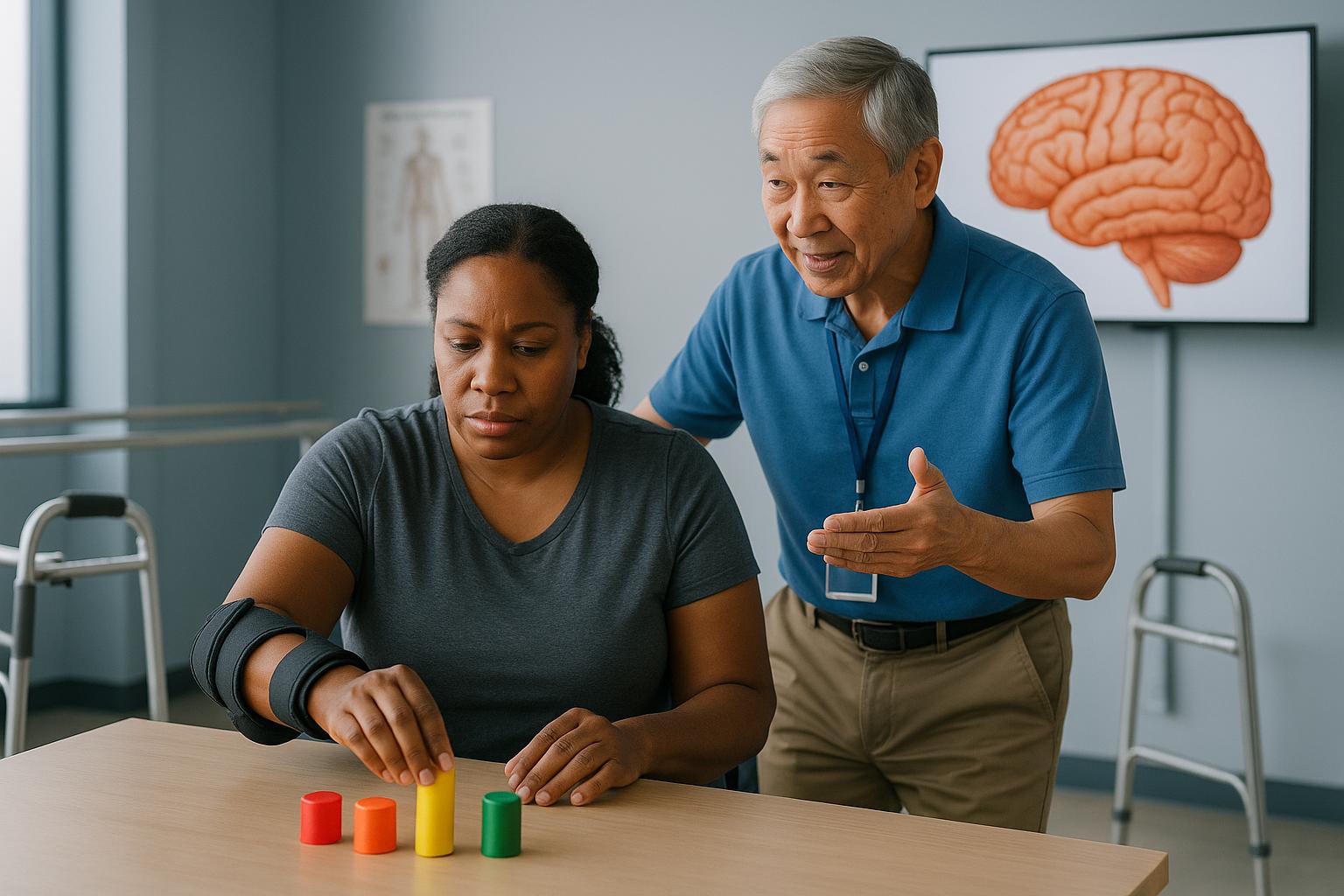
How Stroke Fatigue Impacts Daily Life and Recovery
By Ellia Ciammaichella, DO, JD
Triple Board-Certified in Physical Medicine & Rehabilitation, Spinal Cord Injury Medicine, and Brain Injury Medicine
Quick Insights
Stroke fatigue is persistent exhaustion that occurs after a stroke, even with adequate rest. It affects up to 70% of stroke survivors and differs from ordinary tiredness. The brain injury disrupts neural pathways that regulate energy and attention. This exhaustion often worsens with mental or physical effort. Medical evaluation can identify treatable causes and guide rehabilitation strategies tailored to individual recovery patterns.
Key Takeaways
- Post-stroke fatigue is linked to deficits in attention, processing speed, and executive function.
- Cognitive-behavioral therapy shows measurable improvement in fatigue symptoms for stroke patients.
- Spasticity management through targeted interventions may reduce energy expenditure and improve endurance.
- Rehabilitation programs should consider the individual’s current capacity and aim to provide appropriate challenges to support adaptation.
Why It Matters
Stroke fatigue can prevent survivors from returning to work, maintaining relationships, or performing daily tasks independently. Understanding its medical basis helps families and legal professionals recognize it as a legitimate, measurable impairment—not laziness or depression. Expert assessment clarifies how fatigue limits function and shapes long-term care needs.
Introduction
As a board-certified physiatrist and attorney practicing in Reno, I frequently evaluate stroke survivors whose lives have been upended by persistent exhaustion that rest alone cannot resolve. To learn more about my credentials and experience, please see my Ellia Ciammaichella, DO, JD background.
Stroke fatigue is a neurological condition caused by brain injury that disrupts the neural pathways regulating energy, attention, and endurance. It affects up to 70% of stroke survivors and differs fundamentally from ordinary tiredness. Research demonstrates that rehabilitation interventions must be carefully tailored to address this complex impairment without worsening symptoms.
This exhaustion often prevents survivors from returning to work, maintaining relationships, or performing basic daily tasks. My dual training allows me to evaluate how medical findings translate into measurable functional limitations with legal significance.
This article explains the mechanisms behind post-stroke fatigue, its impact on cognitive endurance, and evidence-based interventions that can improve outcomes.
What Causes Fatigue After Stroke
Stroke damages brain tissue by interrupting blood flow, which disrupts the neural networks that regulate energy, attention, and arousal. This injury creates persistent exhaustion that differs fundamentally from ordinary tiredness. The fatigue occurs even when survivors get adequate rest and sleep.
Clinical guidelines recognize fatigue as a core rehabilitation challenge requiring systematic assessment. The brain injury affects multiple systems simultaneously—motor control, sensory processing, and cognitive regulation all demand more energy than before the stroke.
In my evaluations, I often see survivors whose imaging shows relatively small lesions but whose functional limitations are profound. The location of the injury matters more than its size. Damage to areas controlling attention or executive function can cause disproportionate fatigue.
Depression and sleep disorders can worsen post-stroke exhaustion, but they do not fully explain it. The fatigue has a distinct neurological basis tied to the brain injury itself. Medical assessment must distinguish between these overlapping conditions to guide appropriate intervention.
How Stroke Fatigue Affects Cognitive Function
Cognitive endurance declines after stroke in ways that standard neuropsychological testing may not fully capture. Survivors may perform adequately on brief assessments but can experience increased fatigue with sustained mental effort. This pattern reflects impaired neural efficiency rather than lack of motivation.
Systematic evidence links fatigue with deficits in attention, processing speed, and executive function. These cognitive domains require sustained neural activation, which becomes metabolically expensive after brain injury. Tasks that previously felt automatic may now require conscious effort and can lead to rapid energy depletion.
When reviewing medical records in these cases, I focus on functional patterns over time. Can the person maintain focus during a full workday? Do they need frequent breaks during conversations or meetings? These real-world observations often reveal impairments that formal testing misses.
The interplay between fatigue and cognitive function may create challenges that impede recovery. Mental effort worsens exhaustion, which further impairs cognitive performance. This dynamic affects return-to-work capacity and independent living more than isolated deficits in either domain alone. For readers seeking more detail about clinical recognition of stroke-related symptoms, this expert guide on AICA stroke symptoms offers additional insights into neurologic assessment.
Evidence-Based Treatments for Post-Stroke Fatigue
Cognitive-behavioral therapy shows measurable improvement in fatigue symptoms for stroke patients. This approach helps survivors recognize patterns that worsen exhaustion and develop strategies to manage energy more effectively. The intervention addresses both the neurological and psychological components of post-stroke fatigue.
Graded activity training, which gradually increases physical and cognitive demands, can improve endurance when carefully calibrated. The key is avoiding overexertion that triggers setbacks. Rehabilitation programs should consider the individual’s current capacity and aim to provide appropriate challenges to support adaptation.
Interventional approaches can influence fatigue-related symptoms by addressing underlying impairments like spasticity. When muscle tone abnormalities increase the energy cost of movement, targeted treatment may reduce overall exhaustion. This illustrates how managing secondary complications can improve functional endurance.
Emerging neuromodulation techniques show promise for improving motor performance and reducing fatigability. These interventions target the neural circuits that control movement efficiency. While still being studied, they represent a mechanistic approach to addressing post-stroke exhaustion at its source.
The Role of Rehabilitation in Managing Stroke-Related Exhaustion
Rehabilitation must balance the need for intensive therapy against the risk of worsening fatigue. Too little activity fails to promote recovery, while excessive demands can trigger prolonged exhaustion that sets back progress. This calibration requires ongoing assessment and adjustment.
Mechanistic research demonstrates how targeted interventions can alter neural control of movement, reducing the energy cost of motor tasks. When rehabilitation addresses the underlying inefficiency rather than simply increasing repetitions, survivors can achieve better functional gains with less fatigue.
In my practice evaluating stroke survivors, I assess how rehabilitation intensity matches their current endurance capacity. Are therapy sessions structured to allow adequate rest? Does the schedule account for cognitive fatigue, not just physical exhaustion? These factors determine whether rehabilitation supports or undermines recovery.
For those dealing with complex neurorehabilitation challenges, my objective medical-legal consulting services include expert witness testimony, IMEs, and comprehensive medical record review relevant to stroke and brain injury cases.
Rehabilitation aims to enhance functional capacity, though some level of fatigue may persist in stroke survivors despite intensive rehabilitation efforts.
My Approach to Evaluating Post-Stroke Fatigue
As a physiatrist who evaluates stroke survivors in both clinical and legal contexts, I focus on how fatigue translates into measurable functional limitations that affect daily life and work capacity.
In my experience reviewing medical records and conducting independent examinations, I look beyond standard neuropsychological test scores to assess real-world endurance patterns. Can the individual sustain attention during a full workday? Do they require frequent rest breaks during routine activities? These observations often reveal impairments that brief office-based testing cannot capture.
My dual training in medicine and law allows me to document these findings in ways that clearly establish the relationship between brain injury and persistent exhaustion. I provide objective analysis that serves both plaintiffs seeking fair compensation and defendants requiring accurate damage assessment.
When I evaluate stroke-related fatigue, I distinguish between the neurological basis of exhaustion and overlapping conditions like depression or sleep disorders. This precision helps all parties—physicians, attorneys, and litigants—understand the specific functional limitations attributable to the stroke itself.
Conclusion
In summary, stroke fatigue is a neurological condition caused by brain injury that disrupts energy regulation and cognitive endurance. It affects up to 70% of stroke survivors and differs fundamentally from ordinary tiredness. Interventional approaches targeting spasticity and motor inefficiency can reduce the energy cost of movement, improving functional capacity. Evidence-based treatments including cognitive-behavioral therapy, graded activity training, and emerging neuromodulation techniques show promise when carefully calibrated to individual tolerance.
As a physician and attorney, I evaluate how post-stroke fatigue translates into measurable functional limitations that affect work capacity, independence, and quality of life. My dual training allows me to document these findings in ways that serve both medical understanding and legal analysis.
Through Ciammaichella Consulting Services, PLLC, I provide specialized medical-legal evaluations for stroke survivors and their legal teams. Based in Nevada, Dr. Ellia Ciammaichella provides medical-legal services across licensed states such as Texas, California, and Colorado. I am available to travel for expert testimony and in-person evaluations when appropriate. This flexibility allows individuals and legal teams with complex cases to access consistent, expert analysis regardless of location.
If you would like to discuss your case or have questions about stroke-related fatigue from a medical-legal standpoint, please request a consultation to get started.
I invite you to schedule a virtual second opinion today to clarify how stroke-related fatigue affects functional capacity and long-term care needs in your case.
This article is for educational purposes only and should not be used as a substitute for professional medical advice, diagnosis, or treatment. Always seek the advice of your physician or other qualified healthcare provider with any questions you may have regarding a medical condition or treatment options. Never disregard professional medical advice or delay in seeking it because of something you have read in this article.
Frequently Asked Questions
What causes persistent exhaustion after stroke even with adequate rest?
Stroke damages brain tissue by interrupting blood flow, which disrupts neural networks that regulate energy, attention, and arousal. This creates neurological fatigue distinct from ordinary tiredness. The injury affects multiple systems simultaneously—motor control, sensory processing, and cognitive regulation all demand more energy than before the stroke. Depression and sleep disorders can worsen exhaustion, but the fatigue has a distinct neurological basis tied to the brain injury itself.
How does stroke fatigue affect cognitive function and work capacity?
Cognitive endurance declines after stroke in ways that brief testing may not capture. Survivors often perform adequately on short assessments but deteriorate rapidly with sustained mental effort. This reflects impaired neural efficiency affecting attention, processing speed, and executive function. Tasks that once felt automatic now demand conscious effort and deplete energy reserves quickly. This pattern affects return-to-work capacity more than isolated deficits in either physical or cognitive domains alone.
Can rehabilitation improve post-stroke fatigue and endurance?
Yes, when carefully calibrated. Graded activity training combined with cognitive-behavioral therapy shows measurable improvement in fatigue symptoms. The key is balancing intensive therapy against the risk of worsening exhaustion. Rehabilitation must address underlying inefficiency rather than simply increasing repetitions. Targeted interventions that reduce spasticity or improve motor control can lower the energy cost of movement, improving functional capacity despite persistent fatigue.
About the Author
Dr. Ellia Ciammaichella, DO, JD, is a triple board-certified physician specializing in Physical Medicine & Rehabilitation, Spinal Cord Injury Medicine, and Brain Injury Medicine. With dual degrees in medicine and law, she offers a rare, multidisciplinary perspective that bridges clinical care and medico-legal expertise. Dr. Ciammaichella helps individuals recover from spinal cord injuries, traumatic brain injuries, and strokes—supporting not just physical rehabilitation but also the emotional and cognitive challenges of life after neurological trauma. As a respected independent medical examiner (IME) and expert witness, she is known for thorough, ethical evaluations and clear, courtroom-ready testimony. Through her writing, she advocates for patient-centered care, disability equity, and informed decision-making in both medical and legal settings.
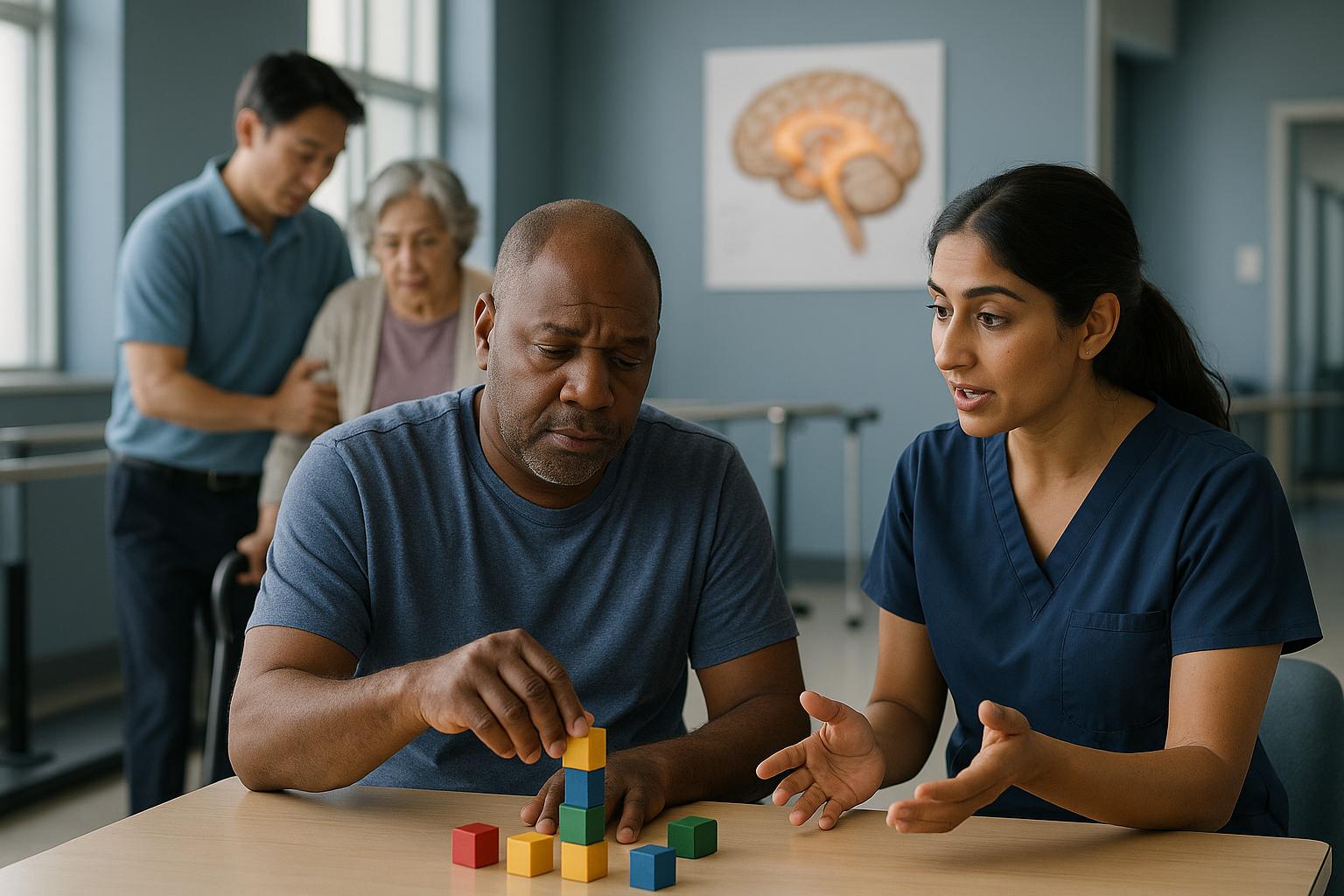
Medical Expert Services
Dr. Ciammaichella provides expert medical consulting for attorneys handling complex injury cases: